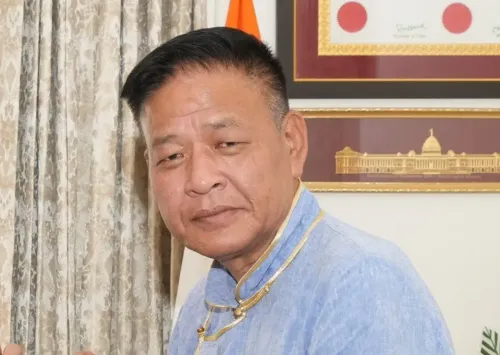
Penpa Tsering sworn in for second term as Sikyong amid Tibet-China deadlock
Synopsis
Penpa Tsering's second swearing-in as Sikyong in Dharamsala was more than a democratic formality — it was a public restatement of the Tibetan exile movement's middle-way strategy at a moment when the 90-year-old Dalai Lama's presence lent the ceremony rare gravity, and Beijing shows no sign of returning to the table.
Key Takeaways
Penpa Tsering was sworn in on 27 May 2025 for a second five-year term as Sikyong of the Central Tibetan Administration (CTA) in Dharamsala .
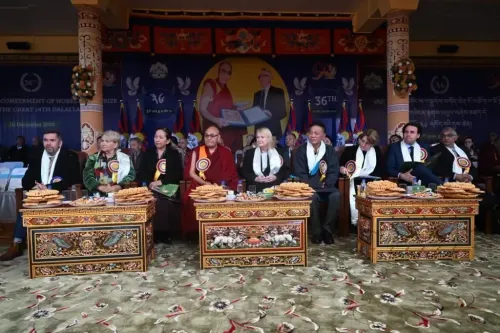
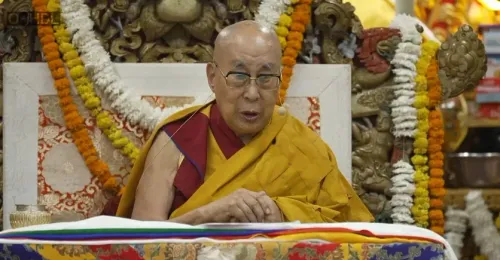
The ceremony was held in the presence of the 90-year-old Dalai Lama at the Tsuglagkhang temple .
Tsering acknowledged 'not much space for negotiations' with Beijing under its current policy direction.
The 17th Kashag reaffirmed commitment to the middle-way policy — seeking autonomy through non-violence and dialogue, not independence.
The CTA will maintain backchannel communications with China while pursuing stronger international support for its position.
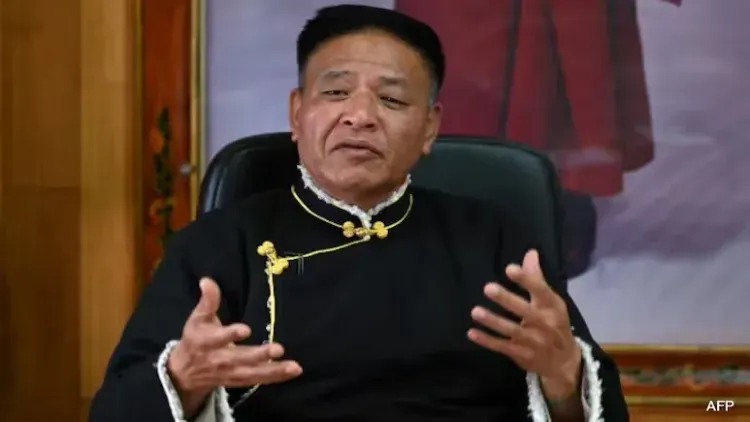
Penpa Tsering was sworn in on Wednesday, 27 May for his second consecutive five-year term as Sikyong (President) of the Central Tibetan Administration (CTA) in Dharamsala, Himachal Pradesh, reaffirming the exile government's commitment to a negotiated resolution of the Tibet-China conflict even as he acknowledged shrinking diplomatic space with Beijing. The ceremony was held in the presence of the 90-year-old Tibetan spiritual leader, His Holiness the Dalai Lama, lending it a significance well beyond the ceremonial.
The Swearing-In Ceremony
Large crowds gathered from the early hours at the Tsuglagkhang temple — situated close to the Dalai Lama's official residence — to witness the oath-taking. Prior to the inauguration, the Dalai Lama met members of the outgoing 16th Kashag (Cabinet) to mark the conclusion of their tenure, in keeping with the CTA's established democratic traditions.
In his inaugural address, Sikyong Tsering stressed that the new 17th Kashag would keep the Dalai Lama's thought and counsel at its core, describing the spiritual leader's blessings as the primary source of inspiration for the administration's work.
The Middle-Way Policy and Beijing's Stance
Tsering was candid about the diplomatic landscape. 'Given the Chinese government's current policy direction towards the nationalities, there does not seem to be much space for negotiations,' he stated. Despite this, he said the 17th Kashag remains 'firmly committed' to the middle-way policy — a framework envisioned by the Dalai Lama that seeks resolution through non-violence, dialogue, and mutual benefit, stopping short of demanding outright independence.
The Dalai Lama fled Tibet in March 1959 following a failed uprising against Chinese rule and has since championed greater autonomy for Tibet rather than full separation. The middle-way approach has been the CTA's cornerstone diplomatic posture for decades, though Beijing has consistently refused to engage substantively.
Backchannel Diplomacy and International Outreach
Tsering indicated the CTA would pursue a dual-track strategy: maintaining cautious backchannel communications with the Chinese government while simultaneously working to strengthen international recognition and support for the middle-way policy. 'We will continue the backchannel communications with caution and steadiness with the Chinese government while pursuing strategies to strengthen international recognition,' he said.
This comes amid a broader pattern of the Tibetan exile movement seeking to internationalise the issue through Western legislatures and human rights forums, even as direct dialogue with Beijing has remained effectively frozen for years.
What the Second Term Signals
Tsering's re-election by the Tibetan diaspora reflects a continuity mandate — a vote for steady-state diplomacy over a sharp change in direction. The CTA, which represents Tibetan people both inside Tibet and across the diaspora, has under his leadership framed the struggle in terms of long-term sustainability rather than near-term breakthroughs.
'We firmly believe that the future of Tibet belongs to the Tibetan people, not to authoritarian control imposed from Beijing,' Tsering remarked, signalling no retreat from the CTA's foundational position.
With the Dalai Lama now 90 years old, questions around succession and the future of the movement's spiritual leadership are increasingly central to the CTA's long-term planning — a dimension that will likely shape the 17th Kashag's agenda in the years ahead.
Point of View
And with the Dalai Lama at 90, the succession question will increasingly test the CTA's ability to hold its diaspora together around a single strategic vision. The real challenge of the second term is not Beijing's intransigence — that was always expected — but whether the exile administration can build enough international institutional pressure to make dialogue a cost Beijing cannot indefinitely avoid.
NationPress
11 Oct 2026
Frequently Asked Questions
Who is Penpa Tsering and what is the Sikyong?
Penpa Tsering is the democratically elected President — titled Sikyong — of the Central Tibetan Administration (CTA), the Tibetan government-in-exile based in Dharamsala, India. He was first elected to the role and has now been sworn in for a second five-year term on 27 May 2025.
What is the middle-way policy that the CTA follows?
The middle-way policy, envisioned by the Dalai Lama, seeks genuine autonomy for Tibet within China rather than outright independence. It pursues resolution through non-violence, dialogue, and mutual benefit, and has been the CTA's central diplomatic framework for decades.
Why did Penpa Tsering say there is little space for negotiations with China?
Tsering cited the Chinese government's current policy direction towards nationalities as leaving little room for dialogue. Beijing has not engaged in substantive talks with Tibetan representatives for years, making the CTA's diplomatic outreach largely one-sided.
What role did the Dalai Lama play in the swearing-in ceremony?
The 90-year-old Dalai Lama was present at the ceremony in Dharamsala and met with outgoing members of the 16th Kashag ahead of the oath-taking. His presence was seen as lending the event significance beyond a routine democratic transition.
What are the CTA's priorities under Tsering's second term?
The 17th Kashag has committed to pursuing political and social welfare initiatives aimed at the long-term sustainability of the Tibetan struggle. It will continue backchannel communications with China while working to strengthen international recognition and support for the middle-way policy.