Explore Tibet's Diplomatic Legacy at New CTA Museum Exhibition
Synopsis
Don't miss the CTA's latest exhibition that unveils Tibet's diplomatic history through rare documents. This exhibition, featuring letters from the Dalai Lama, highlights Tibet's independent stance before the Chinese invasion—a crucial narrative for understanding its past and advocating for its future.
Key Takeaways
Exhibition Duration: Four months at the Tibet Museum.
Historical Impact: Features documents detailing Tibet's diplomatic status pre-invasion.
Significant Contributors: Sir Basil Gould's role as a mediator is highlighted.
Archival Importance: Documents serve as evidence against the Chinese narrative.
Engagement Call: Encourages Tibetan youth to understand their history.
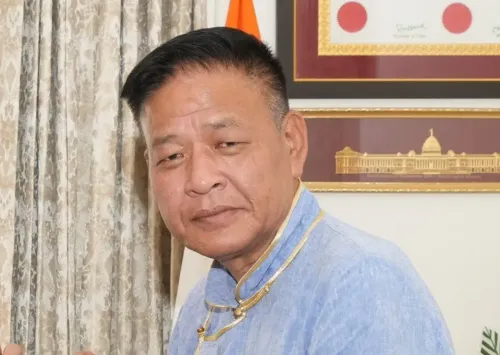
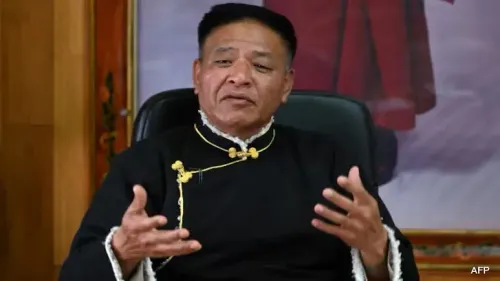
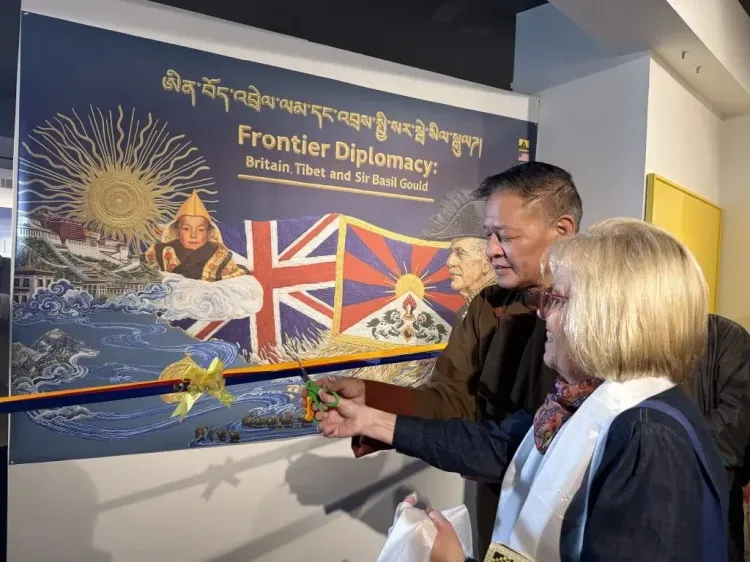
New Delhi, April 5 (NationPress) The President of the Central Tibetan Administration (CTA), Penpa Tsering, has officially opened a four-month exhibition named "Frontier Diplomacy: Britain, Tibet, and Sir Basil Gould" at the Tibet Museum. This exhibition features two unique historical documents that once belonged to Sir Basil Gould, which detail Tibet's diplomatic and political standing before China's incursion into Tibet, according to reports.
Sir Basil Gould served as the British Political Officer in Sikkim from 1935 to 1945, acting as a crucial mediator between Tibet and British India. He was previously the British Trade Agent in Gyantse, Tibet, from 1912 to 1913.
In 2025, two significant documents from his personal archives were presented to Penpa Tsering in London.
This handover coincided with increasing worries over the dispersal of historical artefacts related to Tibet, particularly following an auction conducted by Bonhams on June 4, 2025, featuring items belonging to both Sir Gould and celebrated Indian artist Krishna Kanwal, as reported by Phayul.
These archival materials provide crucial insights into Tibet's political and diplomatic status before the illegal Chinese invasion. They are deemed valuable evidence supporting Tibet's de-facto independence prior to 1950, challenging the official Chinese narrative regarding Tibet's historical claims, according to Phayul.
Central to the exhibition are two letters—a 1947 correspondence from the 14th Dalai Lama and the 3rd Taktra Rinpoche, Regent of Tibet, addressed to Sir Basil Gould during a historic Tibetan trade mission led by WD Shakabpa, the then Finance Minister of Tibet. These letters highlight Tibet's independent approach to foreign relations and demonstrate its direct engagement with international representatives as a sovereign political entity.
In his speech at the event, Penpa Tsering emphasized the significance of such archival documents in fortifying Tibet's historical narrative.
He discussed the long-standing ties between Tibet and Britain, noting that formal relations trace back to 1774 with the visit of Scottish envoy George Bogle.
He also referenced various engagements involving British officials, explorers, and missionaries, asserting that these interactions are critical components of Tibet's diplomatic history.
Additionally, the CTA President recalled the pivotal 1948 Tibetan trade delegation's journey to India, China, the US, and the UK, marking a significant milestone in Tibet's global outreach.
He pointed out that Tibet lost its independence just two years after this diplomatic mission, emphasizing the urgency for Tibetan youth to deeply engage with their history. A robust understanding of Tibet's past is essential for effective advocacy, particularly against the growing narratives surrounding Tibet's status.
Point of View
It aims to educate the public about Tibet's past and encourage dialogue about its future. The event has significant implications for understanding historical narratives surrounding Tibet.
NationPress
10 Oct 2026
Frequently Asked Questions
What is the focus of the exhibition?
The exhibition focuses on Tibet's diplomatic and political history, featuring rare documents that illustrate its status before the Chinese invasion.
Who is Sir Basil Gould?
Sir Basil Gould was a British Political Officer who played a pivotal role in mediating between Tibet and British India during the early 20th century.
Why are the documents significant?
The documents provide crucial evidence of Tibet's de-facto independence and counter the official Chinese narrative regarding Tibet's historical status.
When does the exhibition take place?
The exhibition will last for four months, beginning from its inauguration on April 5.
Who inaugurated the exhibition?
The exhibition was inaugurated by Penpa Tsering, the President of the Central Tibetan Administration.