Piyush Goyal at G20 Milwaukee: India pushes WTO-led trade order
Synopsis
Commerce Minister Piyush Goyal is in Milwaukee for the G20 Trade Ministerial, where India's push to protect WTO-led multilateralism is on a collision course with Washington's demand for 'fair, reciprocal' trade reform. The sideline bilateral with US Trade Representative Jamieson Greer — aimed at finalising an interim India-US trade deal — may prove as consequential as the formal two-day summit itself.
Key Takeaways
Commerce Minister Piyush Goyal is representing India at the G20 Trade Ministerial in Milwaukee , which opened on 30 September for two days.
The ministerial is hosted by US Trade Representative Jamieson Greer and covers global trade rules, supply chains, and excess industrial capacity.
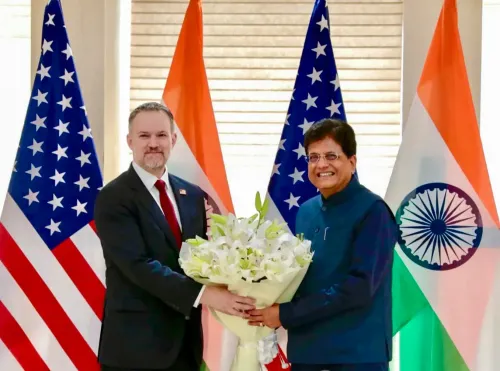
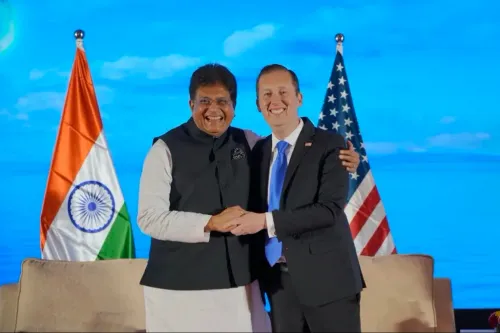
Goyal is scheduled to hold bilateral talks with Greer to advance the India-US Bilateral Trade Agreement (BTA) and finalise an interim deal, in line with the 7 February 2026 joint statement.
India's stated position prioritises a WTO-led, rules-based multilateral trading system with policy space for developing economies.
The US has put forward four agenda items: eliminating forced labour from supply chains, reviewing the Most-Favoured-Nation principle, opposing food-trade weaponisation, and tackling excess industrial capacity.
Goyal's broader US visit runs from 29 September to 5 October , covering Milwaukee, Chicago, and New York.
Commerce and Industry Minister Piyush Goyal is representing India at the G20 Trade Ministerial in Milwaukee, United States, which opened on Wednesday, 30 September for a two-day session covering the future of global trade, supply-chain resilience, excess industrial capacity, and the rules underpinning international commerce. The gathering, hosted by United States Trade Representative Jamieson Greer, comes at a pivotal moment for the multilateral trading system.
India-US Bilateral Trade Agreement in Focus
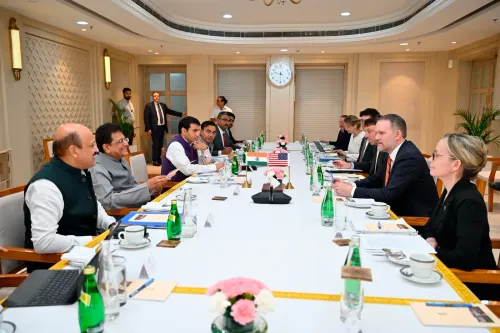
The Milwaukee ministerial provides New Delhi a critical platform to advance negotiations on an India-US Bilateral Trade Agreement (BTA). Goyal, who arrived in Milwaukee on Tuesday, 29 September, is scheduled to hold bilateral meetings with counterparts on the sidelines, with the United States engagement being central to his agenda.
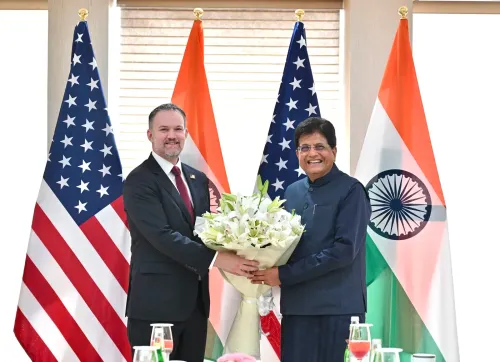
The Commerce Ministry confirmed that Goyal will engage with Greer 'as part of ongoing efforts to advance a balanced and mutually beneficial India-US Bilateral Trade Agreement and finalise an interim deal in line with the joint statement of 7 February 2026.' Both an interim arrangement and the broader agreement remain under active negotiation, with several trade issues still outstanding.
Key Agenda Items at the Ministerial
The United States has put forward four broad discussion areas: eliminating forced labour from global supply chains, updating the Most-Favoured-Nation (MFN) principle, opposing the weaponisation of trade in food, and addressing structural excess capacity and production. The agenda places some of the most foundational principles of international commerce under scrutiny, particularly the MFN principle under which World Trade Organisation (WTO) members generally extend comparable tariff treatment to one another.
The ministerial opened with a meeting of the Global Forum on Steel Excess Capacity on Wednesday morning. Greer and the trade ministers also toured Rockwell Automation, a Milwaukee-based industrial automation and manufacturing technology company, meeting workers and industry representatives on the factory floor.
India's Position: Multilateralism and Developing-Economy Space
India is approaching the Milwaukee discussions with a clear emphasis on preserving the multilateral trading system. According to the Commerce Ministry, India will work toward 'a rules-based, open, inclusive, transparent, equitable and non-discriminatory multilateral trading system, with the WTO at its core, while ensuring adequate policy space for developing countries.'
This stance carries particular weight as Washington pushes G20 members to consider structural changes to how international trade rules operate. Greer, in announcing the ministerial, had stated that the Trump administration wanted to work with G20 partners 'to establish a global trading order based on fair, reciprocal, and balanced trade.' The two positions — India's multilateralist stance versus Washington's push for reciprocity-based reform — represent one of the central tensions of the Milwaukee talks.
Goyal's Broader US Outreach
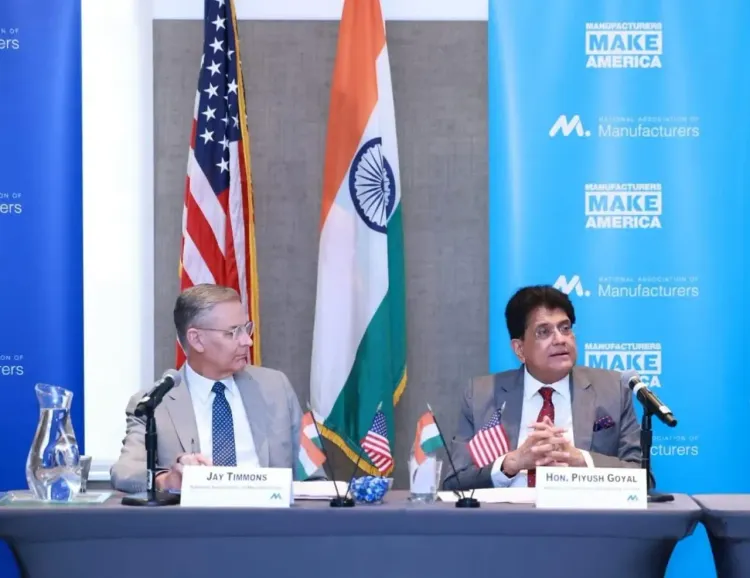
Ahead of the formal ministerial sessions, Goyal engaged with American industry at a roundtable convened by the National Association of Manufacturers, urging US manufacturers to expand their presence in India, partner with Indian small and medium enterprises, and explore co-investment in advanced manufacturing.
His broader US visit, running from 29 September to 5 October, spans Milwaukee, Chicago, and New York, with engagements covering manufacturing, consumer goods, agribusiness, retail, and technology sectors. The Commerce Ministry noted that his G20 bilateral meetings would also focus on expanding opportunities for farmers, fishermen, women entrepreneurs, startups, MSMEs, and other enterprises.
What Comes Next
Ministers are scheduled to continue deliberations on Thursday, 1 October, followed by a press conference by the US Trade Representative. The outcome of the Milwaukee talks — particularly on MFN reform and excess capacity — could shape G20 trade discussions for the remainder of the year. For India, the bilateral engagement with the United States on the sidelines may prove as consequential as the multilateral sessions themselves.
Point of View
And India's insistence on preserving multilateral frameworks puts it in a structurally different camp from its largest trade negotiating partner. The India-US bilateral track is advancing, but the gap between New Delhi's multilateralism and Washington's reciprocity doctrine is a contradiction that an interim deal alone cannot resolve. Goyal's industry outreach in Milwaukee, Chicago, and New York suggests India is also hedging — using the diplomatic window to attract US manufacturing investment regardless of how the formal trade talks conclude.
NationPress
30 Sept 2026
Frequently Asked Questions
Why is Piyush Goyal in Milwaukee for the G20 Trade Ministerial?
Commerce and Industry Minister Piyush Goyal is representing India at the G20 Trade Ministerial in Milwaukee, which opened on 30 September for two days. The meeting brings together trade ministers from the world's major economies to discuss global trade rules, supply chains, excess industrial capacity, and WTO reform.
What is India's position at the G20 Trade Ministerial in Milwaukee?
India is advocating for a rules-based, open, inclusive, and non-discriminatory multilateral trading system with the WTO at its core, while ensuring adequate policy space for developing countries. This places India in a different position from the United States, which is pushing for 'fair, reciprocal, and balanced trade' and a review of the Most-Favoured-Nation principle.
What is the status of the India-US Bilateral Trade Agreement?
The India-US Bilateral Trade Agreement is under active negotiation, with both an interim arrangement and a broader deal being discussed. Goyal is scheduled to meet US Trade Representative Jamieson Greer in Milwaukee to advance the BTA and finalise an interim deal in line with the joint statement of 7 February 2026.
What are the four key agenda items the US has proposed for the G20 trade meeting?
The United States has identified four areas for discussion: eliminating forced labour from global supply chains, updating the Most-Favoured-Nation principle, opposing the weaponisation of trade in food, and addressing structural excess capacity and production. The session opened with a meeting of the Global Forum on Steel Excess Capacity.
What else is Piyush Goyal doing during his US visit?
Beyond the G20 ministerial, Goyal's US visit runs from 29 September to 5 October and covers Milwaukee, Chicago, and New York. He has already addressed a roundtable at the National Association of Manufacturers, urging US firms to invest in India and partner with Indian MSMEs, with further engagements planned across manufacturing, agribusiness, retail, and technology sectors.