Pakistan-occupied Gilgit-Baltistan cut off for 4th day as flash floods, GLOFs wreak havoc
Synopsis
For four straight days, flash floods and glacial lake outbursts have kept entire valleys in Pakistan-occupied Gilgit-Baltistan cut off from the outside world. With food, medicine, and power failing and the Karakoram Highway damaged at multiple points, the crisis lays bare how rapidly accelerating glacial melt is turning a slow-burn climate threat into an acute humanitarian emergency.
Key Takeaways
Road access to several parts of Pakistan-occupied Gilgit-Baltistan (PoGB) has been severed for four consecutive days as of 25 July .
Flash floods and glacial lake outburst floods (GLOFs) triggered by unprecedented temperatures between 18–21 July are the primary cause, according to GBDMA Director General Ataur Rehman Kakar .
Thousands of residents and tourists remain stranded; shortages of food, medicine, drinking water, and electricity reported in Hisper Valley , Diamer , Astore , and Ghizer .
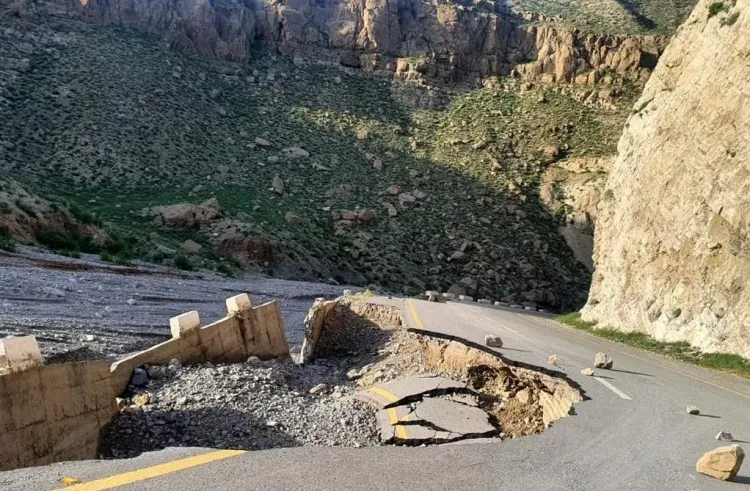
Flash floods on 13 July damaged the Karakoram Highway (KKH) at six locations in Diamer and completely suspended traffic in Thore Valley .
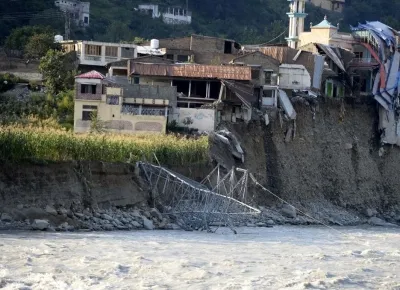
Entire houses were swept away in Khanbari ; livestock losses also reported across affected areas.
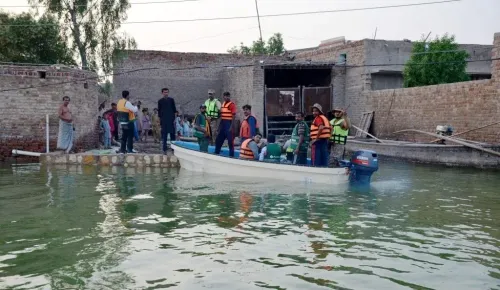
Road access to several parts of Pakistan-occupied Gilgit-Baltistan (PoGB) remained severed for the fourth consecutive day as of 25 July, with flash floods and glacial lake outburst floods (GLOFs) continuing to batter highways and stall restoration work, according to local media reports. Thousands of residents and tourists are stranded across multiple valleys, while communities face acute shortages of drinking water, electricity, and communication services.
Unprecedented Temperatures Triggered the Crisis
The Director General of the GB Disaster Management Authority (GBDMA), Ataur Rehman Kakar, told Pakistani daily Dawn that between 18 July and 21 July, the region recorded unprecedented temperatures, leading to rapid glacier melting and multiple GLOF incidents across several areas. The cascading effect has left entire valleys isolated and overwhelmed local emergency response capacity.
Humanitarian Hardships Deepen Across Districts
Residents of Hisper Valley in Nagar district reported that patients and students are bearing the worst of the crisis, with food and medicine supplies running critically short. People from Diamer, Astore, Ghizer, and other affected districts have flagged disruptions to electricity, water supply, and essential commodities. Residents of Astore expressed particular concern over what they described as the slow pace of work to reopen the Valley Road, which has kept the valley isolated for at least three days.
Earlier Destruction: Flash Floods From July 13
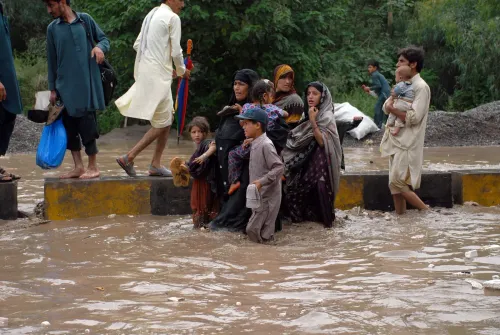
The current crisis compounds damage that began earlier in the month. On 13 July, flash floods struck at six locations in Diamer in the early hours, damaging several houses, stretches of the Karakoram Highway (KKH), crops, agricultural land, and both public and private property. Traffic was completely suspended in Thore Valley after the main road was washed away at multiple points. Power transmission lines were also damaged, and flood debris entered several homes.
Scale of Damage: Homes, Livestock, Infrastructure
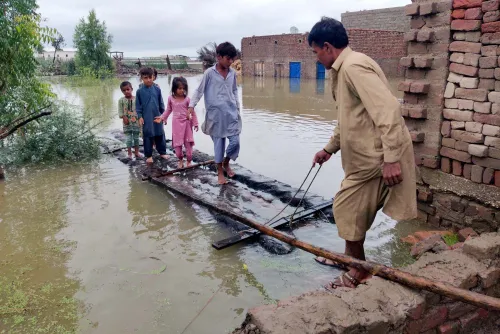
In Khanbari, a devastating flash flood swept away entire houses along with their contents. Livestock losses were also reported. The cumulative destruction across the region — spanning roads, homes, farmland, and utilities — has stretched the GBDMA's resources thin and delayed any meaningful timeline for restoration.
What Comes Next
With glacial melt continuing and no immediate forecast of relief, authorities face a compounding challenge: reopening cut highways while simultaneously managing fresh flood incidents. The situation in PoGB underscores the accelerating threat that climate-driven glacial instability poses to the high-altitude communities of the western Himalayas, where over 7,000 glaciers make the region one of the most vulnerable on earth.
Point of View
And each summer of above-average temperatures translates directly into GLOF events that overwhelm infrastructure built for a more stable climate. What is missing from the official response is not just speed but structural preparedness: early-warning systems for GLOF events remain underfunded, and the Karakoram Highway — the region's only arterial lifeline — has no redundant routing. Until climate adaptation spending matches the scale of the hazard, communities in these valleys will continue to face the same crisis, year after year, with diminishing recovery windows.
NationPress
25 Oct 2026
Frequently Asked Questions
Why is Pakistan-occupied Gilgit-Baltistan cut off from road access?
Flash floods and glacial lake outburst floods (GLOFs) triggered by unprecedented temperatures between 18 and 21 July have damaged highways, including the Karakoram Highway, at multiple points. Road access has remained severed for four consecutive days as of 25 July, with restoration work hampered by continued flooding.
What is a glacial lake outburst flood (GLOF)?
A GLOF occurs when water held in a glacier-dammed lake is suddenly released, typically due to rapid ice melt or structural failure of the ice dam. Gilgit-Baltistan is one of the world's most GLOF-prone regions due to its high density of glaciers, making it acutely vulnerable to temperature spikes.
Which areas of Gilgit-Baltistan are worst affected?
The worst-affected areas include Hisper Valley in Nagar district, as well as Diamer, Astore, Ghizer, Thore Valley, and Khanbari. Residents across these areas report shortages of food, medicine, electricity, and drinking water.
When did the flash flooding in Gilgit-Baltistan begin?
The first major flash flood event struck six locations in Diamer on 13 July, damaging the Karakoram Highway and several homes. A second wave of flooding driven by rapid glacial melt followed between 18 and 21 July, compounding the destruction.
Who is managing the disaster response in Gilgit-Baltistan?
The GB Disaster Management Authority (GBDMA) is leading the response. Its Director General, Ataur Rehman Kakar, has confirmed the scale of the GLOF incidents but residents in areas like Astore have criticised the slow pace of road restoration efforts.