PoJK protest crackdown: Activist warns movement won't stop until demands met
Synopsis
Pakistan's move to ban the Joint Awami Action Committee on June 5 didn't silence PoJK's protest movement — it supercharged it. With thousands on the streets, a communications blackout in place, and allegations of security forces killing dozens and threatening doctors, a Washington-based activist is now calling out the Trump administration for backing the Pakistani military establishment that he says is doing the suppressing.
Key Takeaways
The Joint Awami Action Committee (JAAC) was declared a banned organisation on June 5 , triggering a sharp escalation in protests across PoJK .
Activist Senge Sering alleged Pakistani forces deployed 15,000–20,000 personnel and 'shot and killed dozens and dozens of people' — figures that cannot be independently verified due to an ongoing communications blackout.
Security forces allegedly entered homes, looted property, and threatened medical staff not to treat injured protesters.
Protesters are demanding local autonomy, control over land and natural resources, economic relief, and political restructuring free from ISI interference.
Sering criticised President Trump for 'aligning himself with General Asim Munir,' arguing US support emboldens Pakistani military crackdowns.
A complete shutdown of phone and internet services, with no media access allowed, is making independent verification of events in PoJK extremely difficult.
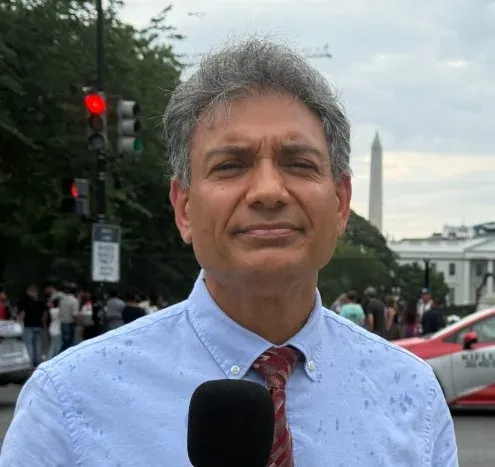
A widening crackdown by Pakistani security forces has failed to quell a mass protest movement in Pakistan-occupied Jammu and Kashmir (PoJK), with demonstrators determined to press on until their demands for autonomy, resource rights, and political reform are addressed, according to Senge Sering, founder of the Washington-based Institute for Gilgit Baltistan Studies. Speaking in an exclusive interview, Sering alleged systematic use of force, communications blackouts, and intimidation of medical staff against protesters.
How the Protests Escalated
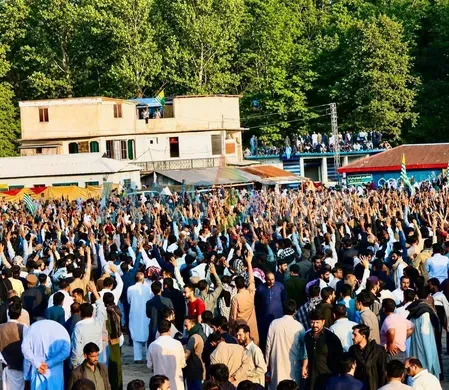
According to Sering, the demonstrations intensified sharply after June 5, when the Joint Awami Action Committee (JAAC) — a broad coalition of traders, students, and activists — was declared a banned organisation by Pakistani authorities. 'Since that has happened, people have come out on the street,' Sering said.
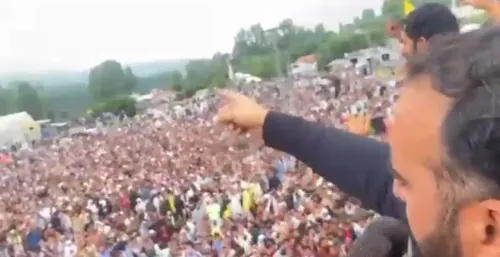
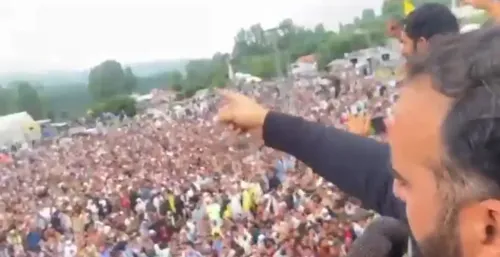
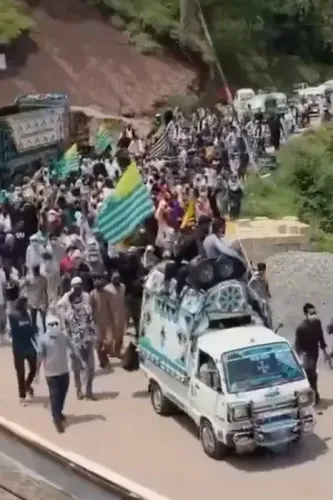
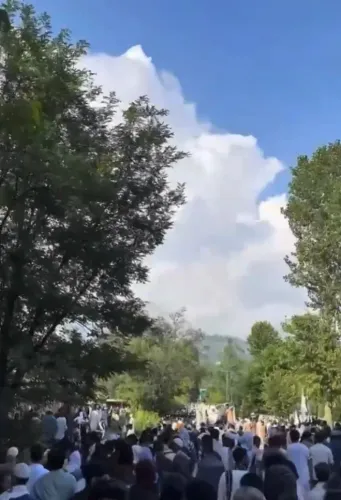
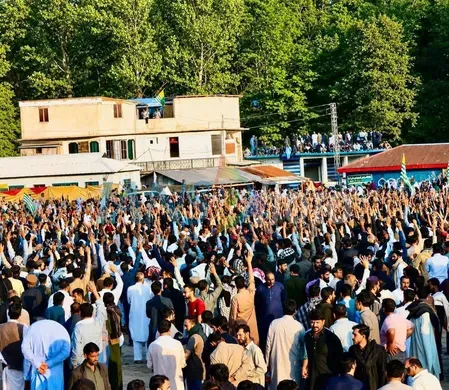
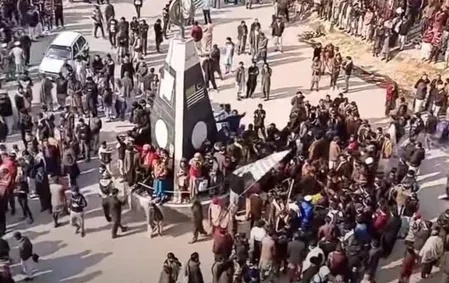
He described the scale as unprecedented. 'There are thousands and thousands of protestors. They're coming from all over the occupied area,' he said, adding, 'This time, the intensity of the protest is huge. It's shocking when you look at different videos that come from different regions, how well-organised people are.'
Alleged Use of Force and Abuses
Sering alleged that Pakistani authorities deployed between 15,000 and 20,000 personnel — drawn from the Punjab Police and paramilitary forces — into PoJK to suppress the unrest. He claimed security forces 'shot and killed dozens and dozens of people,' though he acknowledged that independent verification of casualty figures remains difficult given the near-total information blackout in the region.
'Right now, there's a complete shutdown. No phone or internet service is working, and there's no media allowed,' he said. He further alleged that security personnel entered homes, looted property, and threatened doctors and hospital staff, warning them not to treat injured protesters.
What Protesters Are Demanding
Sering outlined the core demands driving the agitation: greater local autonomy, control over land and natural resources, relief from economic hardships, and structural changes to PoJK's political framework. 'They want control of land and resources in their own hands, and they want less influence and less interference from Pakistan,' he said.
He also pointed to deep-rooted opposition to what he described as externally installed political representatives, alleging that Pakistan's Inter-Services Intelligence (ISI) effectively controls the appointment and removal of local governments. 'The local people do not want that because these are the 12 people that the Pakistanis' ISI uses to create and discard the governments,' he said.
Why Trust in Islamabad Has Collapsed
Sering argued that the current protest wave differs from previous rounds because residents no longer believe promises made during earlier negotiations. 'Pakistan has exposed itself as the liars, and now they're not going to listen to or believe anything the Pakistanis are telling the people of PoJK,' he said. 'This time, you know, they will not leave till their demands have been met.'
This comes amid a broader pattern of periodic unrest in PoJK over issues of resource exploitation, lack of political representation, and economic marginalisation — grievances that have persisted for decades but have reportedly grown sharper in recent years.
Sering's Appeal to Washington
Asked about the Trump administration's engagement with Pakistan's military leadership, Sering was sharply critical. 'President Trump has made a huge mistake by aligning himself with General Asim Munir,' he said. He argued that international legitimacy extended to Pakistan's military establishment emboldens it to crack down on local populations. 'Every time he supports the Pakistani military, the Pakistani military gets this excess of international bonhomie, which they use to suppress and oppress the local people,' Sering said, urging the US to 'stand with the people of PoJK.'
Sering, who was born in Pakistan-occupied Gilgit-Baltistan, founded the Institute for Gilgit Baltistan Studies in 2010 and has worked with policymakers and international institutions on issues of local autonomy, democracy, and indigenous rights. With the communications blackout still in place, independent corroboration of the claims he has made remains limited.
Point of View
Not just a bilateral India-Pakistan one. Whether that reframing gains traction in Washington will matter for how much international pressure, if any, Islamabad faces in the weeks ahead.
NationPress
26 Oct 2026
Frequently Asked Questions
What triggered the latest protests in PoJK?
The protests intensified after Pakistani authorities declared the Joint Awami Action Committee (JAAC) — a coalition of traders, students, and activists — a banned organisation on June 5, 2025. The move brought thousands onto the streets across Pakistan-occupied Jammu and Kashmir.
What are the protesters in PoJK demanding?
Demonstrators are demanding greater local autonomy, control over land and natural resources, relief from economic hardships, and structural political reforms. They also want an end to what they describe as ISI-controlled political appointments in the region.
How has Pakistan responded to the PoJK protests?
According to activist Senge Sering, Pakistani authorities deployed 15,000–20,000 security personnel from Punjab Police and paramilitary forces into PoJK. He alleged that forces used lethal violence, entered homes, looted property, and threatened medical staff — claims that cannot be independently verified due to a communications blackout.
Why is it difficult to verify what is happening in PoJK?
A complete shutdown of phone and internet services is in effect, and media access to the region has been blocked, according to Sering. This makes independent corroboration of casualty figures and other claims extremely difficult.
Who is Senge Sering and why is he speaking on PoJK?
Senge Sering is the founder of the Washington-based Institute for Gilgit Baltistan Studies, established in 2010. Born in Pakistan-occupied Gilgit-Baltistan, he has long worked with policymakers and international institutions on issues of local autonomy, human rights, and indigenous rights in the region.