PoJK unrest 2026: How Pakistan criminalised dissent over elite privilege
Synopsis
Pakistan signed a reform accord with PoJK's protest movement in October 2025, then designated the same group a terrorist organisation eight months later. With a disputed death toll of up to 96 protesters, UN letters unanswered, and a legislature-requested truth commission yet to materialise, the crisis has become a case study in how the Pakistani state handles challenges to its own privilege structure.
Key Takeaways
Pakistan's government designated the JKJAAC a proscribed organisation under the Anti-Terrorism Act 2014 in June 2026 , just eight months after signing a reform accord with the group.
A UN Special Procedures letter dated 4 September cited reports of at least 96 protesters and 6 security personnel killed; Pakistan has not replied.
The PoJK Legislative Assembly passed a resolution in late July 2026 seeking an independent truth commission; whether it was formed remains unclear.
The UNDP valued Pakistan's elite economic privileges at approximately $17.4 billion annually — about 6% of GDP — while the IMF 's November 2025 assessment found governance reform could lift output by 5–6.5% over five years.
Pakistan's national poverty rate has risen to an estimated 25% in recent years after falling to 21.9% in 2018–19, according to the World Bank .
No verified, named register of those killed in PoJK has been published; Amnesty International , the UN Human Rights Office and the Human Rights Commission of Pakistan have all called for independent investigation.
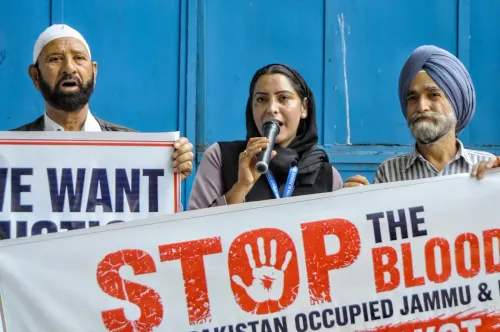
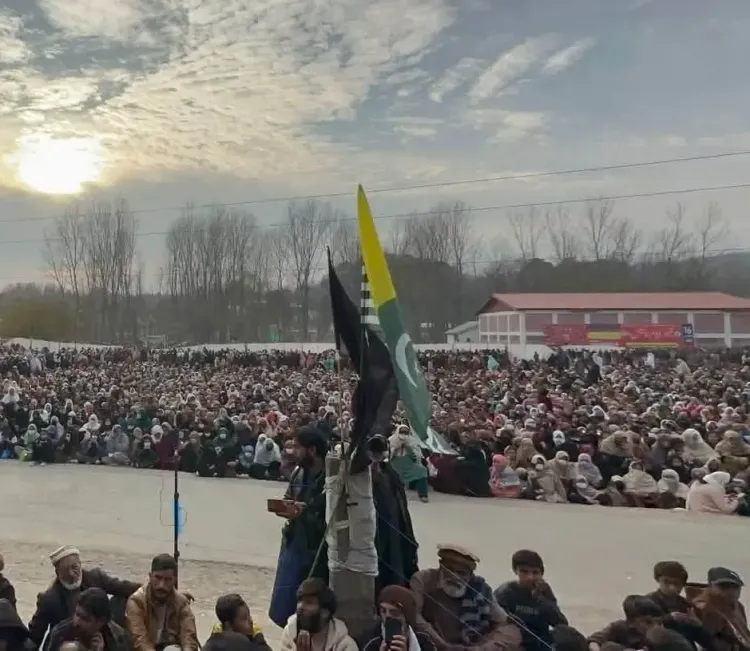
Pakistan-occupied Jammu and Kashmir (PoJK) has been gripped by a deepening crisis through 2025–26, exposing what critics and international watchdogs describe as a fundamental failure of accountability in Pakistan's governance architecture. The unrest, rooted in a political dispute over elite privileges and unrepresentative assembly seats, was reclassified by Islamabad as a terrorism matter — a move that drew sharp rebukes from Amnesty International, the UN Human Rights Office and the Human Rights Commission of Pakistan.
From Accord to Anti-Terrorism Designation
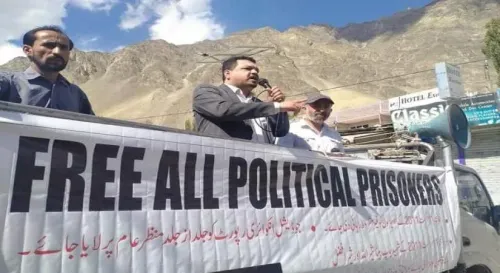
In October 2025, Pakistan's federal government signed an accord with the Jammu Kashmir Joint Awami Action Committee (JKJAAC) — a broad coalition of traders, lawyers, transport workers and students in PoJK. The deal promised to cut the territory's oversized cabinet to 20 members and to review ministerial and judicial perks. Pakistan's prime minister publicly called it an achievement.
By June 2026 — just eight months later — the same government had designated the JKJAAC a proscribed organisation under the Anti-Terrorism Act 2014. No court had examined the group's conduct in the interim. Amnesty International called the designation disproportionate and unlawful. What had begun as a political dispute over privilege had, reportedly without judicial scrutiny, been reframed as a security threat.
A Contested Death Toll and Silenced Accountability
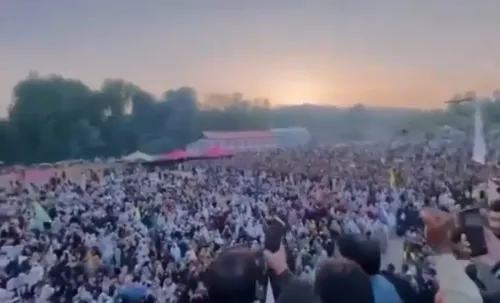
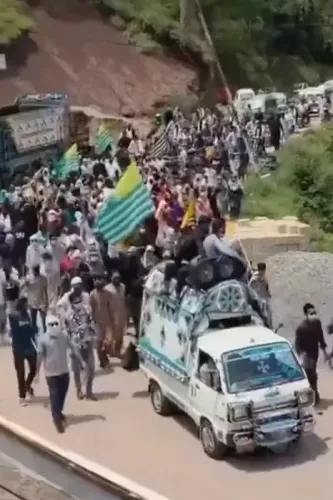
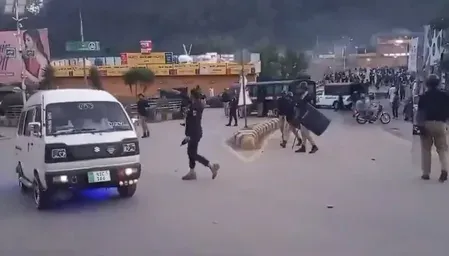
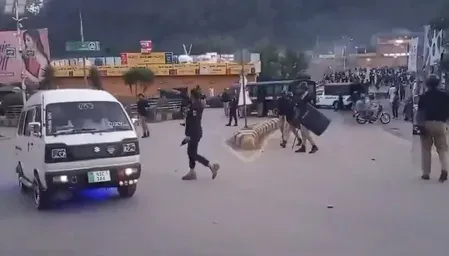
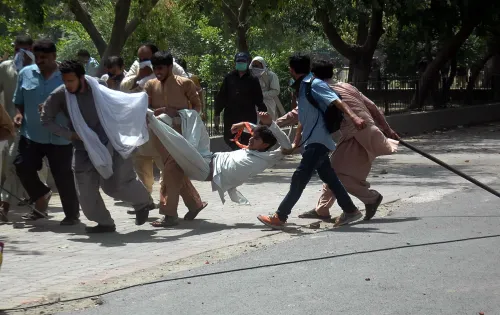
By 19 June 2026, more than two weeks of unrest had left over two dozen people dead, though local accounts placed the figure higher. The regional police chief acknowledged four officers killed and 97 wounded, with 515 people detained. On 17 July, the UN Human Rights Office said dozens had been killed since June — most of them protesters, some of them law-enforcement personnel — and called for prompt, thorough and impartial investigations into every death on both sides.
An allegation letter sent by UN Special Procedures experts on 4 September cited reports of at least 96 protesters and six police or paramilitary personnel killed, with 205 people placed on the anti-terrorism watch list. Available reporting shows no reply from Pakistan. The pattern reportedly repeated in Rawalakot on 5 November, when JKJAAC sources named three dead and 18 injured and alleged the use of drones. Police said armed individuals had fired on officers and declined to confirm the civilian toll or address the drone allegation. No verified, named register of those killed has been published — which is why estimates range from dozens to nearly a hundred.
Notably, the PoJK Legislative Assembly itself passed a resolution in late July 2026 seeking an independent truth commission into all deaths, injuries and property losses. Whether that body was ever constituted remains unclear.
What Independent Investigations Found
Following a fact-finding visit in August 2026, the Human Rights Commission of Pakistan traced the unrest to institutional distrust, sweeping restrictions on expression and connectivity, and an increasingly confrontational state response. The Commission found definite evidence of systematic voter coercion in the July election, while also insisting that accountability must apply to protesters where individual responsibility is established.
The core demands at the heart of the dispute were two: the abolition of elite privileges, and the removal of 12 assembly seats reserved for refugees from across the Line of Control who reside elsewhere in Pakistan. A nine-member committee was notified in December 2025 to examine the reserved-seats clause. The PoJK information minister later claimed that everything within the territory's jurisdiction had been implemented. Authorities also cited constitutional protection for the reserved seats — a legitimate legal argument — but critics argue that converting a representational dispute into a terrorism case without transparent judicial process is an institutional failure, not a security measure.
The Bigger Picture: Elite Privilege and Governance Failure
The UNDP's 2021 National Human Development Report estimated that economic privileges granted to elite groups cost Pakistan approximately $17.4 billion — roughly 6% of its economy. The corporate sector accounted for the largest share, around $4.7 billion. The military, described in the report as Pakistan's largest business conglomerate, received an estimated $1.7 billion through preferential access to land, capital and infrastructure.
The IMF's Governance and Corruption Diagnostic Assessment, published in November 2025, reached a compatible conclusion. Corruption risks are widespread, it found, rooted in a state-dominated economy and compounded by fragmented oversight and politically influenced anti-corruption bodies. The IMF specifically flagged broad legal immunity granted to officials of the Special Investment Facilitation Council, many of them drawn from the armed forces. Governance reform, the Fund estimated, could raise output by 5 to 6.5% over five years — a significant prize left unclaimed.
Separately, leaked property data from the 2024 'Dubai Unlocked' project listed roughly 17,000 Pakistani citizens as owners of more than 23,000 Dubai properties, valued at over $10 billion in early 2022. A National Assembly committee was told in January 2025 that more than 22,000 bureaucrats held dual nationality and most had property abroad.
Human Cost and What Comes Next
The World Bank reported in September 2025 that Pakistan's national poverty rate, after falling from 64.3% in 2001–02 to 21.9% in 2018–19, has risen again since 2020, with a modelled estimate of around 25% in recent years. In PoJK, the hardship was immediate: day labourers and motorcycle-taxi drivers lost income for the duration of the June shutdown, with reports of people struggling to obtain medicine, food and transport.
Months on, the UN experts' letter has gone unanswered, the territory's own legislature-requested truth commission has not visibly materialised, and no transparent register of the dead exists. Amnesty International, the UN Human Rights Office and the Human Rights Commission of Pakistan have all called for the same outcome — an independent investigation — and all have reportedly been met with silence. How Islamabad responds to mounting international pressure in the coming weeks will determine whether PoJK's crisis enters a new phase or remains frozen in institutional impasse.
Point of View
Inaction, proscription, crackdown — is not a one-off policy misstep; it is a pattern documented by the UNDP, the IMF and the World Bank across Pakistan's governance architecture. What is striking is that each institution's findings were formally acknowledged and informally shelved. When street protests made the same demand, the response was anti-terrorism law and a communications blackout rather than the reform already promised on paper. The reserved-seats dispute has a legitimate constitutional dimension, but that argument loses force when it is advanced behind a wall of force, a silenced legislature resolution, and unanswered UN correspondence. The real test for Islamabad is not whether it can suppress this movement — it has demonstrated it can — but whether international accountability pressure and its own institutions' findings will eventually compel the structural change that bilateral diplomacy has not.
NationPress
19 Nov 2026
Frequently Asked Questions
What triggered the PoJK unrest in 2026?
The unrest stemmed from a political dispute over elite privileges and unrepresentative assembly seats, after Pakistan's government failed to implement key terms of an October 2025 accord with the JKJAAC. Demands included cutting the territory's cabinet and removing 12 assembly seats reserved for Kashmiri refugees living elsewhere in Pakistan.
How many people were killed in the PoJK protests?
The toll is contested. The UN Human Rights Office said dozens were killed from June 2026 onward, while a UN Special Procedures letter dated 4 September cited at least 96 protesters and six police or paramilitary personnel killed. No official, named register of the dead has been published by Pakistan.
Why was JKJAAC designated a terrorist organisation?
Pakistan's government proscribed the JKJAAC under the Anti-Terrorism Act 2014 in June 2026, eight months after signing an accord with the group. Amnesty International called the move disproportionate and unlawful, noting that no court had examined the group's conduct before the designation was made.
What has the UN said about the PoJK crackdown?
The UN Human Rights Office called for prompt, thorough and impartial investigations into all deaths on both sides. A follow-up letter from UN Special Procedures experts sent on 4 September cited reports of at least 96 protest deaths and 205 people placed on the anti-terrorism watch list. Available reporting indicates Pakistan has not responded to this letter.
How does the PoJK crisis connect to Pakistan's wider governance problems?
International bodies have documented systemic issues: the UNDP valued elite economic privileges at $17.4 billion annually, the IMF's November 2025 diagnostic found widespread corruption rooted in fragmented oversight, and the World Bank reported Pakistan's poverty rate rising back toward 25% after earlier gains. PoJK's protesters raised the same grievances at the street level and were met with anti-terrorism law rather than reform.