Pakistan-occupied Kashmir crackdown turns Kashmiri diaspora against Islamabad
Synopsis
The Kashmiri diaspora that Pakistan spent decades cultivating as a geopolitical weapon against India has flipped — now protesting outside Pakistani missions in London and Bradford over a crackdown that reportedly left 16 dead at Rawalakot, bodies withheld from families, and the JAAC grassroots alliance banned under anti-terror law with a Rs 10 million bounty on its leaders.
Key Takeaways
At least 16 people were reportedly killed and 37 injured in a single incident at Rawalakot Eidgah in Pakistan-occupied Kashmir (PoK) .
Bodies of several victims have reportedly been withheld by authorities, preventing families from conducting funeral rites.
The Joint Awami Action Committee (JAAC) has been declared a proscribed organisation under anti-terror legislation, with a bounty of Rs 10 million placed on its key leaders.
Internet services have been suspended in PoK, and reports allege looting of shops by Pakistani army personnel.
The Kashmiri diaspora , previously mobilised by Pakistan against India, is now staging protests outside Pakistani embassies in London and Bradford .
The findings are drawn from a report by the International Centre for Peace Studies , released on 18 June .
Pakistan's military-led administration is facing mounting international pressure as the Kashmiri diaspora — long cultivated by Islamabad as a geopolitical asset against India — has turned into its most vocal critics, according to a report by the International Centre for Peace Studies. The report, released on 18 June, details a sweeping crackdown in Pakistan-occupied Kashmir (PoK) that has drawn condemnation from overseas Kashmiri communities, British lawmakers, and human rights observers.
Killings, Arrests, and Enforced Disappearances in PoK
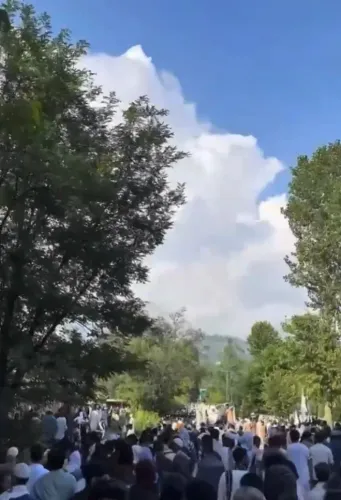
The report documents a sharp deterioration in ground conditions across PoK in recent weeks. According to the report, at least 16 people were reportedly killed in a single incident at the Rawalakot Eidgah and surrounding areas, with 37 others injured. The bodies of several victims have reportedly not been returned to their families, preventing funeral rites from being held.
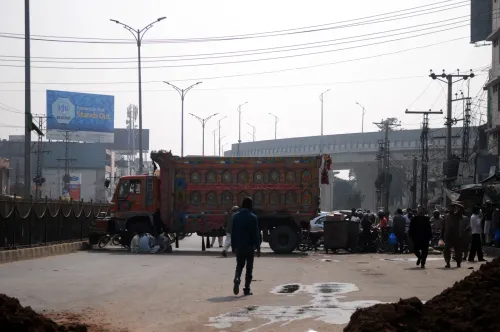
'The Munir-led regime is scared that if the bodies are handed over, there will be huge crowds at funeral prayers, potentially leading to large-scale mobilisation,' the report stated. It further alleged that internet services have been suspended in the region and that Pakistani army personnel have reportedly broken open shop shutters and looted goods belonging to local businessmen and shopkeepers.
JAAC Banned, Bounty Placed on Leaders
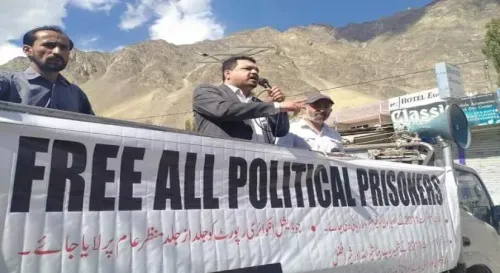
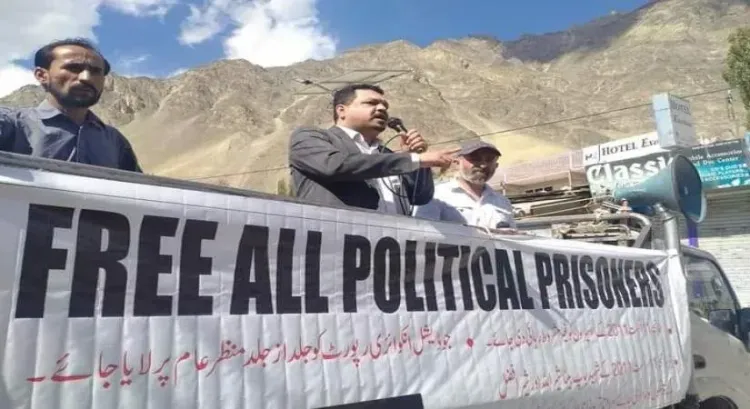
The Joint Awami Action Committee (JAAC), a grassroots protest alliance in PoK comprising traders, transporters, lawyers, and civil society representatives, has been declared a proscribed organisation under anti-terror legislation by PoK authorities. The JAAC has historically raised demands around basic rights, grievance redressal, and civil and political liberties.
A bounty of Rs 10 million has reportedly been announced for information leading to the arrest of the organisation's core members, including Shaukat Nawaz Mir, Umar Nazir Kashmiri, Khawaja Mehran Arshad, and Sardar Aman Khan. The report described this as evidence of the regime's 'desperation' and its systematic denial of civil, human, and political rights to the people of PoK.
Diaspora Protests Outside Pakistani Missions
Members of the PoK diaspora have staged demonstrations outside Pakistani embassies and consulates across multiple countries, including at forums linked to the United Nations. Protests have been particularly visible in the United Kingdom, with demonstrations reported in London and Bradford. British lawmakers have also drawn attention to the issue, reportedly urging international scrutiny of the alleged abuses.
Notably, this represents a significant reversal: Pakistan had for decades invested in and mobilised diaspora networks to challenge India's position on Kashmir internationally. That same constituency is now, according to the report, 'exposing decades of state propaganda and leaving the regime internationally isolated and domestically compromised.'
Broader Context: Military Priorities Over Economic Stability
The International Centre for Peace Studies report frames the PoK crackdown within a wider pattern of the Pakistani military's governance failures. It argues that the regime's 'counterproductive obsession' with consolidating absolute power — including prioritising inflated defence spending over an economy described as being on life support — is actively deepening Pakistan's insecurity rather than resolving it.
This comes amid Pakistan's ongoing engagement with the International Monetary Fund (IMF) for economic stabilisation, even as military expenditure continues to draw scrutiny from domestic and international observers. The report's findings are likely to add to calls for accountability at international human rights forums in the months ahead.
Point of View
And mainstream coverage often misses, is the internal contradiction at the heart of Pakistan's Kashmir policy: a state that claims moral authority over the territory while allegedly withholding the bodies of those it kills there. The banning of the JAAC — a civil society alliance of traders and lawyers — under anti-terror law signals that the regime has run out of political tools and is defaulting to coercion, a pattern that historically accelerates, not arrests, popular mobilisation.
NationPress
18 Sept 2026
Frequently Asked Questions
What is happening in Pakistan-occupied Kashmir (PoK)?
According to a report by the International Centre for Peace Studies, Pakistani authorities have launched a violent crackdown in PoK, with at least 16 people reportedly killed and 37 injured in a single incident at Rawalakot Eidgah. Civilians have also reportedly been arrested, subjected to enforced disappearances, and had their internet access cut off.
Why has the Kashmiri diaspora turned against Pakistan?
The diaspora, which Pakistan had historically mobilised to challenge India's position on Kashmir at international forums, has begun protesting outside Pakistani embassies and consulates — particularly in London and Bradford — over the reported killings, disappearances, and rights abuses in PoK. The report describes this as a reversal of decades of Pakistani investment in diaspora networks.
What is the JAAC and why has it been banned?
The Joint Awami Action Committee (JAAC) is a grassroots protest alliance in PoK comprising traders, transporters, lawyers, and civil society groups that advocates for basic rights and civil liberties. PoK authorities declared it a proscribed organisation under anti-terror legislation and reportedly announced a Rs 10 million bounty for information leading to the arrest of its leaders.
Who are the JAAC leaders named in the bounty?
The four named individuals are Shaukat Nawaz Mir, Umar Nazir Kashmiri, Khawaja Mehran Arshad, and Sardar Aman Khan, according to the International Centre for Peace Studies report.
What has the international response been to the PoK crackdown?
Members of the PoK diaspora have staged protests at Pakistani diplomatic missions in multiple countries and at UN-linked forums. In the United Kingdom, British lawmakers have reportedly raised the issue and called for international scrutiny of the alleged human rights abuses.