PoK election manipulation exposes Pakistan's flawed democratic system
Synopsis
A report by Athens-based think tank Directus, citing HRCP findings, details how PoK's disputed elections were held under security lockdown, communication blackouts, and anti-terrorism laws used against at least 157 activists. Scholar Ayesha Siddiqa's framing of Pakistan as a 'constitutional militarist' state — not merely a hybrid regime — is the sharpest analytical lens the story offers, and mainstream coverage has largely missed it.
Key Takeaways
Athens-based Directus published a report on 10 October flagging manipulation of legislative elections in Pakistan-occupied Kashmir (PoK) .
The Human Rights Commission of Pakistan (HRCP) raised concerns over lethal force used against protesters in PoK , including in hotspot Rawalakot .
At least 157 individuals — including 147 JAAC activists — were reportedly listed under Pakistan's Anti-Terrorism Act between June and August .
Independent election observers faced restrictions; communication blackouts and heavy security deployment were documented during the polls.
Ayesha Siddiqa of King's College London described Pakistan as a case of constitutional militarism , arguing civilians have no real decision-making say.
Pakistan's next general elections are reportedly scheduled for 2029 .
The manipulation of legislative elections in Pakistan-occupied Kashmir (PoK) stands as yet another symptom of Pakistan's deeply fractured democratic order, according to a report published by Athens-based think tank Directus. The report, released on 10 October, draws on findings from the Human Rights Commission of Pakistan (HRCP) and expert analysis to paint a grim picture of political rights in the disputed territory.
Elections Under a Cloud
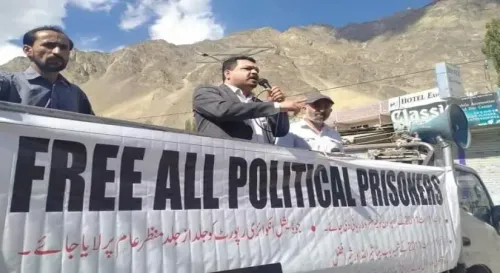
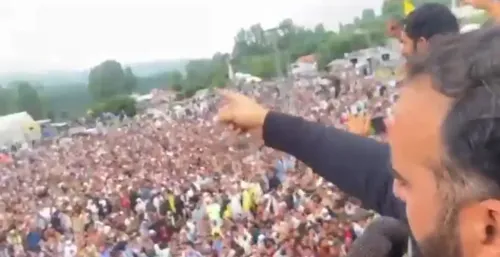
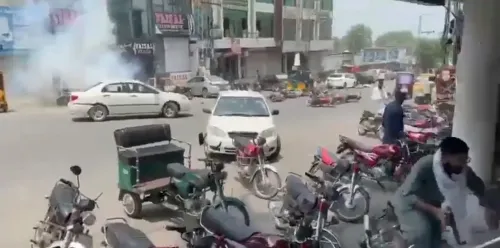
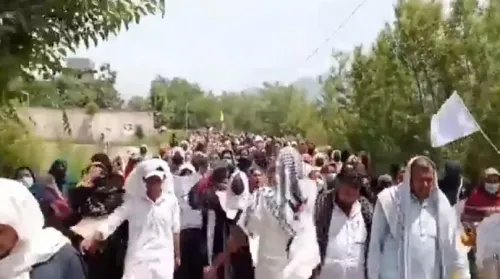
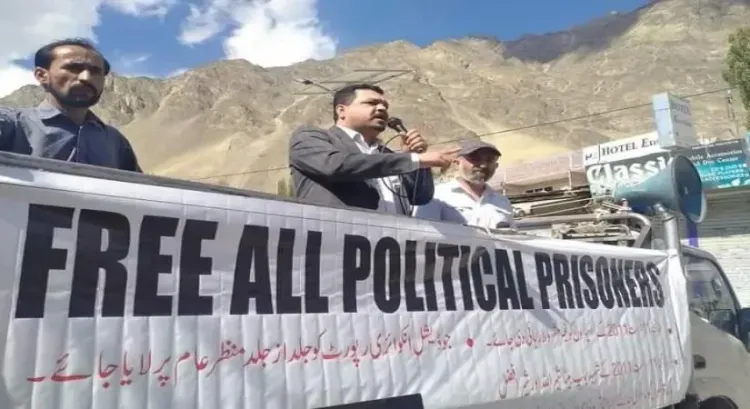
The legitimacy of the recent PoK elections has been widely questioned — with some of the sharpest criticism reportedly originating within Pakistan itself. The polls were held against the backdrop of a popular uprising fuelled by longstanding political and socio-economic grievances. According to the Directus report, the HRCP fact-finding mission raised grave concerns about the heavy deployment of security personnel, prolonged communication blackouts, and restrictions placed on independent election observers.
Notably, the HRCP mission was unable to reach Rawalakot, identified as a major hotspot of the unrest. Despite this, the mission received multiple accounts from families who alleged that protesters were killed or seriously injured by security forces — allegations the report attributed to what it described as lethal and excessive use of force.
Anti-Terrorism Laws Used Against Activists
The Directus report highlighted a particularly alarming pattern: the invocation of anti-terrorism statutes against political workers and civil society members. At least 147 Joint Awami Action Committee (JAAC) activists were initially placed on the Fourth Schedule of Pakistan's Anti-Terrorism Act. A series of notifications issued between June and August reportedly expanded that list to at least 157 individuals, including political workers, journalists, residents, and activists.
The HRCP report, as cited by Directus, questioned whether the use of force by security agencies was lawful, necessary, and proportionate. It also raised alarm over the government's resort to preventive-detention provisions against political activists, warning of a chilling effect on civic participation in the region.
Pakistan's Structural Democratic Deficit
The report situates the PoK crisis within a broader pattern of democratic erosion in Pakistan. 'Democratic erosion is a gradual process that has been ongoing in Pakistan,' Directus stated, noting that the country's democratic development has been repeatedly interrupted by military intervention. While formal military rule is considered to have ended in 2008, the report argues that it left the system structurally fractured.
Ayesha Siddiqa, a senior fellow in the Department of War Studies at King's College London and author of 'Military Inc.', described Pakistan not as a hybrid regime but as a case of constitutional militarism — a term suggesting the military's dominance has been institutionalised, not merely imposed. Speaking on a podcast titled 'Beyond the Indus', Siddiqa said: 'The legal framework which allows the system where the military has greater say, or complete control, almost complete control, has been condoned and supported by the Parliament itself. The Parliament is still there. Technically, Pakistan has elections. It is going to have the next elections in 2029. But do we have a decision-making system where civilians have a say? The answer is no.'
Authoritarianism as a Systemic Feature
The Directus report concludes that Pakistan's drift toward authoritarianism is not incidental but rooted in its long history of military intervention and control. The PoK episode, critics argue, is less an aberration than a concentrated expression of structural problems — an electoral exercise conducted under security lockdown, with civil society muzzled and independent scrutiny barred.
With Pakistan's next general elections reportedly scheduled for 2029, analysts and rights organisations will be watching whether Islamabad moves to address the systemic conditions that have repeatedly undermined free and fair electoral processes — or whether the patterns exposed in PoK continue unchecked.
Point of View
The credibility deficit runs deep. Ayesha Siddiqa's concept of 'constitutional militarism' is analytically sharper than the usual 'hybrid state' framing: it locates the problem not in a breakdown of institutions but in their deliberate design. The use of anti-terrorism statutes against over 150 political workers is not collateral damage — it is the system functioning as intended. Mainstream coverage treats PoK as a geopolitical footnote; the Directus report suggests it is a stress test that Pakistan's democratic structures are failing in plain sight.
NationPress
10 Oct 2026
Frequently Asked Questions
What were the main concerns raised about the PoK elections?
The recent PoK elections were criticised for being held amid a popular uprising, with heavy security deployment, communication blackouts, and restrictions on independent observers, according to a Directus report citing HRCP findings. The HRCP mission also questioned whether the use of force against protesters was lawful and proportionate.
How many activists were placed under Pakistan's Anti-Terrorism Act during the PoK unrest?
At least 157 individuals, including political workers, journalists, residents, and activists, were reportedly listed under Pakistan's Anti-Terrorism Act through notifications issued between June and August. Initially, at least 147 Joint Awami Action Committee (JAAC) activists were placed on the Fourth Schedule of the Act.
What triggered the unrest in PoK ahead of the elections?
The unrest in PoK was triggered by longstanding political and socio-economic grievances among the local population. The popular uprising preceded the elections and drew significant scrutiny to the legitimacy of the entire electoral process.
Who is Ayesha Siddiqa and what did she say about Pakistan's democratic system?
Ayesha Siddiqa is a senior fellow in the Department of War Studies at King's College London and the author of 'Military Inc.' She described Pakistan not as a hybrid regime but as a case of constitutional militarism, arguing that Parliament has itself condoned legal frameworks giving the military near-complete control, leaving civilians without real decision-making power.
When are Pakistan's next general elections scheduled?
Pakistan's next general elections are reportedly scheduled for 2029, according to the Directus report. Analysts and rights organisations are expected to monitor whether Islamabad addresses the structural democratic deficits highlighted by the PoK episode before that vote.