Ceuta migrant crisis: Portugal tightens borders, skips Schengen suspension
Synopsis
An estimated 60,000 migrants crossed into Spain's Ceuta enclave from Morocco in 24 hours, killing at least 57. Portugal is tightening its southern borders without suspending Schengen rules — but Italy is demanding exactly that, Spain is summoning the Italian ambassador, and France has already activated border reinforcements. Europe's migration fault lines are cracking open in real time.
Key Takeaways
Portuguese PM Luis Montenegro ruled out suspending Schengen rules with Spain but ordered reinforced controls on Portugal's southern maritime and land borders.
An estimated 60,000 migrants entered Spain's Ceuta enclave from Morocco within 24 hours ; at least 57 people died in crossing attempts.
Spain's Interior Ministry said 48,300 migrants had returned to Morocco voluntarily by 6 pm on Friday.
Spanish PM Pedro Sanchez visited Ceuta and announced floating barriers near the El Tarajal breakwater to block further sea crossings.
Italy called for a Schengen suspension with Spain; Spain rejected the demand as 'partisan demagoguery' and summoned the Italian ambassador .
France activated a rapid-response border unit and reinforced checks along its border with Spain.
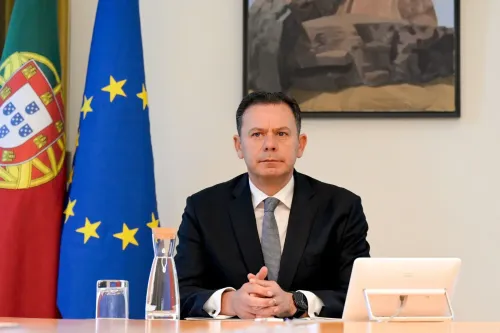
Portuguese Prime Minister Luis Montenegro on 1 August ruled out suspending Schengen free-movement rules with Spain over the deadly migrant surge into Ceuta, but ordered an immediate reinforcement of security forces along Portugal's southern maritime and land frontiers. The decision comes as an estimated 60,000 migrants crossed into Spain's North African enclave from Morocco within a 24-hour window, with at least 57 people dying in the attempt.
What Montenegro Said
'There is no reason to take any measure to suspend the rules of the Schengen area, but there are reasons to reinforce the presence of security forces at border controls closest to this event, on the maritime and land borders of southern Portugal,' Montenegro said. He described the situation as 'serious' and called for measured, realistic decisions rather than 'hysteria.'
A formal statement from the Portuguese Prime Minister's office expressed condolences for the lives lost and confirmed that Lisbon had been kept informed by Madrid since the crisis began. 'The Portuguese government reaffirms that the integrity of the Schengen system depends on rigorous border controls and a determined fight against all forms of illegal immigration,' the statement read.
Scale of the Ceuta Crisis
The crossing surge, concentrated over 48 hours, is one of the largest single influxes recorded at Ceuta. Most fatalities occurred as migrants attempted to swim around the El Tarajal border breakwater separating Morocco from the enclave, according to Spanish authorities. The death toll from sea crossings alone stood at at least 34 by Friday.
Spain's Interior Ministry reported that 48,300 migrants had returned to Morocco by 6 pm local time on Friday, many voluntarily after concluding they would be unable to remain in Spain or travel onward to the mainland. Around 50,000 migrants had entered the enclave over the two-day period, according to reports.
Spain's Response on the Ground
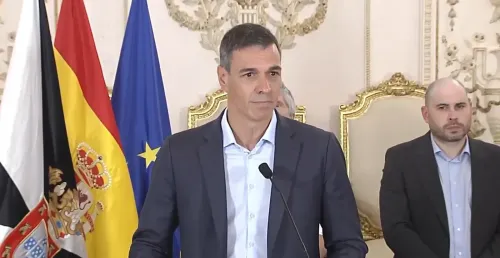
Spanish Prime Minister Pedro Sanchez described the influx as a violation of Spain's territorial integrity and travelled to Ceuta on Friday alongside Interior Minister Fernando Grande-Marlaska to assess conditions directly. Sanchez announced new border security measures, including the installation of floating barriers near the El Tarajal breakwater to prevent further sea crossings.
Portuguese security forces — including the GNR gendarmerie and the Maritime Police — are coordinating with their Spanish counterparts. Portugal said Spain has given assurances that, working closely with Moroccan authorities, it will reverse the flow of migrants that has intensified over recent weeks.
European Diplomatic Fallout
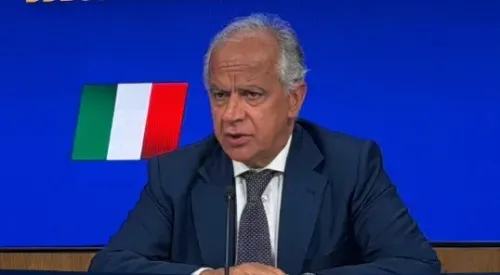
The crisis has exposed fissures within the European Union. Italian Foreign Minister Antonio Tajani called for the suspension of Schengen arrangements with Spain — a position that Spanish Foreign Minister Jose Manuel Albares rejected as 'partisan demagoguery.' Albares announced he would summon the Italian ambassador in Madrid on Friday.
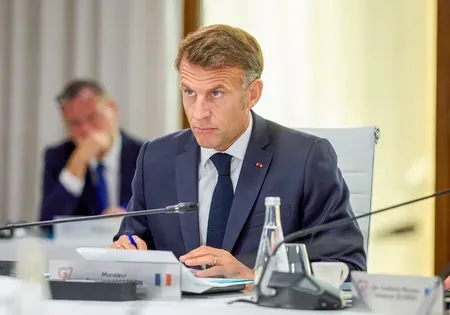
Meanwhile, France ordered the immediate reinforcement of checks along its border with Spain and activated a rapid-response border unit to conduct more extensive inspections. The diverging national responses highlight the absence of a unified EU migration framework capable of managing large-scale, sudden crossings.
What Comes Next
Portugal's approach — reinforcing controls without triggering a formal Schengen suspension — reflects a deliberate attempt to balance border security with the bloc's foundational free-movement principle. Whether Spain and Morocco can stabilise the situation and sustain the return of migrants will determine whether the crisis remains contained or forces a broader European policy reckoning.
Point of View
Preserve Schengen — is the politically sensible position, but it sidesteps the harder question: the bloc has no credible mechanism for burden-sharing when a single enclave absorbs 60,000 crossings in a day. Italy's call for a Schengen suspension is opportunistic, but it lands because there is a real vacuum where EU migration solidarity should be. Spain summoning the Italian ambassador is a diplomatic reflex; the structural problem — Morocco's leverage over Ceuta as a pressure valve — remains unaddressed. If Spain cannot demonstrate a durable reversal of flows in the coming days, the political pressure on Schengen's internal borders will only intensify.
NationPress
1 Aug 2026
Frequently Asked Questions
What is the Ceuta migrant crisis?
The Ceuta migrant crisis refers to a sudden, large-scale crossing in which an estimated 60,000 migrants entered Spain's North African enclave of Ceuta from Morocco within approximately 24 hours, with at least 57 people dying in the attempt. The influx is one of the largest single-day crossings ever recorded at Ceuta and has triggered diplomatic tensions across Europe.
Why is Portugal reinforcing its borders if it is not suspending Schengen rules?
Portuguese PM Luis Montenegro said the scale and proximity of the crisis warranted a precautionary reinforcement of security forces along Portugal's southern maritime and land frontiers, even though he saw no grounds to formally suspend Schengen free-movement rules with Spain. The move is intended to prevent onward movement of migrants who may attempt to transit through Portugal.
How many migrants have died crossing into Ceuta?
At least 57 people have died in attempts to cross into Ceuta, according to reports. Of these, at least 34 deaths were recorded from sea crossings, with most victims drowning while attempting to swim around the El Tarajal border breakwater separating Morocco from the enclave.
What measures has Spain announced in response to the crisis?
Spanish PM Pedro Sanchez visited Ceuta on Friday alongside Interior Minister Fernando Grande-Marlaska and announced the installation of floating barriers near the El Tarajal breakwater to prevent further sea crossings. Spain is also coordinating with Moroccan authorities to reverse the flow of migrants, and 48,300 people had already returned to Morocco by Friday evening.
Why did Spain summon the Italian ambassador?
Spain summoned the Italian ambassador after Italian Foreign Minister Antonio Tajani called for the suspension of Schengen arrangements with Spain in response to the Ceuta crisis. Spanish Foreign Minister Jose Manuel Albares rejected Tajani's remarks as 'partisan demagoguery,' prompting the diplomatic summons.