Quad business forum set for early 2027, Rubio confirms after Manila summit
Synopsis
The Quad has moved decisively from security signalling to commercial dealmaking. After the Manila summit, Rubio confirmed a business forum for early 2027 — but Trump's insistence that AI work and data centres stay in the US injects a US-first tension that could complicate the multilateral framing India, Japan, and Australia have long favoured.
Key Takeaways
US Secretary of State Marco Rubio confirmed a Quad business forum will be held in early 2027 , bringing together top companies from India , the US , Japan , and Australia .
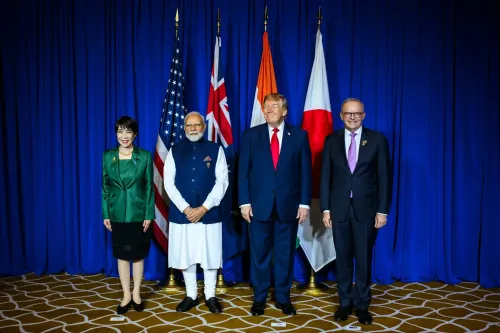
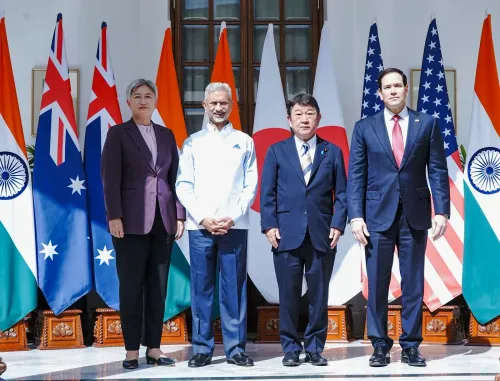
The forum follows the Quad leaders' summit in Manila on 21 November 2026 , attended by PM Narendra Modi , President Donald Trump , and the leaders of Japan and Australia.
Trump announced a joint advanced AI initiative but said he wanted most AI work and data centre development to remain in the United States , threatening a 'substantial tax' on US firms building data centres abroad.
Trump's Asia trip secured more than $17 billion in commercial deals, including 20 Boeing 787 Dreamliners for Philippine Airlines .
The Manila summit expanded the Quad's agenda to include maritime security , cyber security , and protection of undersea cables .
The Quad has evolved from post-tsunami humanitarian cooperation in 2004 to a fully-fledged economic and security grouping, with its first leaders' summit held in March 2021 .
US Secretary of State Marco Rubio confirmed on 21 November 2026 that leading companies from India, the United States, Japan, and Australia will convene early next year to explore commercial agreements, following a Quad leaders' summit held in Manila on Tuesday. The announcement signals a deliberate push by the Trump administration to convert the Quad's strategic alignment into tangible economic outcomes.
What Rubio Said at the White House
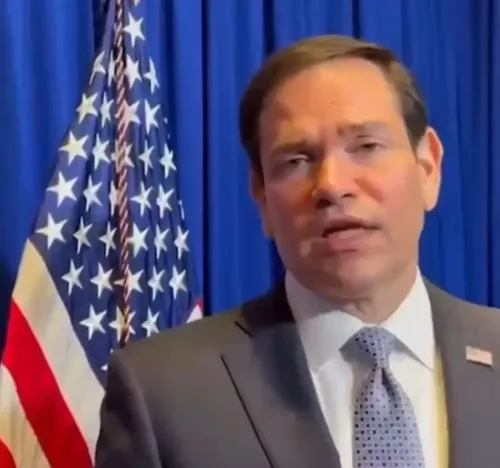
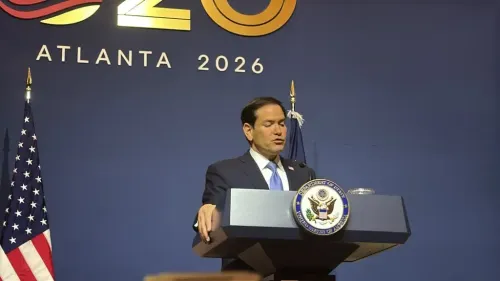
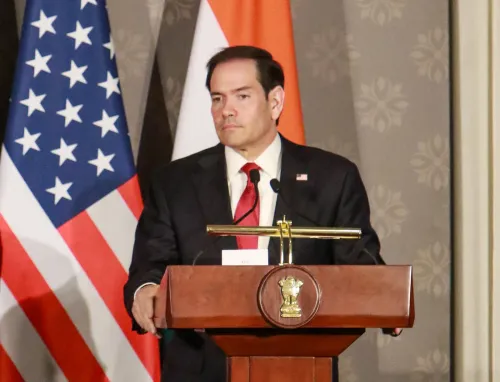
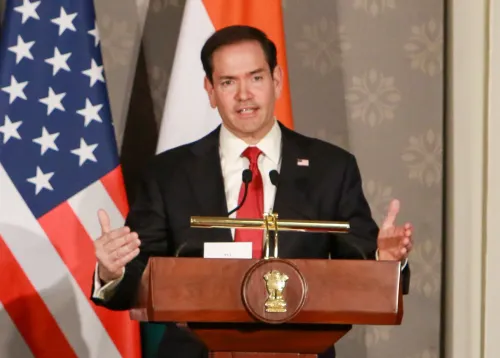
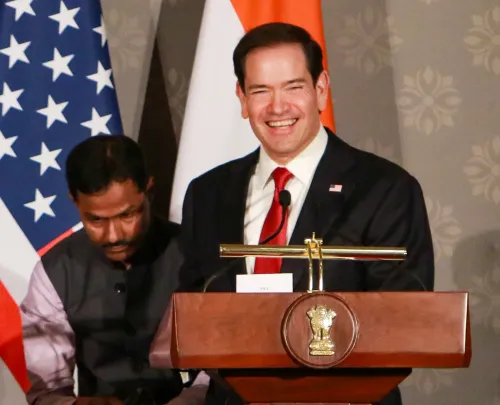
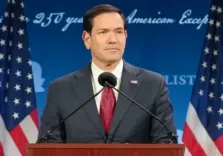
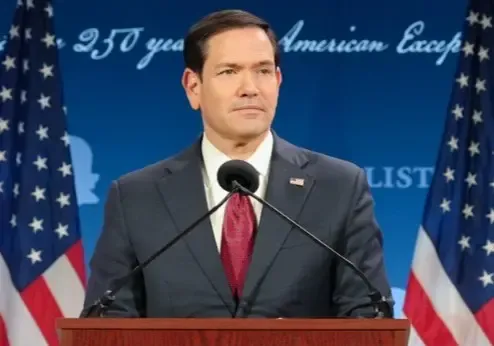
Speaking at a White House news conference after President Donald Trump returned from Asia, Rubio said 'the top businesses in these four countries are going to meet early next year.' He did not name the companies expected to attend, nor did he specify a date or venue. Rubio placed the forum explicitly under Trump's sponsorship, saying the four economies together could 'create jobs and markets for American products' — framing the initiative as much about domestic US gains as regional partnership.
Rubio described commercial agreements as the outcome he hoped the meeting would produce. He also pointed to the Philippines as a template for the commercial results Washington sought from its Asia diplomacy, arguing that the US defence commitment to Manila should be reflected in the bilateral trading relationship.
AI, Data Centres and Trump's US-First Qualification
At the Manila summit, the four Quad leaders launched an initiative to develop advanced artificial intelligence. Trump, however, attached a significant caveat: while the four countries shared common interests in AI, he said he wanted most of the work to take place in the United States. He made that preference explicit on data centres, warning that US companies building them abroad could face a 'substantial tax', though he did not specify a rate or timeline. Trump also urged American communities to negotiate directly with developers over electricity supplies and payments to residents.
Manila Deals and Southeast Asia Outcomes
Beyond the Quad, Trump said his meetings with Southeast Asian leaders secured more than $17 billion in commercial deals. Among the purchases cited were 20 Boeing 787 Dreamliners with General Electric engines for Philippine Airlines. The Philippines and Malaysia also agreed to use American technology and services for their cloud infrastructure. Rubio said Trump had personally negotiated a framework for reciprocal trade with Philippine President Ferdinand Marcos.
Quad's Expanded Security Agenda
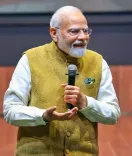
The Manila summit also extended the Quad's security cooperation, with the four leaders agreeing to deepen collaboration on maritime security, surveillance, cyber security, and the protection of undersea cables. No contracts in those areas were announced at the Washington briefing. Prime Minister Narendra Modi joined Trump and the leaders of Japan and Australia at the summit, where the four countries agreed to work more closely on economic security and supply chains.
Background: Quad's Evolution from Tsunami Relief to Economic Bloc
The Quad grew out of humanitarian cooperation among India, the US, Japan, and Australia following the Indian Ocean tsunami of December 2004. Its first leaders' summit took place by video in March 2021, followed by an in-person meeting in Washington later that year. Supply chains featured on the agenda from the outset — the four countries launched an initiative to map semiconductor supply chain capacity and identify vulnerabilities. Subsequent summits broadened the economic agenda to include clean energy supply chains and digital infrastructure across the Indo-Pacific. The 2026 Manila summit, and the forthcoming business forum, represent the most commercially explicit iteration of that agenda yet.
All eyes will now turn to the early-2027 business forum, where the depth of the Quad's commercial ambitions — and the balance between US-first conditions and genuinely multilateral deals — will face its first real test.
Point of View
Japan, and Australia joined a multilateral technology initiative; Trump simultaneously told American companies that building abroad could cost them. That contradiction will define the forum's early-2027 negotiations. Meanwhile, the \$17 billion in Southeast Asia deals and the Manila trade framework with the Philippines suggest the Trump administration is using security commitments as leverage for market access — a transactional model that will test India's comfort with the alliance's direction.
NationPress
21 Nov 2026
Frequently Asked Questions
What is the Quad business forum announced for early 2027?
It is a commercial meeting of top companies from India, the US, Japan, and Australia, confirmed by US Secretary of State Marco Rubio after the Quad leaders' summit in Manila on 21 November 2026. The forum is intended to produce commercial agreements and is described as being under President Trump's sponsorship.
What was decided at the Quad summit in Manila on 21 November 2026?
The four Quad leaders — from India, the US, Japan, and Australia — agreed to deepen cooperation on economic security, supply chains, maritime security, surveillance, cyber security, and protection of undersea cables. They also launched a joint advanced AI initiative, though Trump said he wanted most AI work to remain in the United States.
Why did Trump warn of a tax on US companies building data centres abroad?
Trump said US companies that built data centres outside the United States could face a substantial tax, reflecting his preference for keeping advanced technology investment and jobs on American soil. He did not specify the tax rate or when it might take effect.
How much in commercial deals did Trump secure during his Asia trip?
Trump said his meetings with Southeast Asian leaders secured more than $17 billion in commercial deals, including 20 Boeing 787 Dreamliners with General Electric engines for Philippine Airlines, and cloud infrastructure agreements with the Philippines and Malaysia.
What is the history of the Quad?
The Quad grew out of cooperation among India, the US, Japan, and Australia following the Indian Ocean tsunami of December 2004. Their first leaders' summit was held by video in March 2021, followed by an in-person Washington summit later that year. Subsequent meetings expanded the agenda from semiconductor supply chains to clean energy and digital infrastructure across the Indo-Pacific.