Quad shifting to concrete actions, leaders to meet in Manila: Rubio
Synopsis
At the G20 Foreign Ministers’ Meeting in Atlanta, US Secretary of State Rubio declared the Quad is done just talking — it’s time to deliver. With a leaders’ summit set for Manila in November and new focus on disaster relief, maritime surveillance, and a business forum, the Quad is making its most operationally ambitious push yet — and India’s role, including on Black Sea shipping, is front and centre.
Key Takeaways
US Secretary of State Marco Rubio said the Quad is shifting from discussions to ‘concrete actions’ at the G20 Foreign Ministers’ Meeting in Atlanta on 31 October 2026 .
A Quad leaders’ summit is expected to be held in Manila in November 2026 .
Priority areas include infrastructure , humanitarian and disaster relief , and maritime domain awareness , including undersea monitoring.
Rubio described the Quad as ‘not anti-China,’ but acknowledged behaviours ‘coming repeatedly from one country’ are ‘obvious to everybody.’ India was noted for its proactive engagement on Black Sea shipping, with Rubio crediting New Delhi with floating ideas to protect global food and energy security.
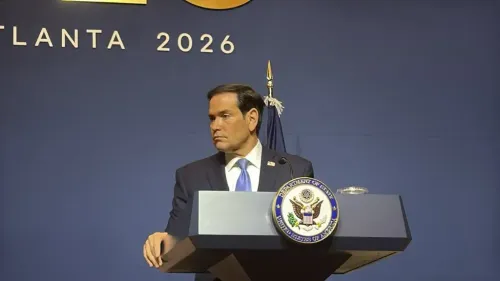
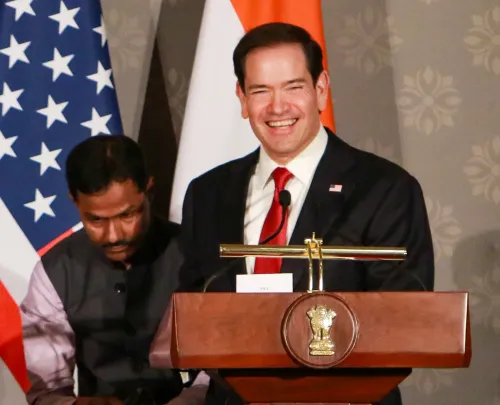
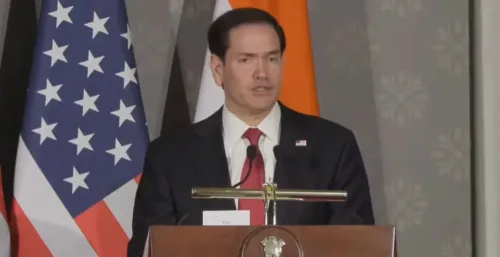
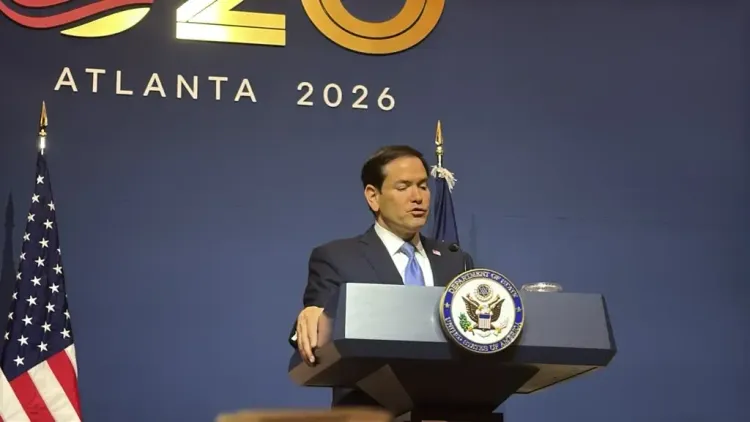
US Secretary of State Marco Rubio declared on Saturday that the Quad was moving decisively from discussions to “concrete actions,” adding that a Quad leaders’ summit was expected in Manila in November. Rubio made the remarks at the closing press conference of the G20 Foreign Ministers’ Meeting in Atlanta, underscoring renewed urgency within the four-nation grouping.
From Talks to Delivery
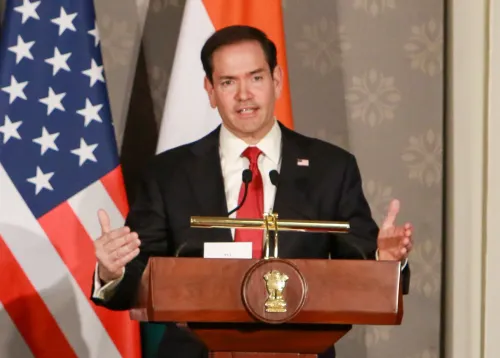
Rubio was candid about the structural challenge facing any multilateral format. “So, you know, the challenge in any time you put together a format like Quad is you can sit, and you can meet, and you can say, ‘We have all these things we wanna work together on, you actually have to do it.’ So in many cases, it’s going from talking about it to doing it,” he said.
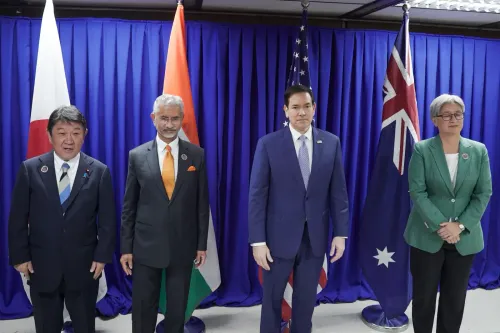
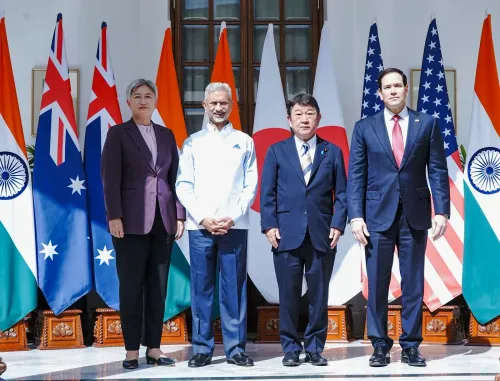
He noted that the Quad grouping — comprising the United States, India, Japan, and Australia — had already met “four or five times” in the current year alone, signalling sustained engagement at the ministerial level ahead of the anticipated leaders’ summit.
Key Areas of Focus
Rubio highlighted several domains where the Quad was building operational momentum. On infrastructure, he said the four nations had achieved “some success in infrastructure projects” and were working to establish a business forum so that companies from all four countries could “identify unique opportunities to work together.”
Humanitarian assistance and disaster relief was cited as an area of “substantial progress.” Rubio articulated the ambition: “We wanna be in a situation where the next time there is a humanitarian and/or crisis or natural disaster in the region, that we can pull our resources to quickly provide assistance to a country that’s been hurt by a typhoon or an earthquake or a mudslide or whatever it might be.”
Maritime domain awareness was flagged as another priority. “Maritime awareness is another area where I think we can pull our resources to better understand not just what’s happening at the surface, but also under the water,” Rubio said — a pointed reference to submarine activity in the Indo-Pacific.
Manila Summit and Concrete Steps
Rubio expressed confidence that the upcoming leaders’ meeting would produce tangible deliverables. “I think we’re building really good momentum and I think hopefully when our leaders meet, in November, they will be able to announce some more concrete steps,” he said. “The best way to make a forum useful and important is to make sure that it does something, not just talks about it, but does it.”
The Manila venue for the Quad leaders’ meeting is notable: the Philippines is itself a close US security partner with active maritime disputes in the South China Sea, lending the location geopolitical symbolism beyond the agenda.
On China and the Quad’s Identity
Asked directly whether the Quad’s joint statement was aimed at China, Rubio was measured but unambiguous. “The Quad is not an anti-anybody. It’s not a format that exists to be against any country,” he said. He added, however: “Now, those activities or behaviours are coming repeatedly from one country; that’s gonna be obvious to everybody, but it is not an anti-China or anti-anybody coalition.”
This framing — denying an anti-China label while implicitly acknowledging Chinese behaviour as the shared concern — reflects a deliberate diplomatic posture the Quad has maintained since its revival in 2017.
India’s Role: Black Sea and Beyond
Rubio also spotlighted India’s constructive engagement on Black Sea shipping, an issue intersecting food and energy security amid the ongoing conflict in Ukraine. “Obviously you saw a lot of countries speak up and provide the willingness to both Turkey and India have come to the table with some ideas about how we need to bring shipments moving because this is threatening the world of food security and some energy security as well,” he said. He added that “India also expressed an interest in perhaps floating some ideas” — a signal that New Delhi’s role as a mediating voice on the conflict is being acknowledged in Washington.
As the Quad gears up for its Manila summit in November 2026, attention will turn to whether the concrete deliverables Rubio promised — particularly on disaster relief architecture and maritime surveillance-sharing — can be formally announced at the leaders’ level.
Point of View
Regardless of the ‘not anti-China’ framing. India’s simultaneous recognition on Black Sea shipping suggests New Delhi is successfully leveraging its strategic ambiguity — staying inside the Quad while engaging Russia-adjacent diplomacy. The real test at Manila will be whether the disaster relief and maritime surveillance frameworks produce binding commitments or remain aspirational frameworks, as past Quad deliverables have often done.
NationPress
1 Nov 2026
Frequently Asked Questions
What did Marco Rubio say about the Quad at the G20 meeting in Atlanta?
US Secretary of State Marco Rubio said the Quad was shifting from meetings to concrete actions, citing progress in infrastructure, disaster relief, and maritime domain awareness. He made the remarks at the closing press conference of the G20 Foreign Ministers’ Meeting in Atlanta on 31 October 2026.
Where and when is the next Quad leaders’ summit?
Rubio indicated the Quad leaders’ meeting is expected to be held in Manila in November 2026. He said the leaders would be able to ‘announce some more concrete steps’ at that summit.
Is the Quad directed against China?
Rubio explicitly stated the Quad is ‘not an anti-anybody’ coalition, denying it is an anti-China format. However, he acknowledged that certain activities and behaviours were ‘coming repeatedly from one country,’ which he said would be ‘obvious to everybody.’
What role is India playing in the Quad and on Black Sea shipping?
India is a core Quad member and was specifically recognised by Rubio for engaging on Black Sea shipping lanes, an issue tied to global food and energy security. Rubio noted that India had ‘expressed an interest in perhaps floating some ideas’ to keep shipments moving.
What are the Quad’s main areas of cooperation going forward?
According to Rubio, the Quad’s priority areas include infrastructure projects, a proposed business forum for companies from all four nations, humanitarian and disaster relief coordination, and maritime domain awareness — including undersea monitoring in the Indo-Pacific.