Ramaswamy Slams Uneven COVID Rules: Fairs Shut, Riots Allowed
Synopsis
Vivek Ramaswamy on July 15, 2026, accused an unnamed Democratic official of closing outdoor county fairs while allowing BLM protests during the 2020 COVID pandemic, renewing Republican arguments about uneven enforcement of public-health mandates and signalling continued pressure for emergency-powers reform.
Key Takeaways
Ramaswamy posted on July 15, 2026 accusing an unidentified official of shutting county fairs while permitting BLM protests in 2020 .
The post revives a longstanding Republican argument that COVID-19 restrictions were applied unevenly by Democratic officials.
Between March and June 2020 , multiple Democratic governors issued executive orders limiting outdoor gatherings, even as large street protests proceeded.
The identity of the female official referenced as 'she' in the post has not been specified by Ramaswamy.
Several U.S. state legislatures are currently reviewing emergency-powers statutes ahead of the 2027 fair season.
Ramaswamy continues to use his post-DOGE platform to challenge institutional credibility on public-health governance.
Entrepreneur and former 2024 Republican presidential candidate Vivek Ramaswamy fired a sharp broadside on Wednesday, July 15, 2026, accusing an unnamed Democratic official of shutting down outdoor county fairs during the COVID-19 pandemic while permitting Black Lives Matter protests to proceed unchecked — all under the banner of 'following the science.'
Context
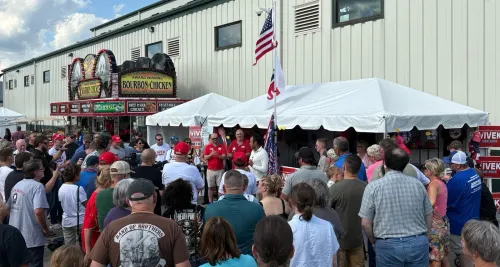
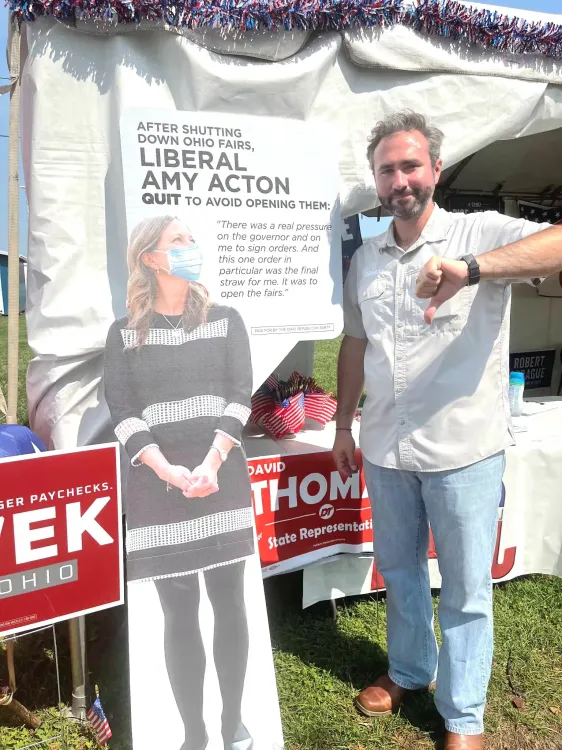
Ramaswamy's post reads: 'She closed outdoor county fairs, while allowing BLM riots to run rampant on the streets, all in the name of following the science. Never again.' The remark targets a female official — whose identity is not specified in the post — and revisits decisions made during the summer of 2020, when the pandemic prompted sweeping restrictions on public gatherings across the United States.
The criticism centres on what Ramaswamy and other Republicans have long characterised as a double standard: traditional community events such as county fairs were shuttered under executive health orders, while large street protests were allowed to proceed with little enforcement. The phrase 'Never again' signals an intent to prevent similar policy asymmetry in the future.
Policy Backdrop
Between March and June 2020, several Democratic governors and mayors issued executive orders limiting outdoor gatherings and commercial events. At the same time, mass protests erupted nationwide following the death of George Floyd, and public-health officials in some jurisdictions issued statements that critics argued downplayed enforcement risks at those gatherings.
That perceived inconsistency became a durable talking point for Republican legislators and commentators, used to challenge the credibility of public-health institutions and to argue for stricter limits on executive emergency powers. Ramaswamy has consistently woven this narrative into his broader push for government accountability — first during his 2024 presidential run and later as co-lead of the Department of Government Efficiency (DOGE) advisory effort.
Stakeholders and Impact
County fair operators, agricultural exhibitors, and rural community organisers were among the hardest-hit groups during the 2020 restriction period, losing revenue and community engagement at events that are often central to local economies. Public-health officials, on the other hand, maintain that outdoor protests — largely masked and mobile — carried different transmission dynamics than stationary fair gatherings.
Black Lives Matter, the decentralised movement that organised the 2020 protests, has consistently rejected the characterisation of those demonstrations as 'riots,' arguing that the vast majority were peaceful. The framing of BLM events as riots versus protests remains a contested political and legal question in the United States.
What's Next
Several U.S. state legislatures are currently reviewing emergency-powers statutes to curtail executive authority during future public-health crises — a legislative trend that Ramaswamy's post is likely to amplify. Ahead of the 2027 fair season, county-level permitting debates are also expected to resurface, with some jurisdictions considering explicit protections against health-order closures for outdoor events.
Ramaswamy's continued public commentary from his platform at Strive Asset Management and his post-DOGE profile suggests he intends to keep institutional accountability — particularly around pandemic-era governance — at the centre of Republican policy discourse heading into the next electoral cycle.
Point of View
Targeting institutional trust in public-health authorities at a moment when emergency-powers legislation is actively moving through state capitols. By invoking an unnamed 'she,' the post invites audiences to project the accusation onto multiple Democratic figures, broadening its rhetorical reach without requiring specific factual accountability. This fits a broader Republican pattern of using 2020 COVID-restriction asymmetries to build the case for deregulation and curtailed executive emergency powers. The 'Never again' close signals that this is not retrospective commentary but forward-looking policy positioning ahead of the next electoral cycle.
NationPress
13 Oct 2026
Frequently Asked Questions
What did Vivek Ramaswamy post about COVID restrictions and BLM protests?
On July 15, 2026, Ramaswamy posted that an unnamed female official closed outdoor county fairs while allowing BLM protests to 'run rampant' during the COVID-19 pandemic, calling it a misuse of 'following the science.'
Who is the official Ramaswamy is referring to in his post?
Ramaswamy did not name the official in his post. The identity of the female official he references has not been publicly specified.
Were county fairs actually closed during COVID-19 in the United States?
Yes. Between March and June 2020, multiple U.S. governors and mayors issued executive orders restricting outdoor gatherings, which led to the cancellation of numerous county fairs and community events.
What is Vivek Ramaswamy's current role?
Ramaswamy is the founder and executive chairman of Strive Asset Management. He previously served as co-lead of the Department of Government Efficiency (DOGE) advisory effort and ran for the Republican presidential nomination in 2024.
What policy changes could follow from Ramaswamy's criticism of pandemic rules?
Several U.S. state legislatures are currently reviewing emergency-powers statutes to limit executive authority during future health crises, a trend that commentary like Ramaswamy's is expected to accelerate ahead of the 2027 fair season.