Ramaswamy Links Affordability Relief to High-Paying Jobs
Synopsis
Vivek Ramaswamy on July 16, 2026, called bringing high-paying jobs to his state the key to affordability relief, urging voters to choose candidates on that basis ahead of November elections. The post signals his continued influence in Republican economic messaging at the state level.
Key Takeaways
Ramaswamy posted on July 16, 2026 , linking high-paying job creation directly to affordability relief for households.
He urged voters to evaluate candidates on economic competitiveness and 'vote accordingly in November.' Ramaswamy is founder of Strive Asset Management and former co-lead of the DOGE advisory effort.
The post aligns with supply-side economic thinking that prioritises wage growth over direct subsidies as a cost-of-living tool.
The message is widely seen in the context of November 2026 state-level elections, potentially including a gubernatorial contest in Ohio .
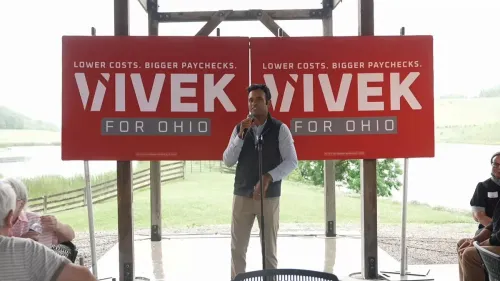
Entrepreneur and former DOGE co-lead Vivek Ramaswamy on Thursday, July 16, 2026, urged voters in his state to evaluate candidates on their ability to attract high-paying jobs, framing economic opportunity as the primary lever for delivering affordability relief ahead of a November election.
Context
Ramaswamy posted on X: 'A key to delivering affordability relief is to bring high-paying jobs to our state. Ask yourself which candidate is going to do that and vote accordingly in November.' The message is a direct appeal to voters to apply an economic-competitiveness lens when choosing between candidates on the ballot this autumn.
Ramaswamy is the founder and executive chairman of Strive Asset Management, a firm that advocates for returns-focused investing. He ran for the 2024 Republican presidential nomination before exiting the race and later served as co-lead of the Department of Government Efficiency (DOGE) advisory effort under the incoming Trump administration.
Policy Backdrop
Affordability — encompassing housing costs, grocery prices, and energy bills — has been a defining concern for American households since the post-pandemic inflation surge of 2021-2023. While federal monetary tightening has cooled headline inflation, many working families continue to feel squeezed, and state-level economic policy has gained renewed attention as a complementary tool.
The argument that job creation, particularly in high-wage sectors such as manufacturing, technology, and energy, can structurally improve household purchasing power is a recurring theme in supply-side economic thinking. Ramaswamy's framing aligns with that tradition, placing workforce earnings at the centre of cost-of-living relief rather than direct subsidies or price controls.
Stakeholders and Impact
The post is addressed to voters in an unspecified state, suggesting Ramaswamy is either commenting on a race in Ohio — where he has deep political ties and has been widely reported to be weighing a gubernatorial bid — or speaking broadly about competitive state-level contests in November 2026. State governors and legislatures hold significant influence over business climate through tax policy, regulatory frameworks, and workforce development programmes.
For ordinary voters, the implicit choice Ramaswamy presents is between candidates who prioritise business attraction and job creation versus those who favour other mechanisms of economic relief. The framing is deliberately candidate-agnostic in language while carrying a clear ideological signal toward pro-growth, low-regulation economic platforms.
What's Next
With November 2026 midterm and state elections approaching, economic messaging around jobs and cost of living is expected to intensify across the political spectrum. Ramaswamy's continued public commentary positions him as an influential voice in shaping the Republican economic argument at the state level, and any formal candidacy announcement would significantly raise the stakes of posts like this one.
Point of View
He is staking out a distinct lane within the Republican economic debate ahead of 2026. The timing and state-specific language reinforce speculation about a formal political candidacy, making this social-media post function simultaneously as policy commentary and pre-campaign signalling. If he does enter a race, this framing is likely to define his core economic argument.
NationPress
16 Jul 2026
Frequently Asked Questions
What did Vivek Ramaswamy say about affordability on July 16 2026?
Ramaswamy posted on X that bringing high-paying jobs to his state is a key to delivering affordability relief, and asked voters to consider which candidate would accomplish that when voting in November.
Is Vivek Ramaswamy running for office in 2026?
Ramaswamy has not made a formal candidacy announcement as of his July 16, 2026 post, but his state-specific economic messaging has fuelled widespread speculation about a potential gubernatorial run, particularly in Ohio.
What is Vivek Ramaswamy's connection to DOGE?
Ramaswamy served as co-lead of the Department of Government Efficiency advisory effort alongside Elon Musk following the 2024 US presidential election, before stepping away from that role.
How does job creation help with affordability?
Higher-paying jobs increase household incomes, which improves purchasing power without requiring direct government subsidies or price interventions — a supply-side argument Ramaswamy's post reflects.
What elections are happening in November 2026 in the United States?
The November 2026 cycle includes US midterm congressional elections as well as several gubernatorial and state legislative races, including contests in Ohio, where Ramaswamy has been politically active.