Ramaswamy Vows to Champion Economic Mobility in Ohio
Synopsis
Entrepreneur Vivek Ramaswamy on June 26 pledged to make the 'American Dream' real in Ohio by incentivising upward economic mobility and wage growth, extending his 2024 presidential platform themes to state-level policy advocacy.
Key Takeaways
Vivek Ramaswamy posted on June 26, 2026 vowing to pursue pro-mobility economic policies in Ohio .
He called for incentivising upward economic mobility and wage growth rather than penalising them.
The message extends themes from his 2024 Republican presidential campaign to the state level.
Ramaswamy is founder of Strive Asset Management and former co-lead of the DOGE advisory effort.
Specific legislative proposals — such as tax credits or regulatory rollbacks — have not yet been announced.
Ohio workers and businesses are the primary stakeholders in any forthcoming policy push.
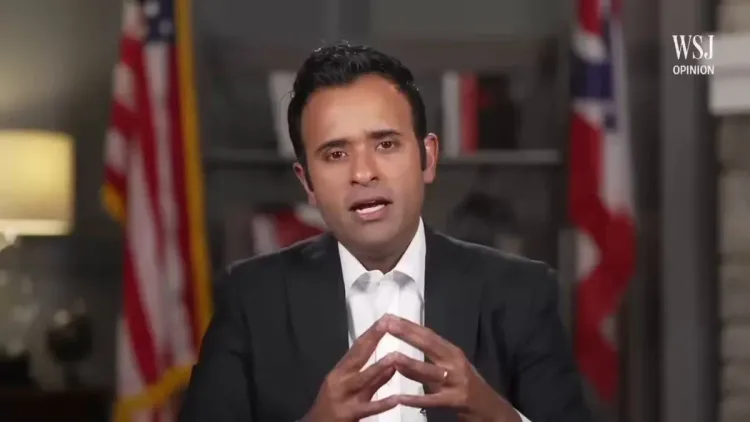
Entrepreneur Vivek Ramaswamy took to X on Thursday, June 26, 2026, pledging to make the 'American Dream' a tangible reality in Ohio by prioritising policies that incentivise upward economic mobility and wage growth over measures that penalise them.
Context
In his post, Ramaswamy wrote: 'We're going to turn the American Dream into an American Reality in Ohio. That starts with incentivizing upward economic mobility and wage growth, rather than penalizing it.' The statement signals a continued focus on Ohio as a proving ground for pro-growth, supply-side economic thinking that defined much of his 2024 presidential campaign platform.
Ramaswamy, who founded Strive Asset Management and previously served as co-lead of the Department of Government Efficiency (DOGE) advisory effort, has consistently argued that tax and regulatory structures should reward workers who climb the income ladder rather than redistribute wealth downward through entitlement expansion.
Policy Backdrop
The broader ideological lineage of this message runs through Republican supply-side economics: lower marginal tax rates, deregulation, and workforce incentives designed to make upward mobility financially rewarding rather than punitive. Ramaswamy's 2024 presidential platform repeatedly called for federal reforms along these lines, and the post suggests he is now channelling that agenda toward the state level in Ohio.
This approach also echoes the philosophy behind DOGE, which sought to reduce federal bureaucratic overhead and regulatory drag — costs that critics argue fall disproportionately on small businesses and working-class households. Post-DOGE, several Republican-aligned figures have pivoted to state-level efficiency and growth campaigns, and Ramaswamy appears to be following that pattern in his home state.
Strive Asset Management, the firm Ramaswamy founded, operates on a shareholder-primacy model explicitly opposed to ESG (Environmental, Social, and Governance) investing frameworks, reflecting his broader preference for market-driven solutions over government-mandated equity programmes.
Stakeholders and Impact
Ohio workers and businesses stand as the primary audiences for this message. For working-class Ohioans, the promise of policies that reward wage growth — rather than clawing back benefits as incomes rise — addresses a well-documented critique of means-tested welfare programmes, which can create effective marginal tax rates that discourage earning more.
For Ohio businesses, particularly small and mid-sized enterprises, the framing suggests potential advocacy for lower regulatory burdens and tax incentives tied to job creation or wage increases. If translated into concrete legislation, such proposals could shape hiring decisions, investment flows, and workforce training priorities across the state.
What's Next
Political observers will watch for follow-up announcements from Ramaswamy detailing specific proposals — whether tax credits, workforce training initiatives, or regulatory rollback efforts tied to measurable mobility metrics in Ohio. His continued public positioning on state economic policy keeps him visible in Republican circles ahead of any future electoral or policy role.
The post, accompanied by a video, suggests this may be part of a broader communications push. Whether it translates into formal legislative advocacy or a new campaign infrastructure in Ohio remains to be seen.
Point of View
He is tapping into a durable Republican critique of means-tested welfare programmes and progressive tax structures. The post keeps him relevant in GOP policy circles without committing to a specific office or timeline. If backed by concrete proposals, it could position him as a significant voice in Ohio's next legislative cycle.
NationPress
26 Jun 2026
Frequently Asked Questions
What did Vivek Ramaswamy say about Ohio's economy?
Ramaswamy said he intends to turn the 'American Dream into an American Reality in Ohio' by incentivising upward economic mobility and wage growth rather than penalising them, in a post on June 26, 2026.
Is Vivek Ramaswamy running for office in Ohio?
As of his June 26, 2026 post, Ramaswamy has not announced a candidacy for any Ohio office; the post focuses on economic policy advocacy without specifying an electoral intent.
What is Vivek Ramaswamy's connection to Ohio?
Ramaswamy was born in Cincinnati, Ohio, and has consistently highlighted Ohio as the focus of his post-campaign economic messaging on mobility and growth.
What does incentivising economic mobility mean in policy terms?
It typically refers to reforms such as lower marginal tax rates, reduced benefit clawbacks for rising earners, and deregulation measures that make it financially rewarding to earn more — a contrast to means-tested programmes that can effectively penalise income growth.
What is DOGE and what was Ramaswamy's role?
The Department of Government Efficiency was a federal advisory initiative aimed at reducing bureaucracy and regulatory burdens; Ramaswamy served as its co-lead alongside Elon Musk before departing to focus on other pursuits.