Could ISI's Multi-Front Escalation Lead to Increased Pak-Supported Terror Activity?

Synopsis
Indian intelligence warns of a potential surge in Pakistan-backed terror activities, as the ISI orchestrates multiple operations. With plans to unify terror factions and escalate cyber attacks, the security landscape is shifting. This article delves into the implications of these developments for India’s national security.
Key Takeaways
Multiple terror operations are being planned by the ISI.
Collaboration between Jaish-e-Mohammed and Lashkar-e-Taiba is expected.
Focus on Jammu and Kashmir and pan-India attacks.
Heightened cyber attack capabilities are a concern.
Potential for increased communal violence across India.
New Delhi, Dec 9 (NationPress) Indian intelligence agencies have raised alarms that terror-related activities originating from Pakistan may see a significant increase in the near future. According to an official from the Intelligence Bureau, there isn't just a single operation that the ISI is orchestrating, but multiple initiatives.
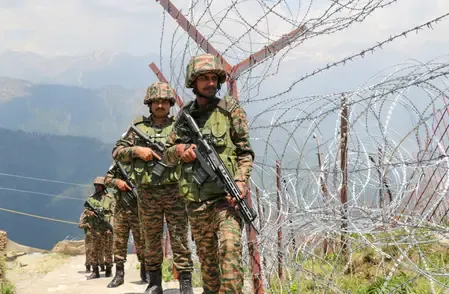
The objective is to keep Indian security agencies preoccupied, both on the ground and in the digital realm, the official stated, emphasizing the need for a robust security framework capable of handling challenges on multiple fronts.
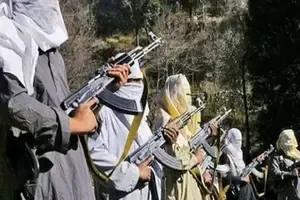
In the wake of Operation Sindoor, the ISI has directed terror factions such as Lashkar-e-Taiba and Jaish-e-Mohammed to collaborate as a unified entity. While they will operate under their own names, the nature of their operations will largely align. Officials indicate that numerous attacks are being orchestrated wherein operatives from both groups will function cohesively, the official added.
While the primary focus remains on Jammu and Kashmir, the ISI has also ordered these terror factions to mobilize their networks throughout India, aiming for nationwide attacks. Additionally, there has been a notable increase in ISI units responsible for executing cyber attacks against India. This escalation means that Indian agencies will need to contend with issues like honey traps, online fraud, and extensive digital propaganda.
The disinformation campaign is also expected to intensify, presenting another significant challenge for security officials. Reports suggest attempts are underway to activate Jaish-e-Mohammed modules across various states, particularly targeting regions like Uttar Pradesh and Maharashtra.
Indian agencies have highlighted a potential Jaish-e-Mohammed plot in Nagpur, urging local law enforcement to maintain an elevated state of vigilance. Both Uttar Pradesh and Maharashtra are under scrutiny as Jaish-e-Mohammed seeks to target religious sites. This has resulted in heightened alertness at these locations, with the intent to foster fear and provoke communal strife across the nation.
Despite Pakistan's army chief Asim Munir making provocative remarks, he knows that his country cannot compete militarily with India's armed forces. Nevertheless, he continues to make such statements to uplift the morale of his troops. Although open conflict is unlikely, the army and ISI are engineering terrorist incidents within India.
The ultimate goal is to destabilize the country. The ISI aims for widespread communal violence, which not only disrupts societal stability but also serves as a recruitment mechanism. This pattern has been observed in the past, where recruiters have capitalized on the chaos following communal riots.
Recently, leaders and operatives from Jaish-e-Mohammed and Lashkar-e-Taiba convened in Bahawalpur to strategize against India. Under ISI's guidance, they resolved to operate under a unified command, focusing not only on Jammu and Kashmir but also on broader Indian territory.
Plans were also discussed to establish additional modules similar to the one in Faridabad, enabling nationwide strikes. Furthermore, they aim to activate terror launch pads in Rawalpindi for infiltrations into Jammu and Kashmir. An officer noted that the challenges facing security agencies are set to intensify due to Pakistan's increasing desperation.
Point of View
It is crucial to emphasize that the safety and security of our nation must remain our top priority. The alarming rise in Pakistan-backed terror activities demands a comprehensive response, combining intelligence, cybersecurity, and community vigilance to safeguard our citizens and maintain peace.
NationPress
21 Sept 2026
Frequently Asked Questions
What is the current threat level from Pakistan-backed terror groups?
Indian intelligence agencies have indicated a high threat level due to the ISI's plans for coordinated operations involving terror groups like Jaish-e-Mohammed and Lashkar-e-Taiba.
How are Indian security agencies responding to the threat?
Security agencies are enhancing their readiness to address multiple threats, focusing on both physical security and cyber defenses.
What regions are most at risk?
Regions such as Jammu and Kashmir, Uttar Pradesh, and Maharashtra have been identified as high-risk areas due to planned attacks targeting religious sites.
What role does cyber warfare play in these threats?
The ISI has ramped up cyber operations targeting India, including cyber fraud and disinformation campaigns, complicating the security landscape.
What are the potential consequences of these terror activities?
The intent behind these operations is to destabilize India, provoke communal violence, and create fear among the populace.