Is Venezuela Serving as China's Oil Hub in the US Backyard?
Synopsis
US Secretary of State Marco Rubio reveals that Venezuela has become a strategic hub for China, Russia, and Iran, allowing discounted oil sales. This poses a significant threat to US interests in the Western Hemisphere, as these nations gain influence close to American borders. Rubio emphasizes the need to reclaim control and protect Venezuelan resources for its people.
Key Takeaways
Venezuela is being used as a strategic base by China, Russia, and Iran.
Beijing is acquiring Venezuelan oil at steep discounts.
The US aims to regain leverage over Venezuelan resources.
Oil revenues from Venezuela will be managed under US oversight.
China's influence in the region is reportedly declining.
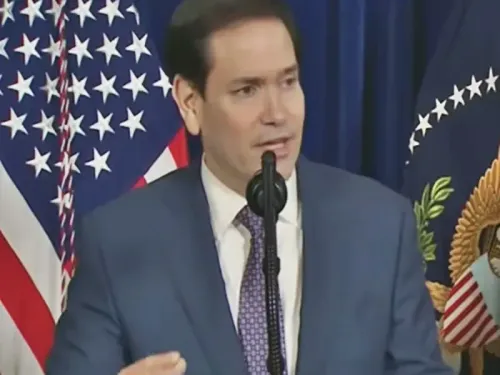
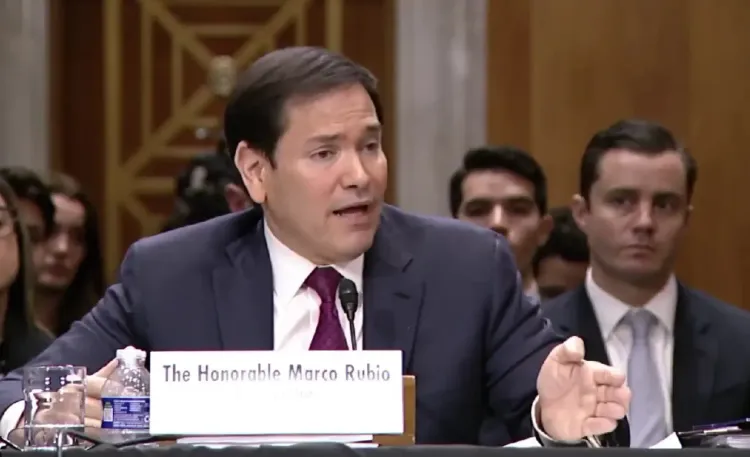
Washington, Jan 29 (NationPress) US Secretary of State Marco Rubio has informed lawmakers that Venezuela, under the leadership of Nicolas Maduro, has transformed into a crucial operational base for China, Russia, and Iran in the Western Hemisphere. He cautioned that Beijing has been acquiring Venezuelan oil at significantly reduced prices while extending its reach near the United States.
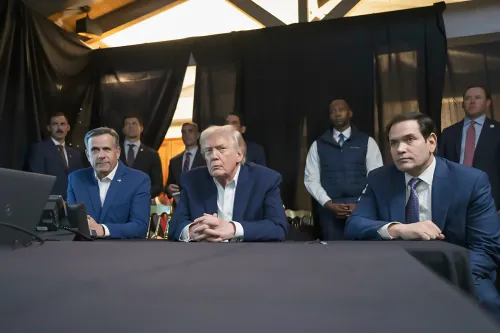
“In our hemisphere, we had a regime run by an indicted narcotrafficker that evolved into a base of operations for nearly every global competitor, adversary, and enemy,” Rubio stated during a Senate Foreign Relations Committee meeting on Wednesday (local time).
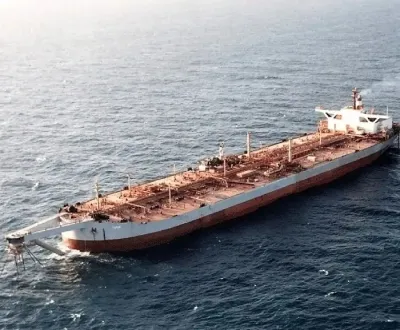
He noted that China was obtaining Venezuelan oil at “approximately $20 a barrel discount,” and in certain instances, “they were not even paying cash for it. It was being used to settle debts owed to them.”
“This is the oil belonging to the people of Venezuela, and it was being bartered away to the Chinese,” Rubio emphasized, adding that China, Russia, and Iran were all active in Venezuela.
He described this scenario as “an immense strategic peril for the United States, not halfway across the globe, not on another continent, but right here in our hemisphere.”
Rubio stated that Washington's actions against Maduro aimed to rectify this situation and regain leverage. “It was an unsustainable circumstance that needed to be confronted,” he remarked.
He argued that the US-led oil “quarantine”—which he clarified was “not a blockade”—has drastically minimized China's access to discounted Venezuelan crude oil.
“China can purchase Venezuelan oil, but they must do so like everyone else in the world, at the standard price,” he emphasized. “Oil revenues from sanctioned Venezuelan crude are now under US oversight.”
“The funds from this will be deposited in an account we will oversee, and that money will be spent for the benefit of the Venezuelan people,” he stated.
Rubio indicated that China's broader strategy in the Western Hemisphere relies more on economic influence than on ideology.
“They are keenly interested in telecommunications, in constructing and controlling essential infrastructure, and in securing critical mineral rights,” he detailed, adding that Chinese firms often gain footholds through “unfavorable contracts” and debt dependency.
He noted that China's influence in the region is beginning to wane, citing Panama's withdrawal from the Belt and Road Initiative and shifting political landscapes in Latin America.
Rubio concluded that the US aims to prevent Venezuela from becoming “a playground for Iran, Russia, and China in our own hemisphere.”
Point of View
It is imperative to recognize the strategic implications of Rubio's statements. The transformation of Venezuela into a base for adversaries like China and Russia is not just a regional concern; it has global ramifications. The US must navigate this complex geopolitical landscape with care, ensuring that the welfare of the Venezuelan people remains central to any actions taken.
NationPress
29 Sept 2026
Frequently Asked Questions
What role does Venezuela play in China's oil strategy?
Venezuela has become a key operational base for China, enabling it to obtain oil at significantly reduced prices while expanding its influence in the Western Hemisphere.
How is the US responding to China's influence in Venezuela?
The US is implementing measures to limit China's access to Venezuelan oil and ensure that oil revenues are managed under US oversight for the benefit of the Venezuelan people.
What does Rubio say about the risks to the US?
Rubio describes the situation as an immense strategic peril for the United States, emphasizing that the threat is not distant but right within the hemisphere.