Trump's NSC plans 5-10 years ahead; Rubio reveals Camp David strategy session
Synopsis
Marco Rubio let slip an unusually long planning horizon — five to ten years — when describing Trump's Camp David national security session, a rare public acknowledgement that the administration is thinking well beyond the next election cycle. The disclosure came as Rubio juggled questions on Russia-Ukraine, the Houthis, and a diplomatic sweep through three NATO allies.
Key Takeaways
Secretary of State Marco Rubio confirmed on 6 October 2026 that the Trump administration's national security planning extends five to 10 years into the future.
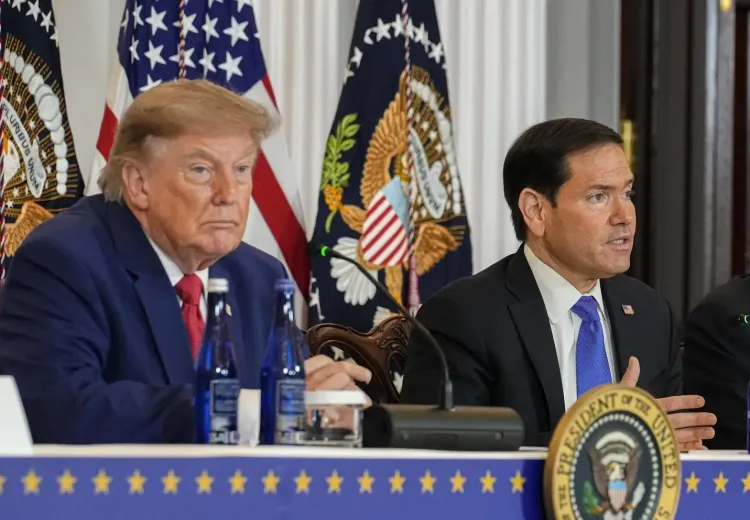
Senior national security officials held a weekend meeting at Camp David , chosen for fewer distractions; participants and agenda were not disclosed.
Rubio said the National Security Council regularly convenes for forward-looking sessions covering time horizons from six months to a decade.
Immediate topics discussed at the press interaction included Russia-Ukraine , the Houthis , a suspected plague case in Russia, and security of US bases in Britain.
Rubio departed for a diplomatic trip to Iceland , Portugal , and Greece — all NATO members.
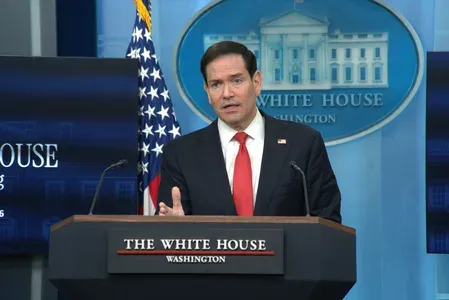
Secretary of State Marco Rubio on Tuesday, 6 October 2026 confirmed that President Donald Trump's national security team is conducting long-range strategic planning that extends as far as five to 10 years into the future, describing a weekend gathering at Camp David as part of the administration's broader approach to global challenges. The disclosure came during a press interaction at Joint Base Andrews ahead of Rubio's departure on a European tour.
What Happened at Camp David
Rubio said the weekend session brought together senior national security officials in a setting designed to minimise distractions, emphasising that it was not convened solely to address immediate crises. He declined to identify participants or disclose the specific issues on the agenda.
'That was just an opportunity to do it in a setting where there were less distractions, but we're constantly — that's just part of the role the National Security Council plays,' Rubio said.
He was careful to push back against describing the gathering as routine, even as he acknowledged the administration had held similar meetings before. 'I wouldn't call it routine because the topics being discussed are global by nature, but they are long-term in thinking,' he said.
The NSC's Long-Term Planning Mandate
Rubio offered an unusually candid description of the time horizons involved. The NSC, he explained, routinely brings stakeholders together for forward-looking sessions covering 'six months, nine months, but in many cases five or 10 years down the road.' The scope of that framing is notable: most publicly acknowledged US national security discussions tend to be framed around near-term crises rather than decade-long strategic arcs.
The National Security Council serves as the principal White House mechanism for coordinating national security and foreign policy across the federal government, drawing together the president and senior officials responsible for diplomacy, defence, and intelligence. Camp David, the presidential retreat in Maryland, has long served as a venue for high-level strategic and diplomatic discussions away from the daily rhythms of the White House.
Immediate Crises Also on the Agenda
Rubio's remarks came during a wider press interaction that touched on several active national security challenges, including the Russia-Ukraine conflict, fighting involving the Houthis and Saudi-backed Yemeni forces, a suspected plague case in Russia, and the security of US military installations in Britain. His comments suggested the Camp David session was separate from — though not disconnected to — those immediate pressures.
European Trip and NATO Allies
Rubio was speaking before departing on a diplomatic trip to Iceland, Portugal, and Greece, all three NATO members. He described Iceland as 'a good friend of the United States,' noting the stop followed conversations with Icelandic leaders at the NATO summit earlier this year. He called Portugal a strong ally and described Greece as 'a very important US ally,' citing both the American military presence there and strong economic ties.
The European leg of the trip underlines that the administration's longer-horizon planning is unfolding against a backdrop of active alliance management and immediate geopolitical turbulence.
Point of View
No participant list, no issue specifics. That opacity invites legitimate questions about whether the Camp David framing is strategic communication as much as operational planning. With simultaneous fires in Ukraine, Yemen, and allied force-posture in Britain, the tension between claiming long-term vision and managing short-term crises will define how seriously this pledge is taken.
NationPress
6 Oct 2026
Frequently Asked Questions
What was the purpose of the Camp David national security meeting?
Senior Trump administration national security officials gathered at Camp David for long-term strategic planning, according to Secretary of State Marco Rubio. The meeting was chosen for its lower-distraction environment and was not focused solely on immediate crises.
How far ahead is the Trump administration planning on national security?
Rubio said the National Security Council conducts planning covering 'six months, nine months, but in many cases five or 10 years down the road.' This unusually broad public disclosure of a long-range planning horizon came during a press interaction on 6 October 2026.
Who attended the Camp David meeting?
Rubio did not identify the participants or disclose who attended the Camp David session. He confirmed it involved national security officials but gave no further specifics on the attendee list.
What immediate security issues is the Trump administration currently managing?
Rubio's press interaction covered Russia-Ukraine, fighting between the Houthis and Saudi-backed Yemeni forces, a suspected plague case in Russia, and the security of US military installations in Britain — all separate from the longer-term Camp David discussions.
Which countries is Secretary Rubio visiting on his European trip?
Rubio is visiting Iceland, Portugal, and Greece — all NATO members. He described Iceland as a 'good friend,' Portugal as a strong ally, and Greece as 'a very important US ally' with significant American military presence and economic ties.