Russia recalls ambassador to Armenia amid EAEU-EU rift
Synopsis
Russia's recall of its ambassador to Armenia is the starkest diplomatic signal yet that Moscow views Yerevan's EU pivot as an existential challenge to the EAEU. With four bloc leaders demanding a referendum and a formal consequences report due in December 2026, Armenia faces a structured ultimatum — and Prime Minister Pashinyan has already said dual membership is not possible.
Key Takeaways
Russia summoned ambassador Sergey Kopyrkin from Yerevan on 30 May 2026 over Armenia 's EU pivot.
The Russian Foreign Ministry said Armenia 's moves undermine EAEU cooperation.
Presidents of Russia , Kazakhstan , Belarus , and Kyrgyzstan jointly demanded Armenia hold a referendum on its bloc allegiance.
A report on the consequences of suspending the EAEU treaty for Armenia is due in December 2026 .
Armenia and the EU signed a connectivity partnership in early May 2026 ; President Khachaturyan initiated the EU accession process in April 2025 .
Prime Minister Pashinyan has said Armenia cannot hold simultaneous membership in both the EU and the EAEU .
Russia has summoned its ambassador to Armenia, Sergey Kopyrkin, back to Moscow for consultations, the Russian Foreign Ministry announced on Saturday, 30 May, citing Yerevan's accelerating pivot toward the European Union (EU) as a direct threat to cooperation within the Eurasian Economic Union (EAEU). The recall marks one of the sharpest diplomatic signals Moscow has sent to a formal ally in the post-Soviet space in recent years.
What Triggered the Recall
The Russian Foreign Ministry stated that Armenia's moves toward EU integration undermine the functioning of the EAEU, the five-member economic bloc that includes Russia, Kazakhstan, Belarus, Kyrgyzstan, and Armenia. This comes just weeks after Armenia and the EU signed a connectivity partnership deal at their first-ever bilateral summit held in Yerevan in early May 2026, covering transport, energy, and digital infrastructure.
Putin and EAEU Partners Issue Joint Warning
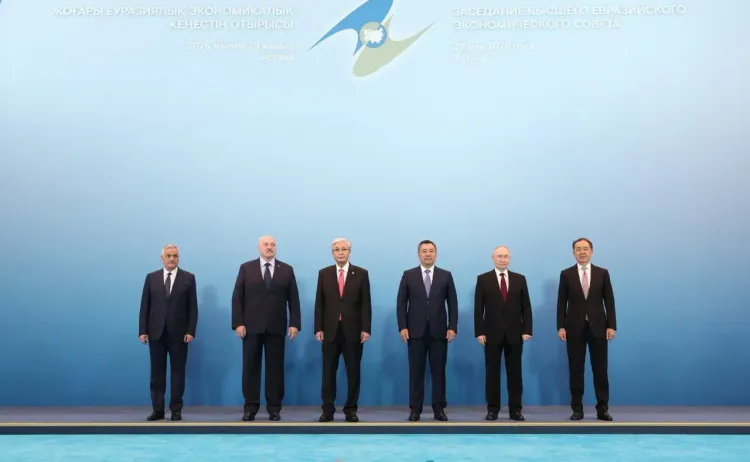
Russian President Vladimir Putin, speaking a day before the ambassador's recall, said Armenia's choice between the EU and the EAEU is 'purely an economic matter,' but warned that abandoning EAEU membership would strip Yerevan of a range of preferential trade benefits. On Friday, the presidents of Russia, Kazakhstan, Belarus, and Kyrgyzstan issued a joint statement urging Armenia to hold a referendum 'as soon as possible' to decide its bloc allegiance. The statement warned that Armenia's EU bid poses 'substantial risks to the economic security' of other EAEU members.
December 2026 Report and Suspension Threat
The four leaders noted that representatives in the Eurasian Intergovernmental Council would present a report in December 2026 on the possible consequences of suspending the EAEU treaty for Armenia. The language around 'suspension' rather than expulsion signals that Moscow and its partners are leaving a door open, but are also laying the groundwork for formal economic consequences should Yerevan proceed.
Armenia's EU Trajectory
In April 2025, Armenian President Vahagn Khachaturyan signed a bill formally initiating the country's EU accession process. Armenian Prime Minister Nikol Pashinyan has publicly stated that Armenia cannot hold dual membership in both the EU and the EAEU — a position that effectively forces a binary choice. The EU-Armenia connectivity partnership, aligned with the EU's Cross-Regional Connectivity Agenda and Armenia's own 'Crossroads of Peace' initiative, signals that Yerevan has already begun operationalising that choice.
What Comes Next
With the December 2026 deadline for the Eurasian Intergovernmental Council report now on the calendar, the coming months will test whether economic pressure from Moscow and its partners can slow Armenia's westward drift — or whether the recall of Ambassador Kopyrkin is merely the opening move in a longer diplomatic confrontation. Armenia's membership in the EAEU, established in 2015, has already become more symbolic than substantive for many analysts tracking the region.
Point of View
The referendum demand, and the December 2026 report deadline form a sequenced pressure campaign. What mainstream coverage underplays is how structurally weakened Russia's leverage already is: Armenia's trade with the EU has grown even within EAEU membership, and Pashinyan's domestic political calculus is now openly post-Russian. The EAEU's threat to suspend Armenia's treaty benefits may accelerate, rather than reverse, Yerevan's westward move — a paradox Moscow appears willing to risk.
NationPress
24 Sept 2026
Frequently Asked Questions
Why did Russia summon its ambassador to Armenia?
Russia recalled ambassador Sergey Kopyrkin to Moscow for consultations on 30 May 2026 because the Russian Foreign Ministry believes Armenia's accelerating pivot toward the EU undermines cooperation within the EAEU. The move followed Armenia's connectivity partnership with the EU and its formal initiation of an EU accession process.
What did the four EAEU leaders demand from Armenia?
The presidents of Russia, Kazakhstan, Belarus, and Kyrgyzstan issued a joint statement on Friday demanding that Armenia hold a referendum as soon as possible to decide whether to pursue EU membership or remain in the EAEU. They warned that Armenia's EU bid poses substantial risks to the economic security of other bloc members.
What is the December 2026 deadline about?
EAEU member states agreed that representatives in the Eurasian Intergovernmental Council will present a report in December 2026 on the possible economic consequences of suspending the EAEU treaty for Armenia. This effectively gives Yerevan a structured deadline before formal consequences are formalised.
What has Armenia already done to move toward the EU?
In April 2025, Armenian President Vahagn Khachaturyan signed a bill initiating the country's EU accession process. In early May 2026, Armenia and the EU signed a connectivity partnership covering transport, energy, and digital infrastructure at their first-ever bilateral summit in Yerevan.
Can Armenia stay in both the EU and the EAEU?
No, according to Armenian Prime Minister Nikol Pashinyan, who has publicly stated that Armenia cannot hold dual membership in both the EU and the EAEU. This makes the choice binary, and Yerevan's recent moves suggest it has already begun tilting decisively toward the EU.