Armenia Parliamentary Elections 2025: Voting ends, count begins amid EU pivot debate
Synopsis
Armenia's parliamentary vote on 7 June is far more than a domestic contest — it is a de facto referendum on whether the country breaks from Russia's orbit and charts a course toward the EU. With Trump endorsing Pashinyan and Moscow demanding a formal referendum, the results could redraw the South Caucasus's geopolitical map.
Key Takeaways
Voting in Armenia's Parliamentary elections concluded on 7 June , with counting beginning immediately after polls closed at 8 pm local time .
More than 2.48 million voters were eligible across 2,005 polling stations ; 18 parties and alliances fielded nearly 2,000 candidates .
PM Nikol Pashinyan of the Civil Contract Party — in power since May 2018 — is seeking a fresh mandate to pursue EU integration .
The presidents of Russia, Belarus, Kazakhstan, and Kyrgyzstan jointly demanded Armenia hold a referendum on EU vs.
EAEU membership, warning of 'significant risks to economic security'.
Armenia and the EU signed a connectivity partnership in early May covering transport, energy, and digital infrastructure.
US President Donald Trump endorsed Pashinyan, calling him 'a great friend and leader' ahead of the vote.
Voting in Armenia's Parliamentary elections concluded on Sunday, 7 June as precinct commission members began tallying ballots across the country, with first results expected by Sunday midnight local time. The polls, watched closely across Europe and Eurasia, are widely regarded as a referendum on Prime Minister Nikol Pashinyan's westward foreign policy shift and Armenia's prospective alignment with the European Union (EU).
How the Vote Unfolded
More than 2.48 million registered voters were eligible to cast ballots at 2,005 polling stations across the country. Stations opened at 8 am local time and closed at 8 pm local time on Sunday. According to the Central Electoral Commission, 18 parties and alliances fielding nearly 2,000 candidates contested seats in the National Assembly, Armenia's unicameral legislature.
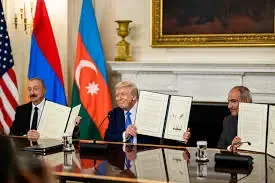
Pashinyan, who has held power since May 2018 under his Civil Contract Party, cast his own ballot at a polling station in Yerevan. US President Donald Trump publicly endorsed Pashinyan ahead of the vote, calling him 'a great friend and leader' — an unusual intervention that drew attention to the geopolitical stakes of the contest.
The EU Question at the Heart of the Election
The elections are considered critical against the backdrop of Armenia's active consideration of EU membership. In early May, Armenia and the EU signed a connectivity partnership deal at their first-ever bilateral summit held in Yerevan, pledging to deepen economic and security cooperation. The partnership spans transport, energy, and digital infrastructure, aligning with the EU's Cross-Regional Connectivity Agenda and Armenia's own 'Crossroads of Peace' initiative.
This represents a dramatic pivot for a country that joined the Eurasian Economic Union (EAEU) — founded by Belarus, Kazakhstan, and Russia in May 2014 — in 2015, alongside Kyrgyzstan.
Russia and EAEU Allies Push Back
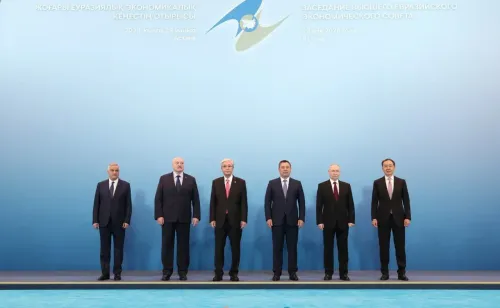
Last month, the presidents of Belarus (Alexander Lukashenko), Kazakhstan (Kassym-Jomart Tokayev), Kyrgyzstan (Sadyr Japarov), and Russia (Vladimir Putin) issued a joint statement — published by the Kremlin — demanding that Armenia hold a nationwide referendum as soon as possible on whether to join the EU or remain within the EAEU.
The four leaders warned that Armenia's EU preparations posed 'significant risks to the economic security' of EAEU member states. They further noted that representatives in the Eurasian Intergovernmental Council would present a report in December 2026 on the possible consequences of suspending the EAEU treaty for Armenia — signalling that economic penalties could follow a formal westward move.
What Comes Next
With vote counting now underway, the composition of the new National Assembly will determine whether Pashinyan retains a parliamentary majority and the political mandate to accelerate EU integration. A strong Civil Contract showing would likely be read in Brussels as a green light, while a fractured result could embolden pro-EAEU factions domestically. The December 2026 EAEU report deadline adds a hard timeline to what has become one of the most consequential foreign-policy elections in the South Caucasus in years.
Point of View
Signing EU connectivity deals, attracting a Trump endorsement — and Sunday's ballot is the public ledger on that gamble. The joint statement from four EAEU heads of state is not diplomatic noise; it is a structured warning with a December 2026 deadline attached. What mainstream coverage underplays is the economic exposure: Armenia remains deeply integrated into EAEU supply chains, and a formal EU accession path without a managed EAEU exit could trigger the kind of economic shock that has derailed reform governments elsewhere in the post-Soviet space.
NationPress
23 Oct 2026
Frequently Asked Questions
What were the Armenia Parliamentary elections on 7 June about?
Armenia held parliamentary elections on 7 June 2025, with over 2.48 million eligible voters choosing among 18 parties and alliances for seats in the National Assembly. The vote is widely seen as a test of public support for Prime Minister Nikol Pashinyan's push to align Armenia with the European Union rather than remain within Russia's Eurasian Economic Union.
Who is Nikol Pashinyan and why is he significant in this election?
Nikol Pashinyan is Armenia's Prime Minister and leader of the Civil Contract Party, in power since May 2018. He is the central figure in Armenia's westward pivot, having signed an EU connectivity partnership in May 2025 and drawn an endorsement from US President Donald Trump ahead of the vote.
Why did Russia and other EAEU leaders respond to Armenia's elections?
The presidents of Russia, Belarus, Kazakhstan, and Kyrgyzstan issued a joint Kremlin statement last month demanding Armenia hold a nationwide referendum on EU versus EAEU membership. They argued Armenia's EU preparations posed significant risks to the economic security of EAEU member states, and set a December 2026 deadline for a report on consequences of suspending Armenia's EAEU treaty obligations.
What is the EU-Armenia connectivity partnership signed in May 2025?
In early May 2025, Armenia and the EU signed a connectivity partnership at their first-ever bilateral summit in Yerevan, covering transport, energy, and digital infrastructure. The deal aligns with the EU's Cross-Regional Connectivity Agenda and Armenia's 'Crossroads of Peace' initiative, and is seen as a precursor to a formal EU membership process.
When will Armenia's election results be announced?
The first results from Armenia's 7 June parliamentary elections were expected to be released by Sunday midnight local time, according to reports, as precinct commission members began counting votes immediately after polling stations closed at 8 pm local time.