NATO chief Rutte: Russia failing to stop Ukraine support, allies stay united
Synopsis
NATO Secretary-General Mark Rutte declared on 29 September that Russia is failing both on Ukraine's battlefield and in its covert campaign to fracture alliance unity — as Estonia simultaneously accused Moscow of ordering the arson attack on defence firm Milrem Robotics in Tallinn, a direct strike at the industrial base supplying Ukraine.
Key Takeaways
NATO Secretary-General Mark Rutte on 29 September said Russia is failing to stop the alliance's support for Ukraine .
Rutte pledged NATO will do 'even more for Ukraine, and not less,' speaking alongside Lithuanian PM Mindaugas Sinkevicius in Brussels .
Estonia formally attributed the 14–15 August arson attack on Milrem Robotics in Tallinn to Russia's special services.
Estonian Foreign Minister Margus Tsahkna confirmed perpetrators were apprehended and Russia's Charge d'affaires was summoned.
Rutte urged all 32 NATO allies to publicly attribute Russian hybrid actions and share intelligence with SHAPE .
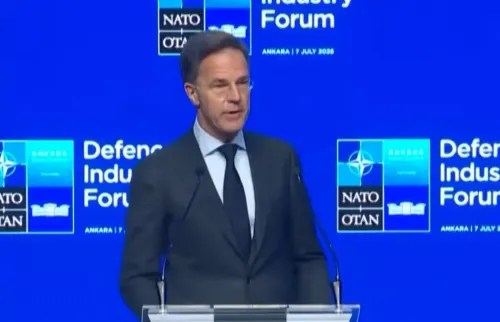
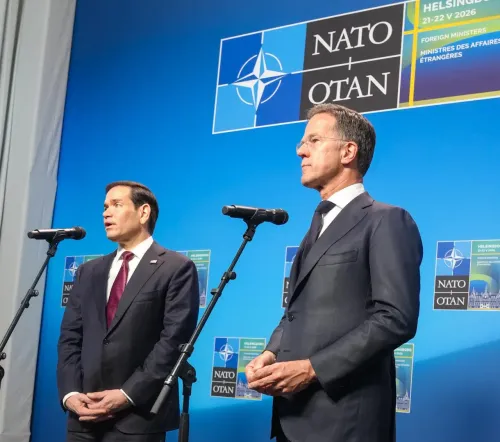
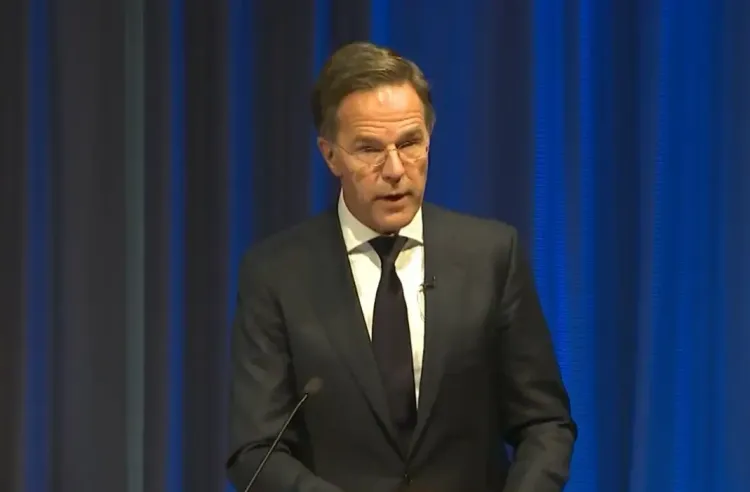
NATO Secretary-General Mark Rutte on Tuesday, 29 September declared that Russia is failing in its campaign of 'hostile actions' against the 32-member military alliance and is unable to erode NATO's resolve to back Ukraine. Rutte made the remarks at a joint press conference in Brussels alongside Lithuanian Prime Minister Mindaugas Sinkevicius.
Rutte's Direct Warning to Moscow
Speaking in unambiguous terms, Rutte said Russia is losing on two fronts simultaneously. 'Russia continues its reckless campaign of hostile actions against NATO Allies. It is trying to weaken our resolve and stop our support for Ukraine. But Russia is failing. It is failing on the battlefield in Ukraine, and it is failing to undermine our unity and support for Ukraine. Our message to Moscow is clear: we will do even more for Ukraine, and not less,' he said.
Rutte acknowledged that Russia's so-called 'grey zone' activities — covert sabotage, disinformation, and hybrid operations — can cause real disruption. However, he insisted that NATO retains a full range of response options, not all of which are made public. 'What I'm saying is we have all the response options, sometimes visible, sometimes not — not always public, not always tit for tat,' he said, urging allies to 'stay calm and carry on.'
Estonia's Sabotage Accusation Against Russia
Rutte's statement followed a significant attribution by Estonia. Estonian Foreign Minister Margus Tsahkna publicly declared that an arson attack on the premises of defence technology firm Milrem Robotics in Tallinn on the night of 14–15 August was an act of sabotage ordered by Russia's special services. The conclusion, Tsahkna said, was based on findings by Estonia's Internal Security Service.
'Such actions are absolutely unacceptable. In response, Estonia's Ministry of Foreign Affairs will today summon Russia's Charge d'affaires,' Tsahkna posted on X. He confirmed that the perpetrators had been apprehended and no longer posed a threat to national security.
Tsahkna framed the attack as part of a wider Russian pattern: 'This act of sabotage is part of Russia's broader campaign across Europe, aimed at intimidating us and weakening our support for Ukraine. Our response will be the opposite. We will increase both our support for Ukraine and the pressure on Russia to end its aggression.'
NATO's Collective Intelligence Approach
Rutte praised Estonia's decision to publicly attribute the attack and called on all NATO members to share intelligence with the alliance and with SHAPE — Supreme Headquarters Allied Powers Europe. 'You have heard the Supreme Allied Commander yesterday saying, 'Hey, when able, when you are sure it is the Russians, or almost sure it is the Russians, attribute it to the Russians' — exactly like Estonia did today. I applaud it,' Rutte said.
He stressed that building a 'collective overview' of Russia's hybrid activities is essential for calibrating the alliance's response. Notably, this is consistent with a broader NATO push — accelerated since 2022 — to counter Russian hybrid operations ranging from cyberattacks to physical sabotage across European infrastructure.
Why This Matters Beyond the Battlefield
Russia's hybrid campaign in Europe has reportedly included suspected sabotage of undersea cables, railway signalling systems, and now defence manufacturing facilities. The Milrem Robotics attack is particularly significant because the Estonian firm produces unmanned ground vehicles that have been supplied to Ukraine. Targeting it signals that Russia may be escalating pressure on the defence industrial base supplying Kyiv.
Critics argue that while NATO's rhetorical unity remains firm, the pace of military aid delivery to Ukraine has been uneven across member states. The coming weeks will test whether Rutte's pledge to do 'even more' translates into concrete capability transfers.
Point of View
Carry on' framing is deliberate messaging as much as policy — designed to prevent Russia's hybrid playbook from achieving its primary goal of inducing panic and fracturing alliance cohesion. What mainstream coverage underplays is the Milrem Robotics dimension: targeting a drone manufacturer supplying Ukraine is a qualitative escalation, moving Russian sabotage from symbolic disruption to direct interference with the war's supply chain. NATO's call for public attribution is a sound counter, but attribution without consequence risks becoming a ritual. The real test of Rutte's 'we will do even more' pledge is whether it accelerates weapons deliveries or remains a press-conference posture.
NationPress
29 Sept 2026
Frequently Asked Questions
What did NATO Secretary-General Mark Rutte say about Russia on 29 September?
Rutte declared that Russia is failing both on the battlefield in Ukraine and in its efforts to undermine NATO unity and stop the alliance's support for Kyiv. Speaking in Brussels, he pledged that NATO would do 'even more for Ukraine, and not less.'
What is the Milrem Robotics sabotage case?
Estonian authorities concluded that an arson attack on Milrem Robotics — a defence technology firm in Tallinn — on the night of 14–15 August was an act of sabotage ordered by Russia's special services. Milrem Robotics produces unmanned ground vehicles that have been supplied to Ukraine, making it a strategically significant target.
How did Estonia respond to the alleged Russian sabotage?
Estonia's Ministry of Foreign Affairs summoned Russia's Charge d'affaires in response to the attack. Foreign Minister Margus Tsahkna confirmed that the perpetrators had been apprehended and said Estonia would increase both its support for Ukraine and pressure on Russia.
What is NATO's strategy against Russia's hybrid or grey zone activities?
NATO's approach involves public attribution of Russian actions when evidence is sufficient, intelligence-sharing among all 32 allies and with SHAPE, and deploying response options that are 'sometimes visible, sometimes not,' according to Rutte. The alliance is encouraging member states to openly name Russia when hybrid attacks are traced back to Moscow.
Why is Russia conducting hybrid operations against NATO countries?
According to NATO officials, Russia's hybrid campaign — which reportedly includes cyberattacks, arson, and infrastructure sabotage — is aimed at intimidating European governments and weakening their political will to continue supplying Ukraine. Rutte and Estonian officials argue the campaign is a sign that NATO's collective pressure on Russia is working.