South Korea, Japan resume joint SAREX drills on 7 June after 9-year pause
Synopsis
For the first time in nine years, South Korean and Japanese naval forces will drill together at sea — a quiet but consequential signal that the radar-lock standoff of 2018 has been formally set aside. The 7 June SAREX revival is less about rescue procedures and more about whether Seoul and Tokyo can rebuild the defence trust the Indo-Pacific security architecture urgently needs.
Key Takeaways
South Korea and Japan will resume joint SAREX maritime drills on 7 June 2025 — the first such exercise in nine years .
The drill will be held in international waters southeast of Jeju Island , involving South Korea's ROKS Cheon Ja Bong and Japan's Kongo destroyer .
The programme was suspended after a December 2018 dispute over a Japanese patrol aircraft's low-altitude flyby and an alleged South Korean radar lock.
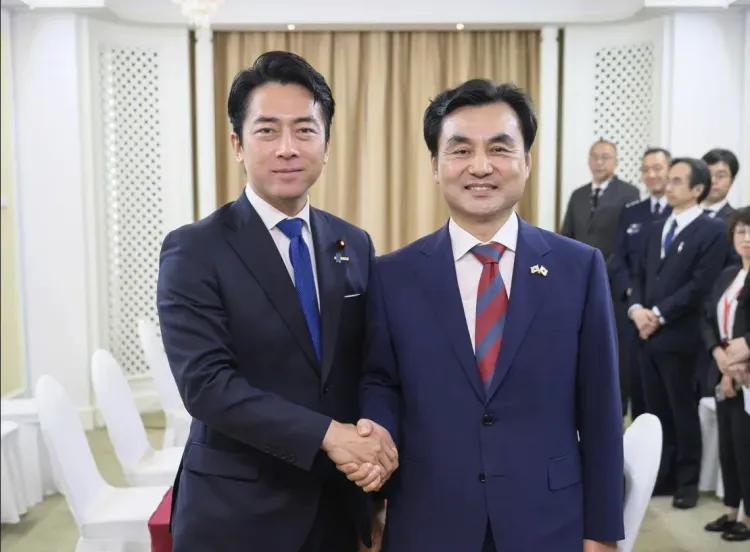
Defence Ministers Ahn Gyu-back and Shinjiro Koizumi confirmed the resumption at the Shangri-La Dialogue in Singapore .
A visit by Koizumi to South Korea in late June is reportedly being arranged.
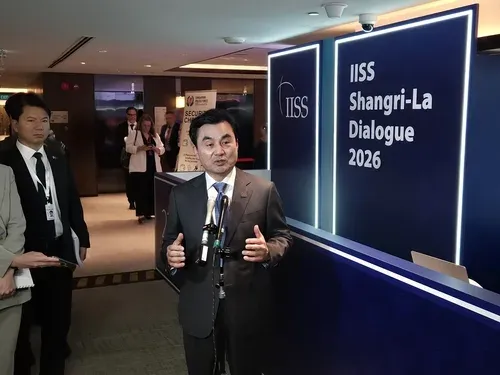
South Korea and Japan will resume their long-suspended joint maritime search and rescue exercises (SAREX) on 7 June, Seoul's defence chief announced on Saturday, 31 May, describing the resumption as a 'symbolic' step that reflects a tangible improvement in bilateral defence ties. The announcement came on the sidelines of the Shangri-La Dialogue in Singapore.
Key Developments
South Korea's Defence Minister Ahn Gyu-back disclosed the plan during bilateral talks with Japanese Defence Minister Shinjiro Koizumi, held on the margins of the Asia Security Summit. 'The SAREX drills will take place on June 7,' Ahn said in his opening remarks. 'I believe the resumption of the drills after nine years carries a highly symbolic and declaratory meaning.'
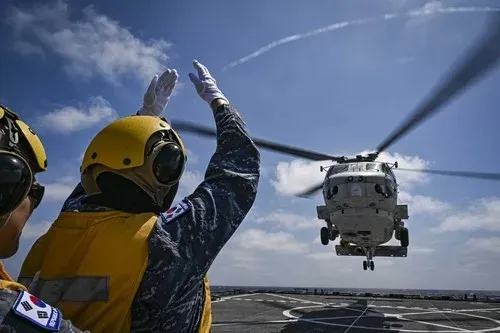
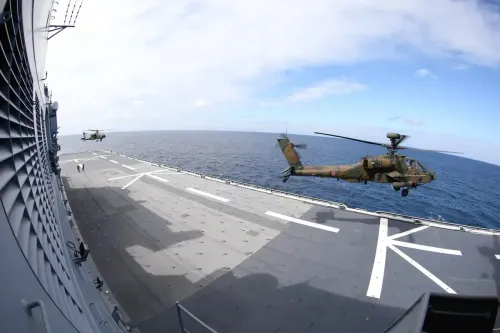
The drill will be conducted in international waters southeast of Jeju Island, with South Korea deploying its 4,900-tonne ROKS Cheon Ja Bong landing ship. Japan will contribute its 7,250-tonne Aegis-equipped Kongo destroyer and a maritime patrol helicopter, according to a separate release from South Korea's Navy.
Why the Drills Were Suspended
The SAREX programme was launched in 1999 as a biennial exercise to train coordinated naval responses to maritime incidents near the Korean Peninsula. It ran for ten rounds before being suspended after 2017, when bilateral relations deteriorated sharply.
The immediate trigger was a December 2018 incident in which a Japanese maritime patrol aircraft made an unusually low-altitude flyby over a South Korean warship. Seoul condemned the approach as a 'menacing' flight; Tokyo countered that the South Korean vessel had locked its fire-control radar on the plane. The dispute proved irreconcilable at the time and the drills lapsed.
Diplomatic Path to Resumption
The groundwork for the revival was laid under the previous Yoon Suk Yeol government, which oversaw a dramatic warming of ties with Japan. In June 2024, both sides agreed during defence ministers' talks to prevent a recurrence of the radar-lock dispute. Ahn and Koizumi subsequently agreed to restart the drills when they met in Tokyo in January 2025.
Ahead of Saturday's talks, Ahn characterised the expanding defence ministerial exchanges as 'ping-pong diplomacy,' calling it yet another milestone in bilateral ties. Koizumi pushed back on any suggestion the meetings were merely goodwill gestures, stressing they were driven by 'necessity' given shared security challenges.
Broader Strategic Context
'To promote peace and stability in the Indo-Pacific region, it is important for Japan and South Korea to take a leading role, including through the US-Japan alliance, the US-ROK alliance, and broader strategic cooperation to maintain and strengthen deterrence and response capabilities,' Koizumi said through an interpreter.
Both ministers reaffirmed the importance of their bilateral cooperation and the US-Japan-South Korea trilateral partnership for stability on the Korean Peninsula. The two sides also agreed to deepen mutual understanding and maintain forward-looking defence exchanges. At Ahn's invitation, a visit by Koizumi to South Korea in late June is reportedly being arranged.
Point of View
Where Japan policy has historically been a lightning rod, and whether the trilateral US-Japan-South Korea framework can translate defence optics into credible deterrence against Pyongyang.
NationPress
21 Sept 2026
Frequently Asked Questions
When will South Korea and Japan resume their joint SAREX drills?
The joint maritime search and rescue exercise is scheduled for 7 June 2025 , in international waters southeast of Jeju Island. It will be the first SAREX since the 10th round in 2017.
Why were the South Korea-Japan SAREX drills suspended?
The drills were suspended following a December 2018 incident in which a Japanese maritime patrol aircraft made a low-altitude flyby over a South Korean warship. Seoul called it a 'menacing' flight; Tokyo alleged the South Korean vessel had locked its fire-control radar on the plane, and the dispute froze bilateral defence cooperation.
What assets will participate in the 7 June SAREX?
South Korea will deploy the 4,900-tonne ROKS Cheon Ja Bong landing ship. Japan will contribute the 7,250-tonne Aegis-equipped Kongo destroyer and a maritime patrol helicopter.
What was agreed at the Shangri-La Dialogue between the two defence ministers?
Defence Ministers Ahn Gyu-back and Shinjiro Koizumi confirmed the SAREX resumption, reaffirmed the importance of US-Japan-South Korea trilateral cooperation, and agreed to advance defence exchanges in a stable, forward-looking manner. A visit by Koizumi to South Korea in late June is also reportedly being arranged.
What is the broader significance of the drills resuming?
The resumption signals a consolidation of the diplomatic thaw between Seoul and Tokyo that accelerated under the Yoon Suk Yeol government. Both ministers have framed the renewed cooperation as a strategic necessity for Indo-Pacific stability, not merely a goodwill gesture.