South Korea maps post-war reconstruction needs in Middle East: FM Cho
Synopsis
As the US and Iran's 60-day ceasefire MOU reopens the Strait of Hormuz, South Korea is moving fast — establishing a task force to map reconstruction opportunities country by country across the Middle East, while 2 of its 22 stranded vessels finally cleared the waterway on Monday.
Key Takeaways
Foreign Minister Cho Hyun announced on 22 June that South Korea has set up a task force to identify country-specific post-war reconstruction needs in the Middle East .
The task force aims to facilitate South Korean companies' participation in regional reconstruction and broader economic cooperation.
The US and Iran signed an MOU last week extending their ceasefire by 60 days for nuclear and peace negotiations.
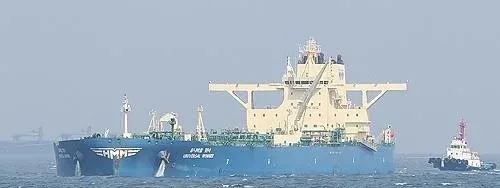
Two South Korean-operated vessels became the first to exit the Strait of Hormuz since the US-Iran agreement, reducing stranded South Korean-linked ships to 22 .
Seoul is coordinating a call between FM Cho and Iranian FM Abbas Araghchi in the near future.
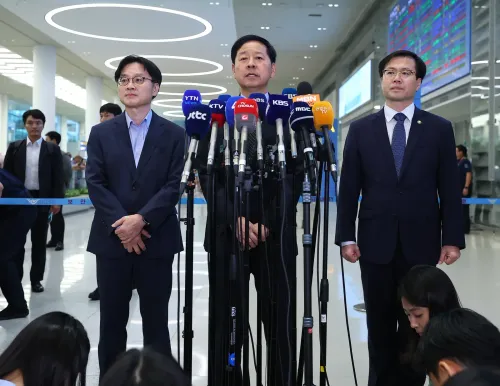
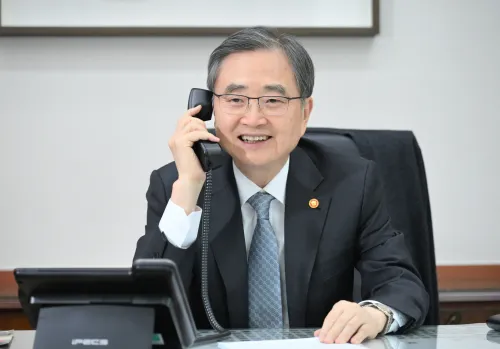
South Korea's Foreign Minister Cho Hyun on Monday, 22 June announced that Seoul has established a dedicated task force to identify country-specific cooperation needs across the Middle East, with the aim of facilitating South Korean companies' participation in post-conflict reconstruction efforts across the region.
Task Force and Diplomatic Push
'To facilitate South Korean companies' participation in reconstruction efforts in the Middle East and to develop broader economic cooperation with the region, the ministry established a dedicated task force and has actively identified country-specific cooperation needs through overseas missions,' Cho said at a press briefing in Seoul.
The minister added that South Korea's handling of the regional crisis has strengthened its standing: 'Our responses to the crisis have reinforced the perception among Middle Eastern countries that South Korea is a reliable partner that stands by them in difficult times.'
US-Iran Ceasefire: The Backdrop
The task force's activation comes against the backdrop of a significant diplomatic development last week, when the United States and Iran signed a memorandum of understanding (MOU) to end their monthslong conflict. The agreement extends the countries' ceasefire by 60 days, during which negotiations on nuclear and other issues are expected to take place, with the goal of reaching a final peace deal.
Cho pledged to work alongside the US and the broader international community to ensure the agreement serves not merely as a short-term de-escalation measure, but as a foundation for lasting peace and stability in the region. This comes amid renewed optimism — and considerable caution — about the durability of any arrangement involving Tehran and Washington.
Strait of Hormuz: South Korean Vessels
On the immediate shipping front, Cho confirmed that the government is closely monitoring conditions in the Strait of Hormuz and the safety of South Korean ships and crew members. 'We will continue cooperating with relevant countries to ensure the swift restoration of free and safe passage for all vessels, including ours,' he said.
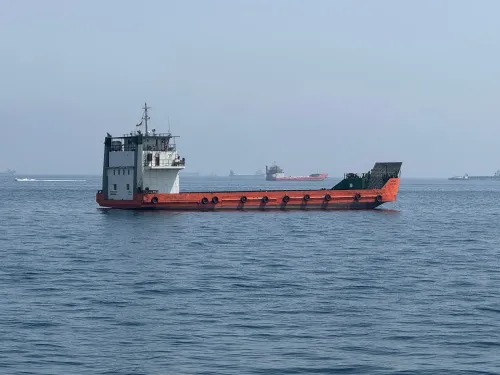
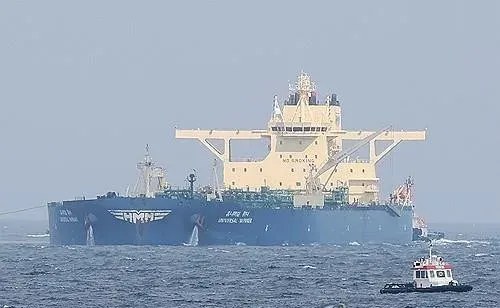
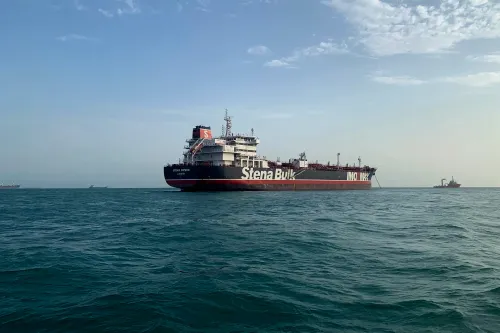
Two South Korean-operated vessels exited the Strait of Hormuz on Monday, becoming the first South Korean-linked ships to transit the strategic waterway since last week's US-Iran agreement to reopen the lane. Their departure reduced the number of South Korean-related ships still in the area to 22.
Diplomatic Coordination with Iran
Cho also revealed that Seoul is coordinating with Tehran to arrange a phone call between himself and Iranian Foreign Minister Abbas Araghchi 'in the near future.' The outreach signals South Korea's intent to maintain direct diplomatic channels with Iran even as it aligns broadly with the US-led framework for regional stability.
What Comes Next
With the 60-day ceasefire window now open and South Korean vessels beginning to move through the Strait of Hormuz, Seoul's dual focus — commercial opportunity in reconstruction and protection of its maritime interests — will define its Middle East posture in the months ahead. The task force's country-specific assessments are expected to guide which sectors and nations South Korean firms target first.
Point of View
Differentiated approach rather than a blanket bid. But the real variable is the US-Iran ceasefire's durability. A 60-day window is thin ground on which to build reconstruction contracts, and South Korean firms will be wary of committing capital before a final peace deal takes shape. The 22 vessels still in the Strait of Hormuz are a reminder that commercial normalcy remains fragile.
NationPress
20 Sept 2026
Frequently Asked Questions
What is South Korea's Middle East reconstruction task force?
South Korea's Foreign Ministry established a dedicated task force to identify country-specific cooperation needs across the Middle East, with the goal of helping South Korean companies participate in post-conflict reconstruction. The task force works through South Korea's overseas missions to assess sectoral and national priorities.
What is the US-Iran ceasefire MOU and how does it affect South Korea?
The US and Iran signed a memorandum of understanding last week to end their monthslong conflict, extending their ceasefire for 60 days while negotiations on nuclear and other issues proceed. For South Korea, the agreement is critical because it reopened the Strait of Hormuz, a key shipping lane through which South Korean-linked vessels had been stranded.
How many South Korean vessels are still in the Strait of Hormuz?
As of Monday, 22 June, 22 South Korean-related ships remain in the Strait of Hormuz area. Two vessels exited the waterway on Monday, becoming the first South Korean-linked ships to transit the strait since the US-Iran agreement to reopen it.
Is South Korea in contact with Iran diplomatically?
Yes. Foreign Minister Cho Hyun confirmed that Seoul is coordinating with Tehran to arrange a phone call with Iranian Foreign Minister Abbas Araghchi in the near future, signalling active diplomatic engagement alongside its alignment with the US-led framework.
Why does South Korea want to participate in Middle East reconstruction?
South Korea sees post-conflict reconstruction as a major economic opportunity and a chance to deepen ties with Middle Eastern nations. FM Cho noted that Seoul's crisis-period support has reinforced its image as a reliable partner in the region, which it aims to translate into long-term commercial and diplomatic relationships.