US Senate blocks Iran war powers resolution 51-48, Trump retains strike authority
Synopsis
Despite losing their congressional majorities partly due to the Iran war, Senate Republicans voted 51-48 to block a resolution that would have curbed Trump's strike authority — the 21st such war powers vote since the conflict began in February. With the midterm results set to shift congressional arithmetic, Democrats are signalling this fight is far from over.
Key Takeaways
The US Senate rejected the Iran war powers resolution by 51 to 48 on 20 November 2026 .
Three Republicans — Susan Collins , Lisa Murkowski , and Rand Paul — voted with Democrats; Democrat John Fetterman voted against.
This was the 21st Iran war powers vote in Congress since the conflict began on 28 February .
The resolution had already passed the House of Representatives in September .
The vote came two weeks after the 3 November midterm elections , where the war was seen as a factor in Republican losses.
Senate Democratic Leader Chuck Schumer has pledged further efforts to end the war following the midterm results.
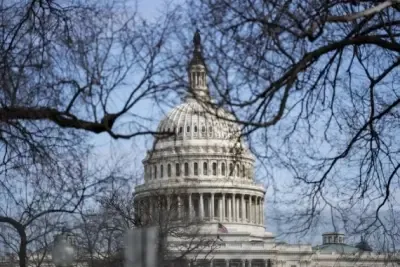
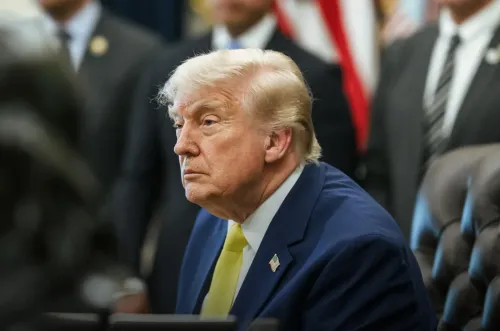
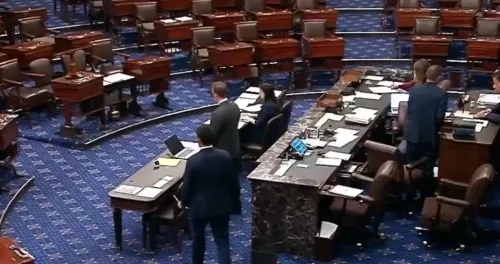
The Republican-controlled US Senate on 20 November 2026 voted 51 to 48 to reject a war powers resolution that sought to curtail President Donald Trump's authority to order further military strikes against Iran. The defeat leaves Trump with unchecked executive power to pursue the conflict, which began on 28 February and has since roiled global oil markets and reshaped American domestic politics.
How the Vote Broke Down
Three Republican senators broke with their party to support the resolution: Susan Collins of Maine, Lisa Murkowski of Alaska, and Rand Paul of Kentucky. On the Democratic side, Senator John Fetterman of Pennsylvania crossed the aisle to vote against it, providing the margin of defeat. The resolution had previously cleared the US House of Representatives in September, making the Senate vote the decisive obstacle.
Notably, this marks the 21st Iran war powers vote in Congress since the conflict began — comprising six in the House and 15 in the Senate, according to a report by The New York Times.
The Midterm Aftermath
The vote came roughly two weeks after the 3 November midterm elections, in which Republicans suffered significant losses. The Iran war has been widely identified as a contributing factor to that electoral setback, with public antipathy toward the conflict widely seen as having cost the party its congressional majorities. Yet, as The New York Times observed, 'while many prominent Republicans have conceded that public antipathy for the war cost them their congressional majorities, the message from the voters has not changed the party's position on it.'
The result underscores a disconnect between the electoral consequences of the war and the Senate Republican caucus's continued backing of executive war-making authority.
A Precedent Already Set — and Now Reversed
On 23 June, the Senate had passed a war powers resolution seeking to restrict Trump from launching further military operations in Iran without congressional approval — the first time such a measure had cleared both chambers of Congress since the conflict began. Some US media outlets described that earlier passage as largely symbolic. The latest vote effectively undoes the momentum of that earlier milestone.
What Democrats and Dissenters Are Saying
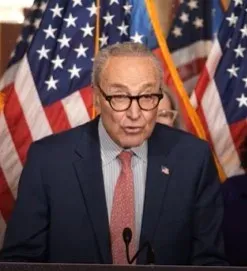
Senate Democratic Leader Chuck Schumer said after the midterms that 'we are going to end the war' with Iran, citing anticipated support from some Senate Republicans. The latest vote suggests that promised support remained thin. Meanwhile, the cross-party dissent from Collins, Murkowski, and Paul signals a small but persistent bloc within the GOP that remains uneasy with open-ended executive war authority.
What Comes Next
With Democrats set to gain congressional seats following the midterm results, the balance of power in future war powers votes is expected to shift. Senate Democratic Leader Schumer has signalled further legislative attempts to constrain the conflict. The war's impact on oil prices and global energy markets will continue to draw scrutiny, particularly as the incoming congressional landscape changes the arithmetic of any future resolution.
Point of View
Then promptly voted to continue empowering the executive they just watched lose them their majority. The three GOP dissenters — Collins, Murkowski, and Paul — represent distinct ideological strands (moderate, institutionalist, libertarian), suggesting the anti-war Republican coalition is real but not yet large enough to matter. Fetterman's crossover vote is equally telling: it reflects the fracturing of Democratic unity on a conflict that lacks a clean ideological home. With the congressional balance of power about to shift, the more consequential question is whether the new majority will treat war powers as a legislative priority or let executive momentum carry forward unchallenged.
NationPress
20 Nov 2026
Frequently Asked Questions
What was the Iran war powers resolution that the US Senate voted on?
It was a resolution seeking to block President Donald Trump from ordering further military strikes against Iran without congressional approval. The Senate rejected it on 20 November 2026 by a vote of 51 to 48, leaving Trump's executive war authority intact.
Which senators crossed party lines in the Iran war powers vote?
Three Republicans — Susan Collins of Maine, Lisa Murkowski of Alaska, and Rand Paul of Kentucky — voted in favour of the resolution alongside Democrats. Democrat John Fetterman of Pennsylvania voted against it, providing the margin that ensured its defeat.
How many times has Congress voted on Iran war powers since the conflict began?
Congress has held 21 Iran war powers votes in total since the conflict began on 28 February — six in the House and 15 in the Senate, according to The New York Times.
Had any previous Iran war powers resolution passed both chambers of Congress?
Yes. On 23 June, the Senate passed a war powers resolution restricting further Iran strikes without congressional approval, the first time such a measure cleared both chambers since the conflict began. Some US media described that passage as largely symbolic.
What impact is the Iran war expected to have on future congressional action?
Senate Democratic Leader Chuck Schumer has pledged to end the war following the midterm elections, in which the conflict was seen as a contributing factor to Republican losses. With Democrats set to gain congressional seats, the arithmetic of future war powers votes is expected to shift in favour of constraining executive authority.