Strengthening Ties: Shared Values Uniting Nations in the Indo-Pacific and Mediterranean-Atlantic
Synopsis
Explore how the United States, India, Israel, Italy, and Japan are forging deeper connections through shared beliefs and interests across critical global regions, as outlined in a recent report.
Key Takeaways
Five nations are forming a critical alliance in the Indo-Pacific and Mediterranean-Atlantic regions.
The US-India trade agreement is pivotal for their partnership.
Shared values of faith , family , and nation are central to their collaboration.
An annual forum is proposed to deepen cooperation.
Cultural solidarity is essential for addressing global challenges.
Washington, March 20 (NationPress) The national interests of the United States, India, Israel, Italy, and Japan create a vital allied connection spanning the Indo-Pacific and Mediterranean-Atlantic regions, highlighting the significance of these areas for all five nations. This collaboration should be strengthened into a robust and determined framework that promotes the common values and interests of these countries, as highlighted in a recent report.
A report published in the American journal ‘The National Interest’ indicates that the trade framework agreement between the US and India established in February has reshaped the trajectory of what might be the most influential partnership of the early 21st century.
“The high stakes necessitate tapping into the previously unexploited cultural and ideological political affiliations of Republican and Bharatiya Janata Party (BJP) constituents — emphasizing faith, family, and nation (FFN) — to maintain political unity and navigate occasional policy discrepancies between the world’s largest democracies,” the report asserted.
The report emphasized that both the US and Indian administrations acknowledge a geostrategic and political alignment with the transformative leadership of Japan, Italy, and Israel, both as individual nations and collectively.
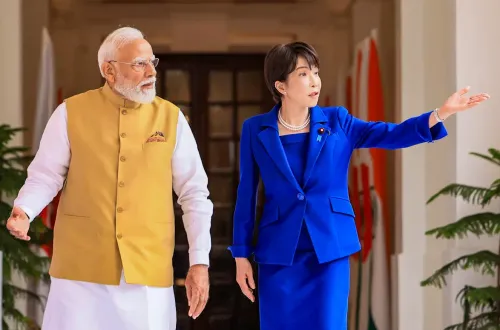
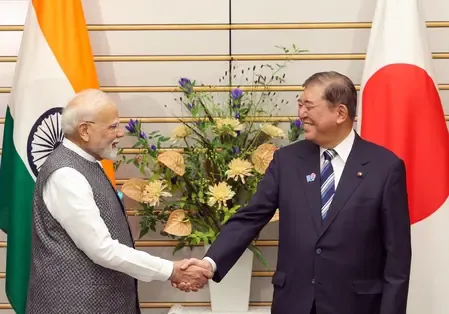
The governments led by Japanese Prime Minister Sanae Takaichi, Italian PM Giorgia Meloni, and Israeli PM Benjamin Netanyahu are pursuing policies that resonate with the administrations of President Donald Trump and PM Narendra Modi, thereby establishing a solid foundation for a lasting centre-right political coalition based on shared and complementary national interests.
“Cultural and ideological connections provide resilience in international relations. The converging ideologies of the current administrations in the US, India, Israel, Italy, and Japan present a timely chance to enhance cultural understanding and solidarity among the five centre-right nationalist traditions rooted in their respective dominant faiths. These connections could significantly help in addressing challenges and reducing discord not only in the Middle East but also across the Transatlantic and Indo-Pacific communities,” the report elaborated.
The report noted that conservative nationalists in the United States, Italy, Israel, India, and Japan would become stronger collectively and could play a pivotal role in reinforcing their shared values of faith, family, and nation while advancing their mutual interests.
To cultivate synergy, it recommended hosting an annual “Faith, Family, and Nation Forum” on a rotational basis among the five nations to promote better comprehension and establish a robust network among conservative activists.
“Centre-right nationalists are gaining prominence in all five nations as their message and actions resonate more deeply with the aspirations and concerns of their respective citizens. The shared characteristics and interests of Christian, Hindu, Jewish, and Shinto nationalism advocate for greater cultural solidarity,” it underscored.
Point of View
This content reflects a significant geopolitical alignment among five nations, emphasizing the importance of shared cultural and ideological values in strengthening international relations. The collaborative efforts of these nations signify a proactive approach toward addressing global challenges.
NationPress
23 Sept 2026
Frequently Asked Questions
What are the key nations discussed in the report?
The report discusses the United States, India, Israel, Italy, and Japan.
What is the significance of the US-India trade framework agreement?
The agreement is seen as a pivotal realignment in the partnership between the US and India for the 21st century.
How do cultural and ideological bonds impact international relations?
These bonds provide resilience and facilitate deeper understanding, which can mitigate challenges and discord among nations.
What is the proposed forum to enhance cooperation among these nations?
An annual 'Faith, Family, and Nation Forum' is suggested to promote understanding and networking among conservative activists.
Why are centre-right nationalists gaining prominence?
Their message resonates more with the aspirations and concerns of citizens across these countries.