Shipki Pass trade revival reignites Tibet legitimacy debate
Synopsis
The reopening of Shipki Pass after six years may be modest in trade volume, but it has reignited a high-stakes battle of narratives: Beijing frames it as a revival of ancient Silk Road ties, while Tibetan scholars say historical records prove Tibet traded independently — governed by customary oath, not Chinese administration — before 1951.
Key Takeaways
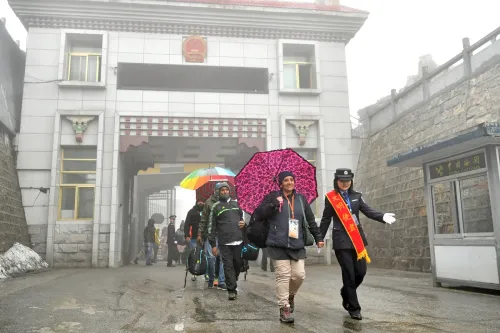
India-China trade via Shipki Pass in Kinnaur, Himachal Pradesh resumed on 1 August after a six-year suspension following the 2020 Galwan standoff .
The pass sits at approximately 3,930 metres and has historically been a gateway between India and Tibet.
Tibetan scholars argue traditional trade was governed by gamgya — a customary mutual-trust oath — not Chinese administration, predating PRC authority in the region.
Beijing's state media framed the reopening as a revival of ancient Silk Road -era ties, a narrative Tibetan experts have rejected.
Border village projects combining civilian housing with military and surveillance infrastructure near Shipki Pass have accelerated, reinforcing China's historical claims on the ground.
The report warns Beijing is consolidating its Tibet narrative through both trade resumption and physical border infrastructure.
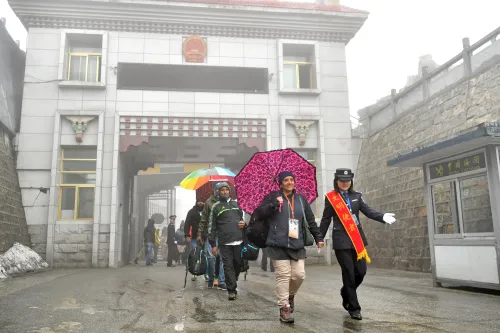
India-China trade through Shipki Pass in Himachal Pradesh's Kinnaur district resumed on 1 August after a six-year suspension, a development that carries limited economic weight but has, according to a report in The Diplomat, 'rejuvenated interest in the competing legitimacy narratives over the Tibet question.' The resumption follows the freeze triggered by the 2020 Galwan standoff.
Why Shipki Pass Matters Beyond Trade
Situated at approximately 3,930 metres above sea level in Kinnaur district, Shipki Pass has historically served as a gateway between India and Tibet. The modest volume of cross-border commerce masks a far larger political argument. Tibetan scholars contend that historical records demonstrate Tibet exercised independent commercial and political agency before 1951, well before the People's Republic of China's consolidation of authority in the region.
According to the report, traditional trade across Shipki was governed by gamgya — a customary informal oath of mutual trust — rather than any form of Chinese administration. This distinction is central to the competing narratives now being revived.
Beijing's Framing vs Tibetan Scholars' Counter-Narrative
Beijing's state-affiliated media framed the reopening as a revival of ancient Silk Road-style ties and a corrective to colonial-era trade imbalances. Tibetan experts, however, rejected this characterisation outright. They argued that the People's Republic of China's administrative and military consolidation after 1951 dismantled traditional trade and transit networks — attributing the disruption to Beijing rather than the British empire, as the official Chinese narrative implies.
The publication noted that 'with the development of modern state infrastructure on either side of Shipki Pass and growing geopolitical disputes culminating in the Sino-Indian War in 1962, the centuries-old trade system was fractured.'
Border Infrastructure and the Ground Reality
The report also flagged a parallel strategic development: the construction of border village resettlement projects near Shipki Pass in the Tibet Autonomous Region, combining civilian housing with military and surveillance infrastructure, has gained momentum in recent years. These villages, critics argue, lend physical credibility to China's version of history by elevating ancient Sino-Indian trade ties over historically documented India-Tibet exchanges.
The PRC's normalisation of trade ties with India, the report stated, 'involved the isolation of Tibet and the enforcement of new restrictions on previously autonomous trade practices between India and Tibet.'
The Broader Strategic Picture
The Diplomat report concluded that Beijing is now consolidating its rendition of Tibet as a commercial bridge — not merely through academic and journalistic channels, but through the twin levers of trade resumption and border infrastructure. This amounts to a slow but deliberate reshaping of the physical and narrative landscape along a historically contested frontier.
With India-China relations cautiously normalising after years of border tension, the Shipki Pass reopening will likely remain a pressure point where geopolitics, historical memory, and trade interests continue to intersect.
Point of View
Trade is never just trade. Beijing's simultaneous moves — state-media framing, border village construction, and measured trade normalisation — form a coherent soft-power playbook aimed at cementing its version of Tibet's history as settled fact. What mainstream coverage misses is that India's decision to resume trade, while diplomatically pragmatic, inadvertently provides Beijing with a legitimacy dividend it has long sought. The gamgya argument advanced by Tibetan scholars is historically substantive, but it has no institutional platform in current India-China diplomacy. New Delhi's silence on the Tibet narrative dimension of this reopening is itself a choice — and one with long-term strategic consequences.
NationPress
22 Sept 2026
Frequently Asked Questions
When did trade resume through Shipki Pass and why was it suspended?
Trade through Shipki Pass resumed on 1 August after a six-year suspension that followed the 2020 Galwan Valley standoff between Indian and Chinese forces. The pass had served as a historic trade route between India and Tibet before the freeze.
What is the gamgya system and why do Tibetan scholars cite it?
Gamgya is a traditional informal oath of mutual trust that historically governed trade across Shipki Pass. Tibetan scholars cite it to argue that pre-1951 trade was managed through Tibet's own customary institutions, not Chinese administration — directly countering Beijing's claim of sovereign continuity over the region.
How is China using the Shipki Pass reopening politically?
Beijing's state-affiliated media has framed the reopening as a revival of ancient Silk Road-era commerce and a correction of colonial-era trade imbalances. Alongside this narrative, China has accelerated border village construction near Shipki Pass that combines civilian housing with military and surveillance infrastructure, physically reinforcing its historical claims.
What do Tibetan scholars say about China's Tibet trade narrative?
Tibetan scholars argue that the PRC's post-1951 administrative and military consolidation dismantled — rather than preserved — traditional trade networks between India and Tibet. They contend the British empire, not China, is incorrectly blamed in Beijing's version, and that Tibet exercised independent commercial and political agency before 1951.
What is the broader strategic significance of the Shipki Pass development?
According to the report, Beijing is using trade resumption alongside border infrastructure to consolidate a narrative of Tibet as a historic commercial bridge between India and China — effectively sidelining the distinct India-Tibet trade history. Analysts see this as part of a wider effort to shape the legitimacy debate over Tibet through physical and diplomatic means.