J&K daily wage workers protest in Srinagar for regularisation, wage hike
Synopsis
Over 50,000 daily wage workers in Jammu and Kashmir took to the streets in Srinagar during the ongoing Legislative Assembly session, demanding wages and regularisation that have been stuck in bureaucratic review since at least March 2025. With a government committee still consulting departments and no final policy in sight, these workers — who keep critical departments like PHED and PDD running — are losing patience.
Key Takeaways
Casual and daily wage workers staged a protest in Srinagar on 22 September 2026 , demanding wage hike and regularisation.
The protest was led by Sajad Ahmed Parray , President of the J&K Casual/Daily Wagers Forum .
Over 50,000 daily wagers are employed across J&K government departments, including PHED, Flood and Irrigation, and PDD.
The J&K government has a committee formed in March 2025 examining a uniform regularisation framework, with consultations still ongoing.
The government has assured phased regularisation but has not announced a specific timeline.
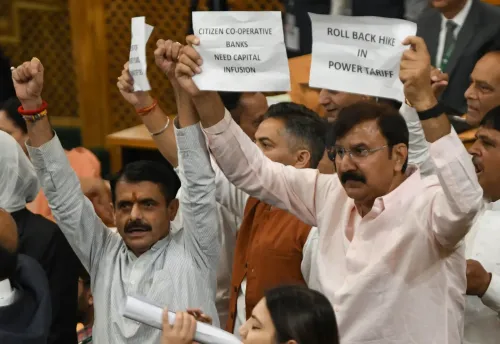
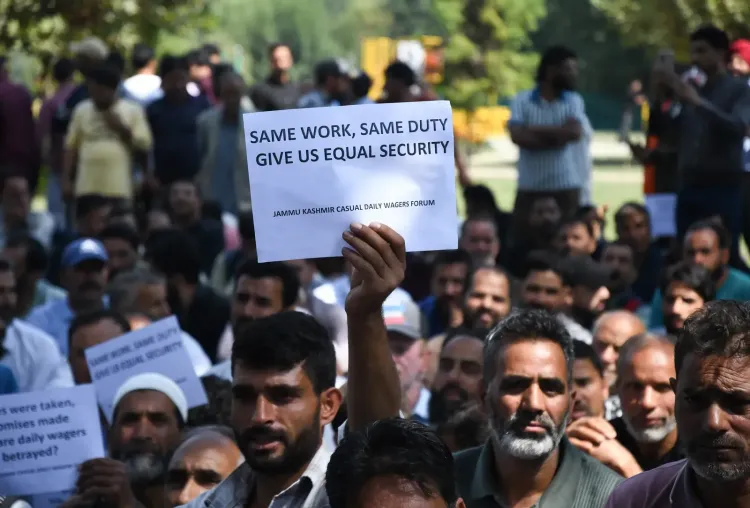
More than 50,000 casual and daily wage workers employed across various Jammu and Kashmir government departments staged a protest in Srinagar on Tuesday, 22 September, demanding wage enhancement and regularisation of their services. The demonstration was timed to coincide with the ongoing Jammu and Kashmir Legislative Assembly session, where temporary employment issues are currently under discussion.
Who led the protest and what they demanded
The protest was organised by the Jammu and Kashmir Casual/Daily Wagers Forum and led by its President, Sajad Ahmed Parray. Workers from multiple government departments gathered to press for two core demands: a hike in wages and formal regularisation of their employment status, both of which they say have remained unresolved for a long time.
The protesting workers urged the Union Territory government to take concrete and immediate steps to address their concerns, arguing that repeated assurances have not translated into action.
What the J&K government has said
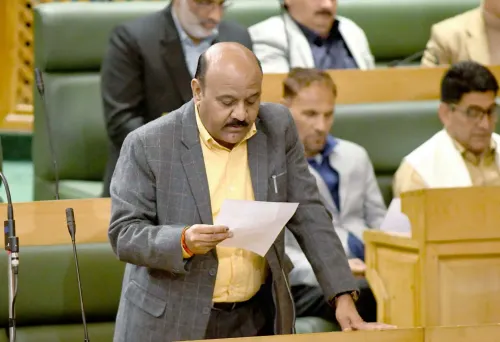
The Jammu and Kashmir government has informed the Legislative Assembly that it is examining a uniform regularisation framework covering daily-rated workers, casual labourers, seasonal staff, and other contractual and need-based employees. A committee constituted in March 2025 is reportedly assessing the humanitarian, legal, and financial dimensions of such a move, with consultations across concerned departments still ongoing before any final policy decision is made.
The government has also assured phased regularisation of all daily wagers across the Union Territory, though a concrete timeline has not been announced.
Scale of the issue and departmental dependence
According to available statistics, over 50,000 daily wagers are currently employed across various J&K government departments. Ground reports indicate that these workers bear a disproportionately large share of the workload in critical departments, including the Public Health Engineering Department (PHED), the Flood and Irrigation Department, and the Power Development Department (PDD). Officials acknowledge that several of these departments would be severely hampered without the contribution of daily wage staff.
Broader context
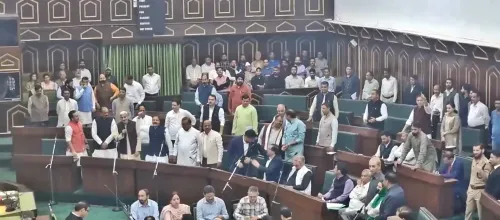
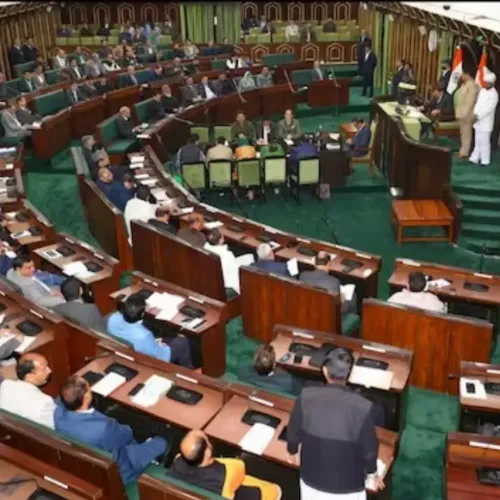
The timing of the protest is significant. With the J&K Legislative Assembly now in session following the Union Territory's first elected government in over half a decade, workers appear to be leveraging the political moment to amplify pressure. The issue of contractual and temporary employment in J&K government departments is not new — successive administrations have grappled with the legal and fiscal burden of regularisation, which carries long-term salary and pension implications for the exchequer.
This is the latest in a series of demonstrations by J&K daily wagers seeking a resolution to employment uncertainties that have persisted across multiple governments and administrative arrangements.
With the regularisation committee's report still awaited and no final policy date set, the workers' push is unlikely to ease until a concrete framework is officially notified.
Point of View
Power, flood control — function largely on the backs of workers who have no formal employment security. A regularisation committee set up in March 2025 is still in consultation mode nearly 18 months later, which raises questions about political will rather than administrative capacity. With an elected government now in place after years of direct central rule, daily wagers are right to ask whether this moment of democratic accountability will finally yield a binding policy — or another set of assurances. The fiscal argument against mass regularisation is real, but so is the operational dependence on these workers, and the longer the gap between the two remains unaddressed, the louder the unrest will grow.
NationPress
22 Sept 2026
Frequently Asked Questions
Why are J&K daily wage workers protesting in Srinagar?
Casual and daily wage workers in Jammu and Kashmir are protesting to demand wage enhancement and regularisation of their services, both of which they say have remained unresolved for years. The protest on 22 September 2026 was deliberately timed to coincide with the ongoing J&K Legislative Assembly session.
Who organised the Srinagar protest by daily wagers?
The protest was organised by the Jammu and Kashmir Casual/Daily Wagers Forum and led by its President, Sajad Ahmed Parray. Workers from multiple government departments participated.
What has the J&K government said about regularising daily wagers?
The J&K government has told the Legislative Assembly that a committee formed in March 2025 is examining a uniform framework for regularisation covering daily-rated, casual, seasonal, and contractual workers. It has assured phased regularisation but has not announced a final timeline, saying inter-departmental consultations are still required.
How many daily wage workers are employed in J&K government departments?
According to available statistics, more than 50,000 daily wagers work across various Jammu and Kashmir government departments. Ground reports indicate they carry a major share of the workload in departments such as PHED, the Flood and Irrigation Department, and the Power Development Department.
What happens next for J&K daily wagers?
The regularisation committee is expected to submit its findings after completing departmental consultations, following which the J&K government will take a final policy decision. Workers are urging the government to expedite the process, particularly given that the Legislative Assembly session currently offers a direct platform for the issue.