Egypt's Sisi warns water security is non-negotiable amid GERD standoff
Synopsis
Egyptian President Sisi's message at Cairo Water Week was unmistakably pointed — 'any wager that Egypt will accept a fait accompli is a losing wager.' With Ethiopia's GERD already inaugurated and trilateral talks deadlocked, Sisi is internationalising Egypt's water security red line ahead of the 2026 UN Water Conference, turning a regional dam dispute into a global diplomatic pressure campaign.
Key Takeaways
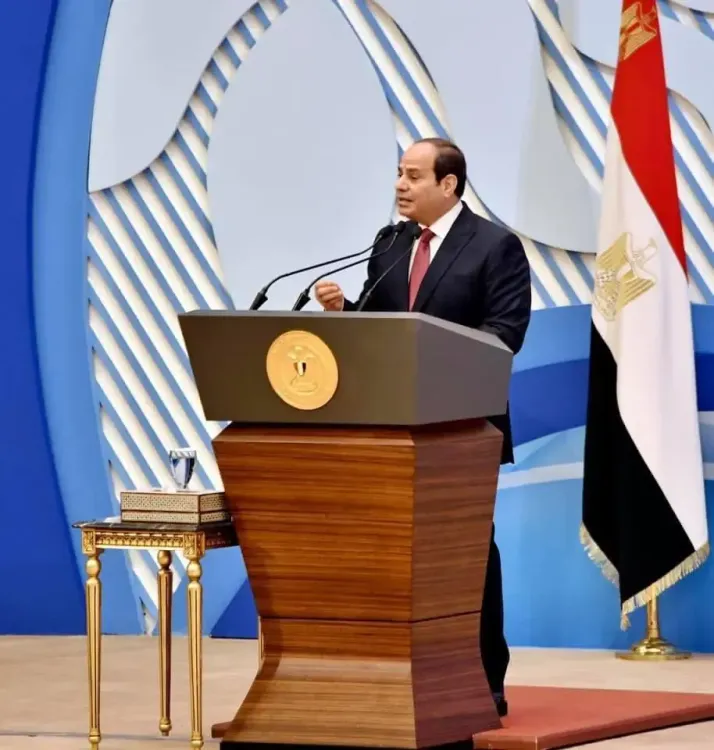
President Abdel Fattah El-Sisi warned on 25 October 2026 that Egypt's water security is non-negotiable, speaking at the Ninth Cairo Water Week in Cairo .
The Nile River provides Egypt with more than 98 per cent of its renewable water resources, making it uniquely vulnerable to upstream changes.
Ethiopia officially inaugurated the Grand Ethiopian Renaissance Dam (GERD) in September 2025 ; years of trilateral talks with Egypt and Sudan have not produced a binding agreement.
Sisi reaffirmed willingness to cooperate based on international law but issued a direct warning against any assumption Egypt would accept a fait accompli.
The Ninth Cairo Water Week runs through Thursday, with more than 130 sessions and a focus on preparations for the 2026 UN Water Conference in the UAE in December .
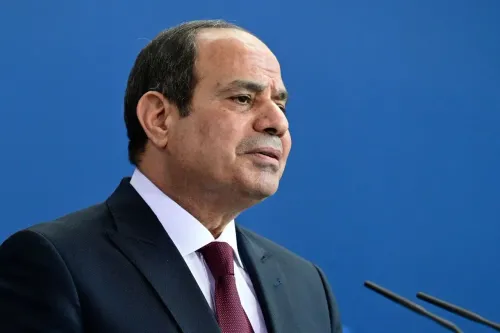
Egyptian President Abdel Fattah El-Sisi issued a firm warning on Sunday, 25 October 2026, that Egypt's water security cannot be compromised, speaking at the opening of the Ninth Cairo Water Week in Cairo. Addressing the forum through a recorded message, Sisi underscored that the Nile River supplies more than 98 per cent of Egypt's renewable water resources — a dependency that makes any threat to the river's flow an existential concern.
Sisi's Core Warning
The president drew a clear red line, stating: 'Any wager that Egypt will accept a fait accompli or compromise its water security is a losing wager.' He stressed that the Egyptian state would not neglect its responsibility to protect the interests of its people. The remarks carried particular weight given the unresolved dispute over the Grand Ethiopian Renaissance Dam (GERD), which Ethiopia officially inaugurated in September 2025.
Cooperation and Dialogue — Egypt's Stated Path
Despite the firm rhetoric, Sisi framed Egypt's posture as one of engagement rather than confrontation. He stated that 'Egypt respects and supports the right of all Nile Basin states to development,' and reaffirmed Cairo's willingness to cooperate with other basin nations based on international law, consultation, coordination, good neighbourliness, and the principle of causing no harm. He also highlighted ongoing cooperation with southern Nile Basin countries on proposed projects spanning energy, agriculture, and irrigation.
Sisi expressed a forward-looking ambition: 'Egypt looks forward to reinforcing cooperation in the Eastern Nile Basin in a manner that serves the interests of Egypt, Sudan, and Ethiopia.' He called for converting the Nile Basin's potential into partnerships that maximise shared benefits and ensure the river remains 'a source of development, prosperity, and stability for all peoples of the Basin.'
The GERD Dispute: Years of Failed Talks
The backdrop to Sisi's remarks is a protracted and unresolved diplomatic dispute. Both Egypt and Sudan — downstream nations — have repeatedly raised concerns about their water shares following Ethiopia's construction of the GERD on the Blue Nile. Years of trilateral negotiations among the three countries have failed to produce a binding legal agreement governing the rules for the dam's filling and operation.
Ethiopia, for its part, inaugurated the dam in September 2025, asserting that the hydropower project would boost electricity generation and economic development without harming downstream nations. Cairo and Khartoum have contested that assurance, demanding legally enforceable guarantees that have yet to materialise.
Cairo Water Week: The Broader Platform
The Ninth Cairo Water Week is being held under the theme 'Water as a Catalyst for Peace, Shared Prosperity and a Sustainable Planet.' The five-day event runs until Thursday and features more than 130 sessions covering water security, capacity building, and preparations for the 2026 UN Water Conference, which is scheduled to be convened in the UAE in December. The forum provides Cairo a high-profile platform to internationalise its concerns ahead of that global gathering.
As the GERD dispute enters a new phase following the dam's inauguration, the trajectory of water diplomacy across the Nile Basin — and whether a legally binding framework can be negotiated before the next filling cycle — will be closely watched by all parties.
Point of View
And the window for a pre-filling agreement has effectively closed; Egypt's leverage is now almost entirely reputational and multilateral. The persistent framing of cooperation alongside an unambiguous red line reveals the structural bind Cairo finds itself in: unable to compel a binding deal, yet unwilling to legitimise the status quo. How Egypt converts diplomatic pressure into actual water guarantees at the UN forum in December will define whether this posture is a strategy or a grievance.
NationPress
26 Oct 2026
Frequently Asked Questions
Why is Egypt concerned about water security?
Egypt depends on the Nile River for more than 98 per cent of its renewable water resources, making it extraordinarily vulnerable to any reduction in flow caused by upstream dam operations. The construction and inauguration of Ethiopia's Grand Ethiopian Renaissance Dam has heightened these concerns significantly.
What is the Grand Ethiopian Renaissance Dam (GERD) dispute?
The GERD is a large hydropower dam built by Ethiopia on the Blue Nile, officially inaugurated in September 2025. Egypt and Sudan, as downstream nations, have expressed repeated concern that its filling and operation could reduce their water shares. Years of trilateral negotiations have failed to produce a legally binding agreement on the rules governing the dam.
What did President Sisi say at Cairo Water Week?
Sisi warned that 'any wager that Egypt will accept a fait accompli or compromise its water security is a losing wager.' He also reaffirmed Egypt's willingness to cooperate with Nile Basin states based on international law and the principle of causing no harm, while calling for partnerships that maximise shared benefits.
What is the Cairo Water Week and why does it matter this year?
The Ninth Cairo Water Week is a five-day forum running until Thursday under the theme 'Water as a Catalyst for Peace, Shared Prosperity and a Sustainable Planet,' featuring more than 130 sessions. It is particularly significant in 2026 as it serves as a preparatory platform for the UN Water Conference scheduled to be held in the UAE in December.
What happens next in the Egypt-Ethiopia water dispute?
With the GERD already operational and trilateral talks stalled, the next major diplomatic arena is the 2026 UN Water Conference in the UAE in December. Egypt is expected to use that platform to internationalise its demand for a binding legal framework governing the dam's operation and filling cycles.