Trump Meets Egypt's Sisi in Bilateral Summit at White House

Synopsis
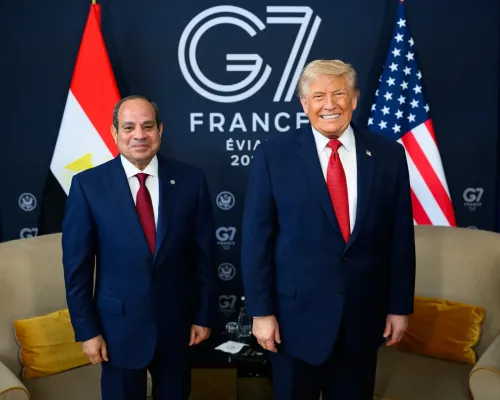
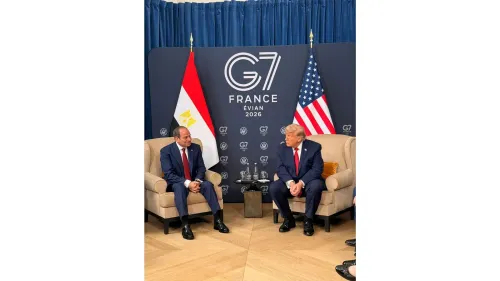
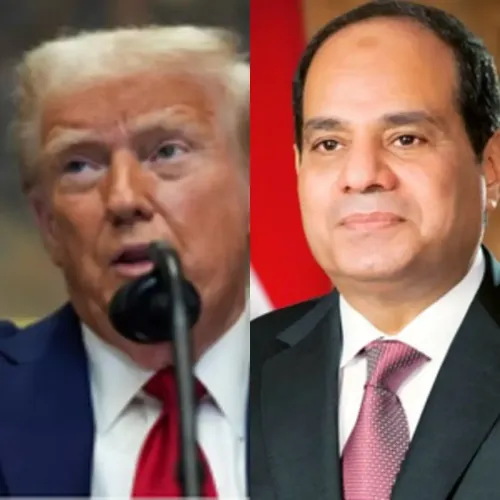
President Donald Trump met Egyptian President Abdel Fattah el-Sisi at the White House on June 17, 2026. The bilateral summit continues a long-standing US-Egypt strategic partnership rooted in military cooperation, counterterrorism, and regional stability efforts centred on Gaza and the Sinai.
Key Takeaways
President Trump held a bilateral meeting with Egyptian President Abdel Fattah el-Sisi on June 17, 2026 .
Egypt has been a major recipient of US military assistance since the 1979 Egypt-Israel Peace Treaty .
The two nations share strategic interests in Sinai security, Gaza diplomacy, and counterterrorism cooperation.
El-Sisi has led Egypt since 2014 and held multiple summits with Trump during the latter's first term.
Analysts will watch for joint statements on military aid levels or new security understandings from the meeting.
Follow-up diplomatic activity may occur at the UN General Assembly or upcoming Arab League gatherings.
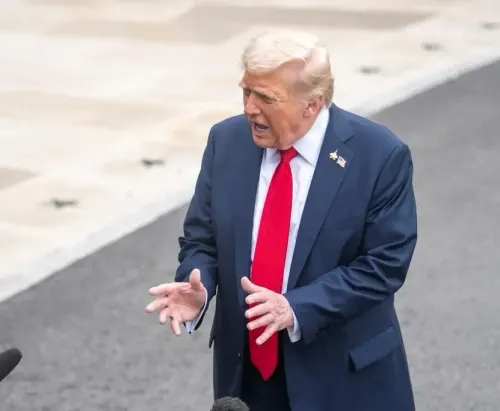
Washington DC, June 17, 2026 — The White House announced on Wednesday, June 17, 2026, that President Donald Trump participated in a bilateral meeting with President Abdel Fattah el-Sisi of the Arab Republic of Egypt, marking a significant diplomatic engagement between the two nations.
Context
Egypt is one of the United States' most enduring strategic partners in the Middle East, a relationship anchored by the landmark 1979 Egypt-Israel Peace Treaty. That accord formalized an annual American military assistance package to Cairo that has been sustained across successive administrations, making Egypt one of the largest recipients of US military aid globally.
President el-Sisi, who has led Egypt since 2014, has maintained close security and military coordination with Washington. During Trump's first term between 2017 and 2021, the two leaders held multiple bilateral summits emphasising counterterrorism cooperation and regional stability.
Policy Backdrop
US-Egypt bilateral meetings have historically addressed a cluster of shared strategic concerns: security in the Sinai Peninsula, the evolving situation in Gaza, and Egypt's role as a stabilising Arab partner in a volatile region. Cairo has long served as a back-channel mediator between Israel and Palestinian factions, a function that gives it outsized diplomatic weight in Washington's calculations.
The bilateral relationship has also been shaped by disputes over the Nile Basin, particularly the Grand Ethiopian Renaissance Dam, where Egypt has sought American diplomatic support. These layered interests make US-Egypt summits substantive affairs that go well beyond ceremonial optics.
Stakeholders and Impact
The primary stakeholders in this engagement include the Egyptian and American diplomatic and military establishments, as well as regional actors watching for signals on Gaza policy and broader Middle East security architecture. Any new security understandings or adjustments to the annual US military aid package would carry significant implications for the region.
For India, which maintains strong bilateral ties with both Washington and Cairo, the tenor of this meeting is relevant to the broader question of how the Trump administration is managing its relationships with key Arab partners amid ongoing tensions in the Middle East.
What's Next
Observers will watch closely for any joint statement emerging from the meeting, particularly regarding security commitments, military assistance levels, or a shared position on Gaza. Follow-up discussions could surface at upcoming multilateral forums, including sessions at the United Nations General Assembly or gatherings of the Arab League.
The meeting signals that Trump's second-term foreign policy continues to prioritise quiet, transactional diplomacy with established Arab partners, sustaining a pattern of military coordination over public pressure on governance issues.
Point of View
Sustaining Egypt as a predictable partner is especially valuable given the unresolved Gaza crisis, where Cairo's mediating role is indispensable. The meeting also signals that Washington is reinforcing its Middle East alliances through direct leader-level diplomacy rather than multilateral frameworks. For regional observers, the key question is whether this summit produces any concrete shift in the US posture on Gaza or the annual military aid package.
NationPress
20 Sept 2026
Frequently Asked Questions
Why did Trump meet Egypt's President Sisi in June 2026?
President Trump met President el-Sisi on June 17, 2026, for a bilateral summit to discuss shared strategic interests including security cooperation, counterterrorism, and regional issues such as the situation in Gaza.
What is the relationship between the US and Egypt?
The US and Egypt have been close strategic partners since the 1979 Egypt-Israel Peace Treaty, with Washington providing Egypt an annual military assistance package that has been maintained across administrations for decades.
What topics are usually discussed at US-Egypt bilateral meetings?
US-Egypt summits typically cover counterterrorism cooperation, Sinai Peninsula security, Gaza diplomacy, Nile Basin disputes, and the terms of American military aid to Cairo.
Who is Egypt's President Abdel Fattah el-Sisi?
Abdel Fattah el-Sisi has been President of Egypt since 2014. He has maintained close military and security ties with the United States and met with Trump multiple times during the latter's first term from 2017 to 2021.
What could come out of the Trump-Sisi meeting?
Observers are watching for a joint statement on security commitments, any adjustment to US military aid levels, or a shared position on Gaza, with possible follow-up at the UN General Assembly or Arab League gatherings.