Egypt's Sisi Congratulates Trump on Middle East Peace Breakthrough
Synopsis
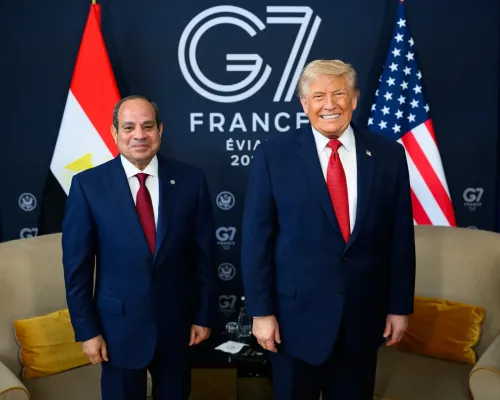
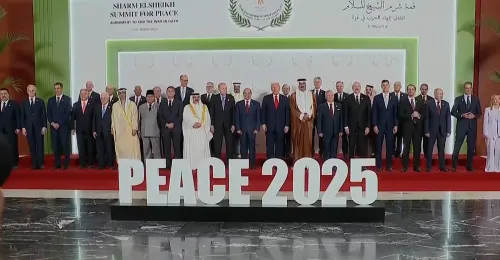
Egyptian President Abdel Fattah el-Sisi publicly congratulated US President Trump on what he called a breakthrough in restoring peace to the Middle East, with the White House amplifying the remarks on 17 June 2026. The statement underscores Cairo's alignment with Washington's regional diplomacy at a potentially pivotal moment.
Key Takeaways
Egyptian President Abdel Fattah el-Sisi congratulated US President Trump on achieving what he described as a Middle East peace breakthrough.
The White House amplified Sisi's remarks on 17 June 2026 , signalling Washington's intent to highlight allied endorsement of its diplomacy.
Egypt has been a cornerstone of US-led Middle East diplomacy since the Camp David Accords of 1978 and the Egypt-Israel Peace Treaty of 1979 .
The Abraham Accords of 2020 set a recent precedent for Arab-Israeli normalization under US auspices, which Egypt publicly supported.
Specific terms and parties to the 2026 breakthrough have not been independently confirmed; follow-on multilateral meetings are expected to provide clarity.
For India , stability in the Middle East carries direct implications for the millions of Indian workers in the region and for energy security.
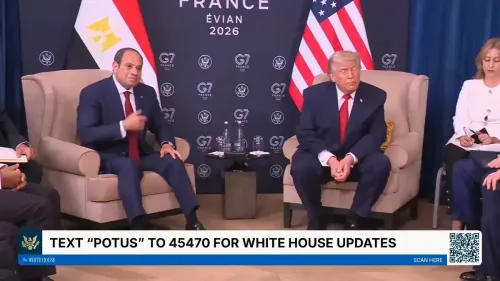
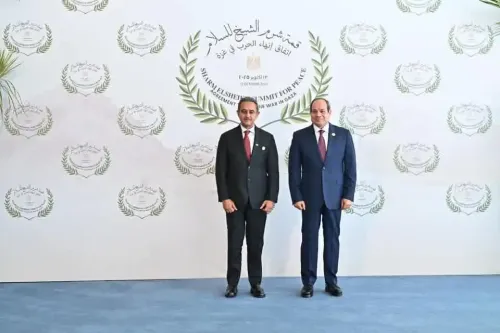
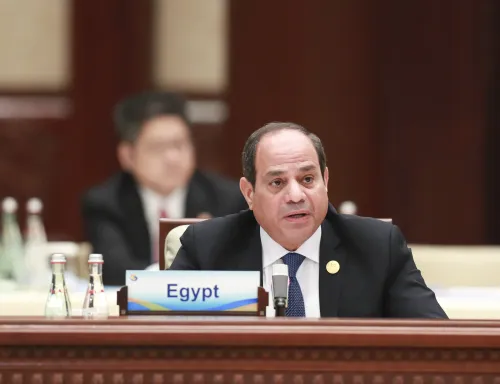
Egyptian President Abdel Fattah el-Sisi publicly congratulated US President Donald Trump on what he described as a breakthrough in restoring peace to the Middle East, in remarks amplified by the White House on Wednesday, 17 June 2026. The official White House account on X shared Sisi's direct quote, underscoring Washington's move to highlight allied endorsement of its regional diplomacy.
Context
Sisi's statement, as quoted by the White House, read: 'Let me start by expressing big congratulations for the breakthrough that you have achieved, Mr. President, of restoring peace to the Middle East.' The remarks signal a significant moment of Egyptian-American diplomatic alignment, with Cairo publicly crediting Washington for a development the two governments are framing as a historic regional achievement.
Egypt has long positioned itself as an indispensable mediator in Middle Eastern affairs. As the first Arab country to sign a peace treaty with Israel — the Egypt-Israel Peace Treaty of 1979 — Cairo has maintained a unique diplomatic standing that successive US administrations have relied upon in brokering regional arrangements.
Policy Backdrop
The foundations of US-brokered Arab-Israeli diplomacy stretch back to the Camp David Accords of 1978, which led directly to the 1979 peace treaty between Egypt and Israel. That framework established a template for incremental normalization deals that Washington has returned to repeatedly over the decades.
More recently, the Abraham Accords of 2020 advanced Arab-Israeli normalization under US auspices, with Egypt publicly supporting the resulting economic and security cooperation. The current development, as referenced in Sisi's statement, appears to represent a further step in that long diplomatic arc, though specific details of the 2026 agreement have not been independently confirmed.
Stakeholders and Impact
The primary stakeholders in any US-led Middle East peace process include the Egyptian government, Israeli and Palestinian negotiating teams, and Gulf Arab states that have participated in or observed normalization efforts. Egypt's role as a border state with the Gaza Strip makes its endorsement of any peace framework particularly significant for on-the-ground implementation.
The White House's decision to amplify Sisi's congratulatory remarks fits a well-established pattern of US administrations showcasing third-party validation during active diplomatic phases, lending multilateral legitimacy to bilateral or US-led initiatives. For India, which maintains strong ties with both Washington and Cairo and has significant interests in West Asian stability — including the welfare of millions of Indian workers in the region — any durable Middle East peace framework carries direct economic and strategic implications.
What's Next
Attention will now turn to whether follow-on trilateral or multilateral meetings involving Egypt, Israel, and the United States are convened to operationalize the referenced breakthrough. Analysts will watch for formal statements from all parties, the scope of any agreement, and the role of Gulf states in consolidating or expanding the arrangement.
If the momentum holds, the current diplomatic moment could mark a significant reconfiguration of regional alignments in the Middle East — one with implications for global energy markets, security architecture, and humanitarian conditions in conflict zones across the region.
Point of View
Using a respected regional actor's voice to validate a diplomatic outcome that remains short on publicly confirmed details. Egypt's endorsement carries particular weight given its unique position as both a peace-treaty partner with Israel and a key interlocutor with Palestinian factions, making Sisi's praise more than ceremonial. This move fits a pattern seen across US administrations: amplifying third-party affirmation during the announcement phase of a deal to build narrative momentum before formal details are released. The broader arc points toward an accelerating push for comprehensive Arab-Israeli normalization, with the 2026 moment potentially positioned as the most significant development since the Abraham Accords of 2020.
NationPress
23 Sept 2026
Frequently Asked Questions
What did Egypt's President Sisi say about Middle East peace?
President Sisi congratulated US President Trump on achieving what he called a breakthrough in restoring peace to the Middle East, in remarks shared by the White House on 17 June 2026.
What is Egypt's role in Middle East peace efforts?
Egypt has been a central mediator in Middle Eastern diplomacy since signing the Egypt-Israel Peace Treaty in 1979. Cairo has hosted multiple rounds of indirect talks between Israeli and Palestinian factions and is a key interlocutor for successive US administrations.
What are the Abraham Accords and how do they relate to this?
The Abraham Accords of 2020 were US-brokered normalization agreements between Israel and several Arab states. Egypt publicly supported the accords, and the current 2026 development appears to be a further step in that diplomatic trajectory.
Why does Middle East peace matter for India?
Millions of Indian workers are employed across West Asian countries, and India is heavily dependent on the region for energy imports. Any durable Middle East peace framework directly affects India's economic and strategic interests.
What details are known about the 2026 Middle East peace breakthrough?
Specific details, including the exact parties and terms of the 2026 agreement, have not yet been independently confirmed. Follow-on multilateral meetings involving Egypt, Israel, and the United States are expected to provide further clarity.