Trump Claims Solo Credit on 47-Year Foreign Policy Stalemate
Synopsis
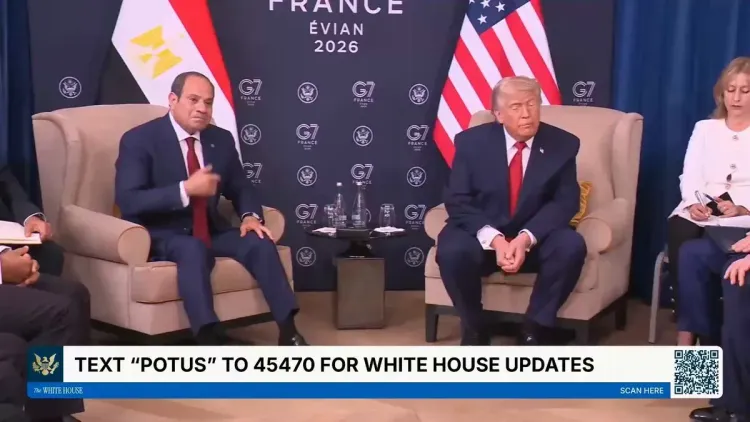
The White House posted a video on June 17, 2026, quoting President Trump claiming he alone resolved a foreign policy issue that has persisted for 47 years, a timeframe pointing to the unresolved dimensions of Arab-Israeli diplomacy since the 1979 Egypt-Israel Peace Treaty.
Key Takeaways
The White House posted a video clip on June 17, 2026 quoting President Trump on a long-running foreign policy matter.
Trump stated the issue had been ongoing for 47 years , placing its origin around 1979 — the year of the Egypt-Israel Peace Treaty .
He claimed to be 'the only one that did anything about it,' consistent with his broader pattern of asserting singular credit for diplomatic milestones.
The specific subject of 'this' was not identified in the post text; the full context is in the linked video.
During his first term, Trump brokered the Abraham Accords , normalising Israel's relations with four Arab states — the most significant regional shift since 1979 .
Further expansions of the Abraham Accords or new bilateral security deals remain possible in the current term.
Washington DC, June 17, 2026 — The White House on Wednesday shared a video clip of President Donald J. Trump asserting that a long-running foreign policy issue — described as persisting for 47 years — was finally addressed under his leadership alone, with Trump stating he is 'the only one that did anything about it.'
Context
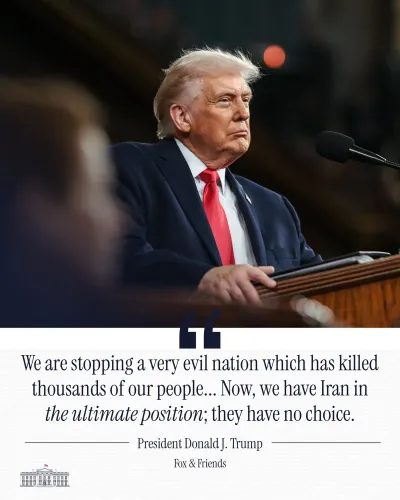
The post quotes President Trump directly: 'This has been going on for 47 years... and I'm the only one that did anything about it.' The accompanying video, shared via the official White House account, provides the full remarks, though the specific subject of 'this' is not identified in the post text itself.
The reference to 47 years places the origin of the issue around 1979 — the year the landmark Egypt-Israel Peace Treaty was signed, establishing the foundational framework for subsequent US-brokered Arab-Israeli diplomacy. That treaty ended decades of open warfare between the two countries and set the template for American engagement in the region.
Policy Backdrop
Every US administration since the late 1970s has pursued, in varying degrees, normalisation between Israel and Arab states. These efforts have alternated between comprehensive multilateral peace plans and narrower bilateral transactional arrangements.
During his first term, Trump pursued an unorthodox approach that bypassed traditional multilateral tracks, culminating in the Abraham Accords — agreements that normalised relations between Israel and several Arab states including the UAE, Bahrain, Sudan, and Morocco. The current second term has seen continued emphasis on expanding that framework.
Trump has consistently framed his foreign policy record as a departure from the incrementalism of predecessors across both parties, frequently citing achievements that he argues eluded administrations stretching back decades.
Stakeholders and Impact
Israeli officials and Arab governments are the primary stakeholders in any US-led regional initiative. Normalisation agreements carry significant economic, security, and diplomatic consequences for all parties, including implications for the broader Middle East security architecture.
For India, shifts in US-Middle East diplomacy carry direct relevance: the region hosts a large Indian diaspora, is a critical energy supplier, and sits along key trade corridors. Any durable security arrangement in the region affects Indian strategic and economic interests.
What's Next
Analysts and regional governments will closely scrutinise the full video remarks to identify the specific policy or agreement Trump is referencing. Possible developments in the current term include further accessions to the Abraham Accords or new bilateral security agreements with Arab states.
If the remarks relate to a fresh diplomatic breakthrough, formal announcements from the State Department or partner governments would be expected to follow. The White House's choice to amplify this quote signals that the administration views the development as a significant political and diplomatic marker heading into the latter half of 2026.
Point of View
Implicitly elevating any current breakthrough to the level of the Egypt-Israel Peace Treaty. Without confirmation of the specific referent, the remark functions as a strong signal of an imminent or recent announcement, likely tied to the Abraham Accords expansion track. For regional governments and Indian policymakers watching US-Middle East dynamics, the rhetoric alone shifts expectations and negotiating atmospheres.
NationPress
19 Sept 2026
Frequently Asked Questions
What is Trump referring to when he says 'this has been going on for 47 years'?
The specific issue is not named in the post text and requires viewing the linked video for full context. The 47-year timeframe points to approximately 1979 , the year of the Egypt-Israel Peace Treaty , suggesting the remark relates to unresolved aspects of Arab-Israeli diplomacy or a connected regional security matter.
What are the Abraham Accords and what is Trump's role in them?
The Abraham Accords , brokered during Trump's first term, normalised relations between Israel and the UAE , Bahrain , Sudan , and Morocco . They are widely regarded as the most significant shift in Arab-Israeli diplomacy since the Egypt-Israel Peace Treaty of 1979 .
Why does Trump say he is the 'only one' who acted on this issue?
Trump frequently frames his foreign policy record as a break from the incrementalism of prior administrations. His reference to being the sole actor is consistent with how he has characterised achievements like the Abraham Accords , which bypassed traditional multilateral diplomatic tracks.
What does this White House post mean for India?
Any major shift in US-Middle East diplomacy has direct implications for India , given the large Indian diaspora in the region, India's dependence on Gulf energy exports, and key trade corridors passing through the area. A durable regional security arrangement could reshape India's strategic partnerships.
Is there a new Middle East deal expected from Trump in 2026?
The White House post signals a significant diplomatic development, with possible further accessions to the Abraham Accords or new bilateral security agreements among the most likely outcomes being watched by analysts in 2026 .