Trump Hopes Diplomatic Deal Lasts 'For Eternity'
Synopsis
The White House on June 1, 2026, quoted President Donald J. Trump expressing hope that an unspecified diplomatic development would prove permanent, writing 'Hopefully it will be for ETERNITY!' — consistent with his pattern of publicly staking credibility on deals brokered during his presidency.
Key Takeaways
The White House posted a direct quote from President Donald J.
Trump on June 1, 2026 , expressing hope a diplomatic outcome would last 'for ETERNITY'.
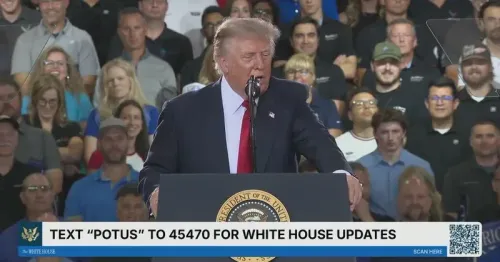
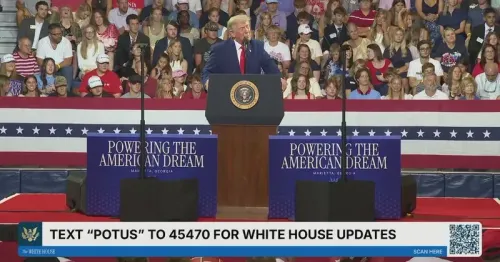
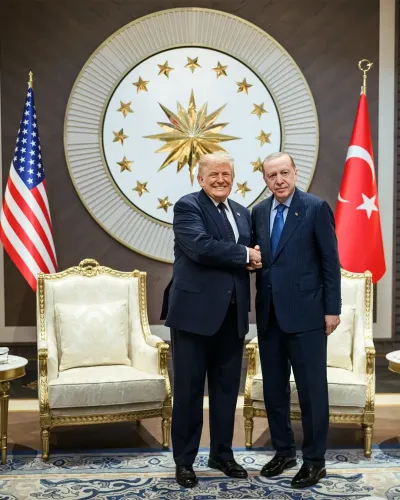
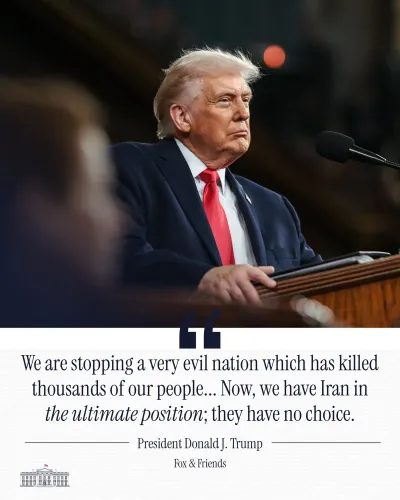
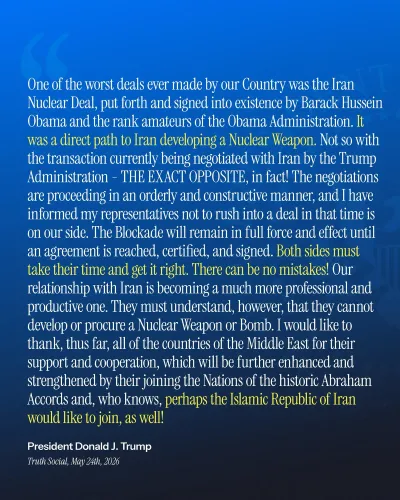
The specific agreement or event referenced in the post was not named; the post included one image.
The statement follows a pattern from Trump's first and second terms of using maximalist language to publicly endorse deals brokered under his administration.
The Abraham Accords of 2020 represent the clearest precedent for this style of presidential endorsement of diplomatic durability.
Trump's second term began in January 2025 and has continued this approach of direct White House social media signalling on foreign policy.
The State Department and National Security Council are expected to provide further clarity on the referenced agreement.
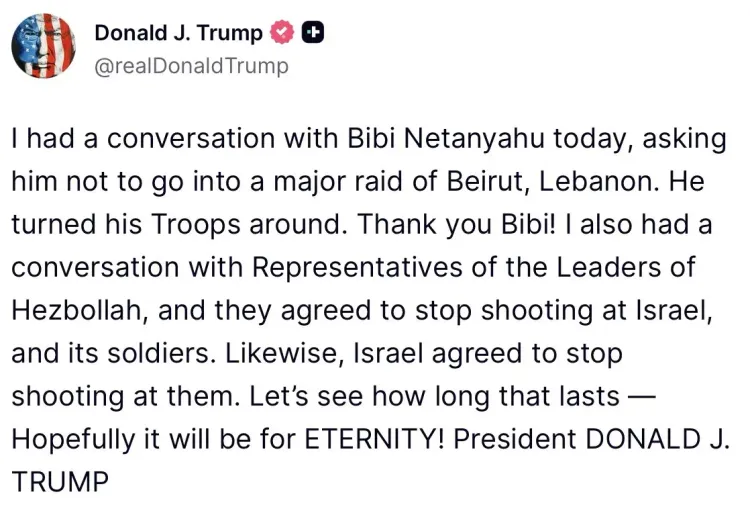
The White House posted a statement on X on Monday, June 1, 2026, quoting President Donald J. Trump expressing hope that an unspecified diplomatic development would prove permanent. The post, attributed directly to the President, read: 'Let's see how long that lasts — Hopefully it will be for ETERNITY!'
Context
The White House shared the quote alongside an image, though the specific agreement or event being referenced was not identified in the post itself. The statement's tone — optimistic but measured with the phrase 'let's see how long that lasts' — suggests the President was reacting to a diplomatic milestone, ceasefire, or deal announced close to the time of posting.
The post reflects a rhetorical pattern consistent with Trump's second term, in which the White House has used social media to signal the administration's confidence in agreements brokered under its watch, framing them as durable rather than provisional.
Policy Backdrop
Trump's first term produced the Abraham Accords of 2020, a set of normalisation agreements between Israel and several Arab states that the administration repeatedly described as historic and lasting. That precedent established a template: the President publicly vouching for the longevity of deals as a diplomatic signal in itself.
In his second term, which began in January 2025, Trump has continued to frame diplomatic outcomes — whether ceasefires, trade pacts, or bilateral agreements — in maximalist terms, often via direct White House communications rather than formal State Department channels. The use of the word 'ETERNITY' in all capitals is consistent with this style of emphatic public endorsement.
Stakeholders and Impact
The statement carries weight for any parties to the referenced agreement, as a sitting US President publicly staking his credibility on its durability creates diplomatic pressure to maintain it. US allies and conflict parties in ongoing disputes will be watching for follow-up signals from the State Department or the National Security Council to understand the full scope of what Trump was endorsing.
For India, which maintains active diplomatic and strategic ties with Washington, any durable shift in the regional or global security architecture stemming from a US-brokered deal carries direct implications for trade, defence partnerships, and multilateral forum alignments.
What's Next
Analysts and foreign ministries will look for a formal statement from the State Department or a scheduled bilateral meeting in the second half of 2026 to clarify the specific agreement Trump was referencing. The White House post, while brief, signals that the administration views the development as significant enough to warrant direct presidential commentary.
Whether the optimism holds will depend on the parties involved and the mechanisms built into the underlying agreement — details the administration has yet to publicly elaborate on following this post.
Point of View
The President places his personal credibility behind whatever agreement is being referenced, making any future unravelling a reputational cost for the administration. This mirrors the Abraham Accords playbook, where maximalist framing was used to lock parties into a narrative of irreversibility. The ambiguity of the post — no named parties, no named deal — is itself strategic, allowing the White House to generate momentum and media attention before formal details are released. For countries like India that calibrate their foreign policy partly around US commitments, the durability of such deals is a live variable worth tracking closely.
NationPress
23 Sept 2026
Frequently Asked Questions
What did Trump mean by 'Hopefully it will be for ETERNITY'?
President Trump was expressing hope that an unspecified diplomatic development — likely a ceasefire, agreement, or deal — would prove permanent. The White House posted the quote on June 1, 2026, without naming the specific event.
What agreement is Trump referring to in the White House post?
The White House post did not name the specific agreement or event. Further details are expected from the State Department or National Security Council in the coming days.
What is Trump's track record on brokering lasting deals?
The most notable example is the Abraham Accords of 2020, which normalised relations between Israel and several Arab states during Trump's first term and are widely considered durable. His second term, which began in January 2025, has continued this emphasis on framing agreements as permanent.
Why does Trump use social media for foreign policy statements?
Trump and the White House have consistently used X and other social platforms to make direct, real-time foreign policy signals, bypassing traditional diplomatic channels. This allows the administration to shape public narrative quickly and create political pressure on other parties.
How does this White House statement affect India?
India maintains close strategic and trade ties with the United States, so any durable shift in global or regional security arrangements brokered by Washington has direct implications for Indian foreign policy, defence partnerships, and multilateral alignments.