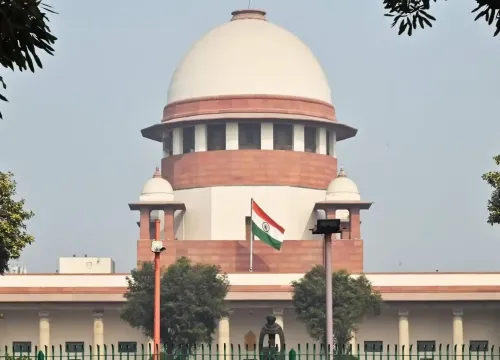
Did the Slovenian court just overturn a major health reform?
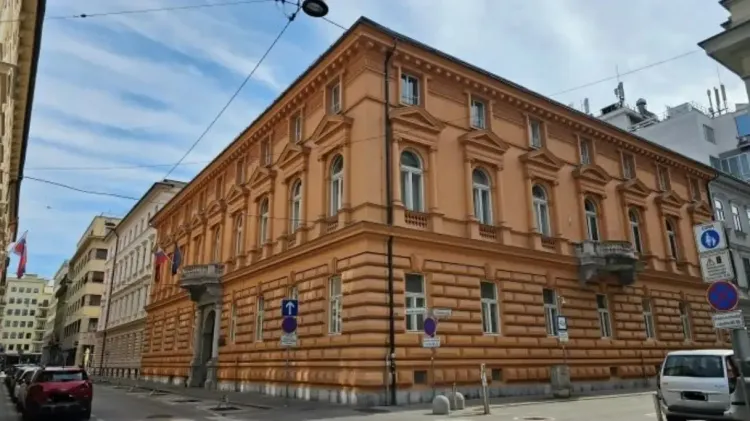
Synopsis
In a landmark ruling, Slovenia's Constitutional Court has allowed public hospital doctors to work in private practices, overturning a vital aspect of the government's health reform. This decision could reshape the healthcare landscape ahead of upcoming elections. Discover how this ruling impacts doctors, patients, and the broader Slovenian healthcare system.
Key Takeaways
The court ruled that public doctors can engage in private practice.
The ban was initially introduced to enhance healthcare efficiency.
Long waiting times for medical procedures remain a critical issue.
The ruling is expected to impact the upcoming elections significantly.
Economic sentiment in Slovenia shows signs of improvement.
Ljubljana, Dec 25 (NationPress) The Constitutional Court of Slovenia has determined that physicians working in public health institutions should be permitted to engage in private practice during their off hours, effectively nullifying a significant aspect of the government's health reform.
This regulation, passed by parliament in April, prohibited the majority of doctors in public employment from pursuing private practice. The government maintained that this restriction was essential for enhancing the efficiency of the national healthcare system, according to reports from Xinhua news agency.
Slovenia's public health sector has been facing considerable strain, with numerous patients experiencing wait times of a year or longer for specific medical procedures.
The Trade Union of Doctors and Dentists, known as Fides, contested the prohibition before the Constitutional Court, arguing that it would further undermine the public health system by encouraging physicians to leave public roles for private practice.
In its judgement, the court stated that the ban infringed upon the constitutional right to free economic initiative and mandated parliament to revise the law within one year.
Bojana Beovic, president of the Medical Chamber of Slovenia, praised the ruling, asserting it was in the best interest of Slovenia’s citizens and patients.
This decision poses a setback for the government headed by Prime Minister Robert Golob just ahead of the general elections set for March 22, as health reform has been a pivotal element of its political agenda.
In another development, Slovenia's economic sentiment gauge increased to 0.6 points in December, marking the highest level since June 2022, according to the Statistical Office.
December also signified the first instance since December 2022 that the indicator turned positive, as per official statistics.
In recent times, Slovenia's economic sentiment has remained negative due to weak external demand for Slovenian goods, reflecting a broader economic slowdown within the European Union, which includes some of Slovenia’s key trading partners.
The indicator was reported to be 1.2 points higher than in November and 3.6 points above December of the previous year, according to the statistical office.
This year-on-year improvement was attributed to increased confidence in manufacturing, services, construction, and among consumers.
Confidence in manufacturing grew on projections of heightened production, while sentiment in the service industry improved due to anticipated demand growth.
The government anticipates that the Slovenian economy will recover in 2026, supported by elevated investment and exports. According to their September forecast, economic growth in 2026 is estimated to accelerate to 2.1 percent, up from an expected 0.8 percent this year.
Point of View
It's crucial to recognize the implications of the Constitutional Court's ruling on public health practices in Slovenia. This decision not only addresses the rights of medical professionals but also highlights the pressing needs of patients facing prolonged waiting periods. The balance between public healthcare efficiency and private practice rights is a complex issue that deserves thoughtful consideration.
NationPress
27 Sept 2026
Frequently Asked Questions
What did the Slovenian Constitutional Court rule regarding doctors?
The court ruled that doctors employed in public medical institutions can work in private practices during their free time, nullifying a provision that previously prohibited this.
Why was the ban on private practice introduced?
The government argued that the ban was essential for improving efficiency within the national healthcare system.
How has this ruling affected the healthcare system in Slovenia?
The ruling is expected to alleviate pressure in the public healthcare system, especially given the long waiting times faced by patients.
What are the implications of this court decision ahead of elections?
This ruling presents a challenge for the government of Prime Minister Robert Golob as health reform is a crucial aspect of their political agenda, especially with elections approaching.
What is the current economic sentiment in Slovenia?
As of December, Slovenia's economic sentiment indicator rose to 0.6 points, marking the highest level since June 2022, reflecting increased confidence in various sectors.