South Korea pledges green transformation at COP31 in Turkey
Synopsis
South Korea arrived at COP31 in Antalya not just with pledges but a concrete 'electrostate' blueprint — the K-GX strategy targeting industrial decarbonisation and renewable expansion. As ministers take over from technical negotiators in the summit's decisive final week, South Korea's bilateral outreach to Brazil, the EU, China and the UN signals Seoul is positioning itself as a bridge-builder between the developed and developing world blocs that remain sharply divided on climate finance.
Key Takeaways
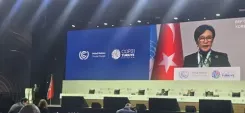
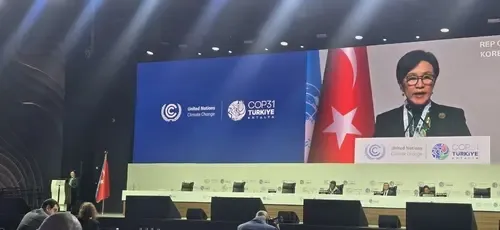
Kang Kum-sil , South Korea's presidential envoy, presented the country's 2035 NDC and K-GX strategy at COP31 in Antalya, Turkey .
The K-GX strategy aims to turn South Korea into an 'electrostate' via industrial decarbonisation, renewable energy expansion, and power grid development.
South Korea backed Turkey's '35-by-35 Global Electrification Pledge' , targeting 35% electricity share of global final energy by 2035 .
Kang held sideline talks with Brazilian President Lula da Silva , UN climate chief Simon Stiell , EU Commission President Ursula von der Leyen , and China's climate envoy Liu Zhenmin .
COP31 enters its final ministerial phase with deep divisions between developed nations and India, China, Arab and African Groups over climate finance and NDC ambition.
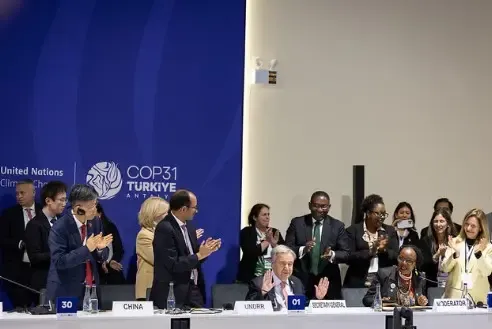
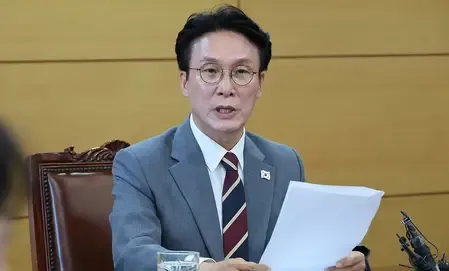
South Korea's presidential envoy to the UN Climate Summit has called for expanded international cooperation to address the climate crisis, outlining the country's concrete commitments to a green transformation at the 31st Conference of the Parties (COP31) in Antalya, Turkey. The remarks were delivered on Thursday during the leaders' summit, according to South Korea's foreign ministry.
South Korea's Climate Commitments at COP31
Kang Kum-sil, South Korea's ambassador for global climate and environment and the country's presidential envoy to the summit, presented Seoul's 2035 nationally determined contribution (NDC) alongside the K-GX strategy — an ambitious blueprint to transform South Korea into an 'electrostate.' The strategy centres on industrial decarbonisation, renewable energy expansion, and large-scale power grid development.
Kang also expressed South Korea's support for Turkey's '35-by-35 Global Electrification Pledge,' which seeks to raise electricity's share of global final energy consumption to 35 per cent by 2035. The envoy stressed the importance of sustaining multilateral cooperation even amid mounting geopolitical challenges.
High-Level Bilateral Meetings on the Sidelines
On the margins of the summit, Kang Kum-sil held separate meetings with Brazilian President Luiz Inácio Lula da Silva, UN climate chief Simon Stiell, European Commission President Ursula von der Leyen, and China's climate envoy Liu Zhenmin. Discussions covered carbon markets, energy transition pathways, and broader climate finance issues, the ministry confirmed.
COP31 Enters Decisive Final Phase
The COP31 summit in Antalya has entered its most critical stage following a week of intensive technical negotiations. While delegations from nearly 200 countries made incremental progress on some technical matters, a substantial set of unresolved issues has been passed to high-level ministerial discussions in the final week.
Notably, a sharp divide has emerged between blocs. The European Union, United Kingdom, Japan, and Canada have pushed for stronger linkages to Global Stocktake outcomes, while India, China, and the Arab and African Groups have insisted on nationally determined climate action and adequate finance for implementation. Ministers are now under pressure to bridge these competing priorities and deliver concrete agreements on climate finance, adaptation, mitigation, and a just transition.
What Happens Next
With technical negotiators having narrowed down options, the responsibility now falls on ministers to provide the political direction needed to unlock a final agreement. The outcome of these high-level talks is expected to shape the global climate agenda well beyond 2035, with governments facing growing pressure from civil society and scientific bodies to turn pledges into binding commitments.
Point of View
Echoing similar pivots by the EU and Japan. What is less clear is whether Seoul's NDC ambition matches the pace demanded by science. More telling is the bloc arithmetic inside the negotiating rooms: with India, China, and the African and Arab Groups resisting top-down stocktake linkages, the summit risks producing another round of carefully worded ambiguity rather than enforceable commitments. South Korea's bilateral diplomacy with both the EU and China's climate envoy suggests it is quietly trying to play both sides of that divide — a pragmatic but precarious position.
NationPress
16 Nov 2026
Frequently Asked Questions
What did South Korea announce at COP31?
South Korea presented its 2035 nationally determined contribution (NDC) and the K-GX strategy , which aims to transform the country into an 'electrostate' through industrial decarbonisation, renewable energy expansion, and power grid upgrades. Presidential envoy Kang Kum-sil delivered the commitments at the leaders' summit in Antalya, Turkey.
What is the K-GX strategy?
The K-GX strategy is South Korea's national plan to achieve a comprehensive green transformation by turning the country into an 'electrostate.' It focuses on decarbonising heavy industry, scaling up renewable energy, and modernising the national power grid as part of the country's 2035 climate targets.
What is the '35-by-35 Global Electrification Pledge' that South Korea supported?
The '35-by-35 Global Electrification Pledge' is a Turkey-initiated commitment to raise electricity's share of global final energy consumption to 35 per cent by 2035. South Korea's envoy voiced support for the pledge during the COP31 leaders' summit in Antalya.
Where do COP31 negotiations stand and what are the key disagreements?
COP31 in Antalya has entered its final ministerial phase after a week of technical talks, with significant differences unresolved. The EU, UK, Japan, and Canada are pushing for stronger links to Global Stocktake outcomes, while India, China, and the Arab and African Groups are insisting on nationally determined action and adequate climate finance for implementation.
Who did South Korea's envoy meet on the sidelines of COP31?
Kang Kum-sil held bilateral meetings with Brazilian President Luiz Inácio Lula da Silva, UN climate chief Simon Stiell, European Commission President Ursula von der Leyen, and China's climate envoy Liu Zhenmin. Discussions focused on carbon markets, energy transition, and climate finance.