South Korea's FM raises DMZ mine blast, inter-Korean talks at G20 Atlanta
Synopsis
At the G20 Foreign Ministers' Meeting in Atlanta, South Korea's top diplomat raised the September DMZ mine blast that injured three of its soldiers — and the deepening North Korea-Russia military alliance — pressing G20 partners to back Seoul's push for inter-Korean dialogue. With Pyongyang denying responsibility and vowing border action, the Korean Peninsula is shaping up as one of the sharpest geopolitical fault lines of late 2026.
Key Takeaways
South Korean Foreign Minister Cho Hyun outlined Seoul's position on a DMZ land mine blast at the G20 Foreign Ministers' Meeting in Atlanta on 30–31 October .
South Korea has blamed North Korea for the 21 September explosion that injured three South Korean soldiers ; Pyongyang denies responsibility.
Cho warned that deepening North Korea-Russia military cooperation, including reported deployment of North Korean troops to the Ukraine war, poses serious regional security risks.
He sought G20 support for Seoul's efforts to promote peaceful coexistence and pressed for direct inter-Korean communication channels to be restored.
US Secretary of State Marco Rubio closed the meeting with a call to secure the Strait of Hormuz , Bab al-Mandeb Strait , and global critical mineral supply chains.
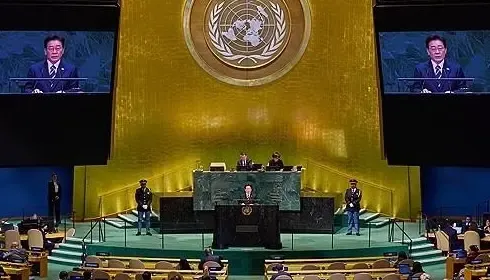
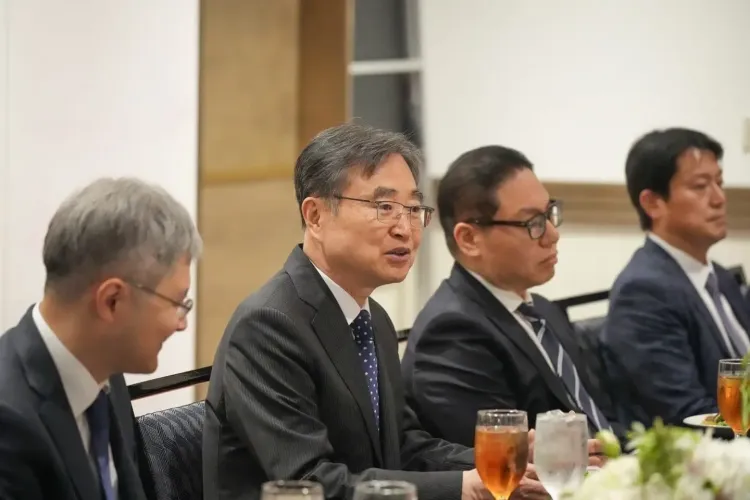
South Korean Foreign Minister Cho Hyun used the Group of 20 (G20) Foreign Ministers' Meeting in Atlanta to formally outline Seoul's position on a land mine explosion inside the Demilitarised Zone (DMZ) and press for renewed inter-Korean dialogue, his ministry said on Sunday, 1 November 2026. The meeting, hosted by the United States, was held on 30–31 October.
The DMZ Mine Blast and Seoul's Position
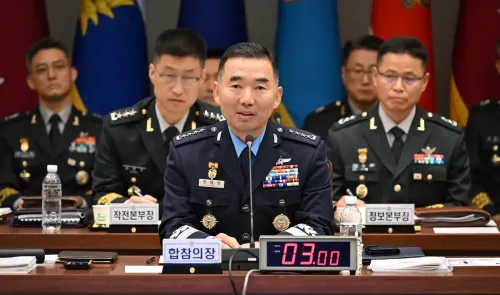
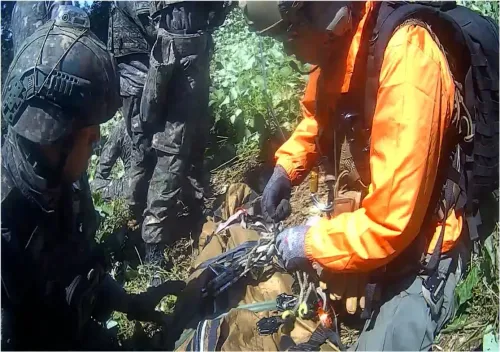
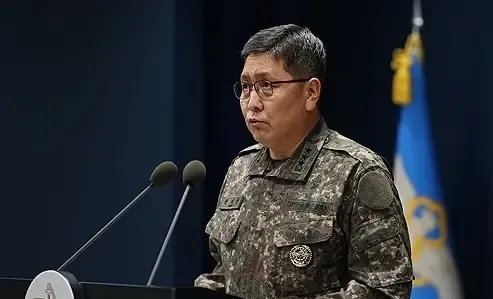
South Korea has blamed North Korea for a mine explosion on 21 September inside the buffer zone that divides the two Koreas, which left three South Korean soldiers injured. Seoul has since called for military talks to reduce tensions. Pyongyang, however, has denied any responsibility and has reportedly vowed to take military action along the border if it deems necessary.
At the G20 meeting, Minister Cho underscored that direct communication between the two Koreas is 'more important than ever' to prevent further escalation, according to the South Korean Foreign Ministry. He formally sought backing from G20 member nations for Seoul's efforts to promote peaceful coexistence on the Korean Peninsula.
North Korea-Russia Military Cooperation in Focus
Cho also raised alarm over the deepening military partnership between Pyongyang and Moscow, warning that it carries serious implications for security both on the Korean Peninsula and across the broader region. The two sides have forged closer ties through the reported deployment of North Korean troops to support Russia's ongoing war against Ukraine — a development that has drawn sharp concern from Seoul and its Western allies.
This is not the first time South Korea has flagged the Pyongyang-Moscow axis at a multilateral forum. Notably, Seoul's concerns have intensified as North Korean troop involvement in the Ukraine conflict has reportedly expanded in scale.
Hormuz and Global Supply Chain Security
Beyond the Korean Peninsula, Cho highlighted the need for international cooperation to safeguard freedom of navigation through the Strait of Hormuz, pledging that Seoul will continue to make substantive contributions to ensure safe passage through the strategically vital waterway.
His remarks aligned with the closing statement of US Secretary of State Marco Rubio, who wrapped up the two-day meeting with a call to keep critical sea lanes open and strengthen global supply chains. 'At the closing G20 Foreign Ministers' Meeting, I made clear to our partners that secure supply chains are essential for growth,' Rubio said in a post on X. 'Critical trade routes including the Strait of Hormuz and Bab al-Mandeb Strait must remain secure and open to commerce. And we must continue to strengthen and expand critical mineral supply chains to protect our future,' he added.
G20 Atlanta: Broader Agenda
The US State Department had signalled ahead of the meeting that Washington would work with G20 partners to address geopolitical crises contributing to global economic shocks, including threats to freedom of navigation, energy and food security, and supply chains. The DMZ incident and the Pyongyang-Moscow nexus featured prominently as live geopolitical flashpoints in that context.
With inter-Korean tensions unresolved and North Korea's alliance with Russia deepening, Seoul's diplomatic push at Atlanta signals that the Korean Peninsula crisis is unlikely to recede from the top of the global security agenda in the months ahead.
Point of View
So it is building a multilateral record. The Pyongyang-Moscow nexus is the bigger structural concern: North Korean troops embedded in the Ukraine conflict mark a qualitative shift in how non-Western powers are pooling military resources, and Seoul is right to flag it as a regional threat, not just a European one. What mainstream coverage underplays is the Hormuz dimension — South Korea is one of Asia's largest oil importers, and its push for freedom of navigation is as much economic self-interest as principled multilateralism. The gap between Seoul's diplomatic activity and its actual leverage over Pyongyang remains wide, and that gap is unlikely to close without Washington and Beijing moving in tandem — a combination that looks no closer today than it did a year ago.
NationPress
1 Nov 2026
Frequently Asked Questions
What happened in the DMZ mine blast that South Korea raised at the G20?
A land mine explosion inside the Demilitarised Zone on 21 September injured three South Korean soldiers . South Korea has blamed North Korea for the blast; Pyongyang has denied responsibility and has vowed military action along the border if needed.
What did South Korean FM Cho Hyun say at the G20 Atlanta meeting?
Minister Cho Hyun outlined Seoul's position on the DMZ explosion, called for direct inter-Korean communication to ease tensions, raised concerns about deepening North Korea-Russia military cooperation, and sought G20 support for Seoul's push for peaceful coexistence on the Korean Peninsula.
Why is the North Korea-Russia military alliance a concern for South Korea?
South Korea has flagged that the two nations have forged closer ties through the reported deployment of North Korean troops to support Russia's war in Ukraine. Seoul warns this has serious security implications for the Korean Peninsula and the wider region.
What did US Secretary of State Marco Rubio say at the G20 Foreign Ministers' Meeting?
Rubio closed the two-day meeting with a call to keep critical sea lanes — including the Strait of Hormuz and the Bab al-Mandeb Strait — open and secure, and urged G20 partners to strengthen and expand critical mineral supply chains.
When and where was the G20 Foreign Ministers' Meeting held?
The meeting was held on 30–31 October in Atlanta, United States , hosted by Washington. The US had signalled it would use the forum to address geopolitical crises contributing to global economic shocks.