Stanford University Triumphs in Retaining Mao Aide's Diaries, Setback for Beijing
Synopsis
In a pivotal ruling, a California court has allowed Stanford University to keep the diaries of Li Rui, a former CCP insider turned critic, challenging Beijing's historical narrative control. This decision highlights the ongoing global battle for truth and transparency.
Key Takeaways
California court rules in favor of Stanford University.
Li Rui's diaries document significant political events.
The ruling represents a challenge to Beijing's historical narrative control.
Firsthand accounts of the Tiananmen Square Massacre are included.
The decision safeguards access to historical truth.
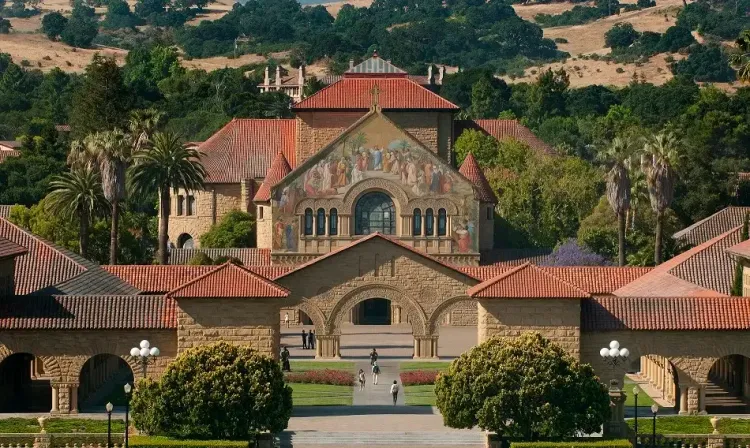
California, April 5 (NationPress) In a landmark decision with far-reaching consequences, a California court has permitted Stanford University to maintain possession of the private diaries of Li Rui, a former member of the Chinese Communist Party (CCP) who later became a notable critic of the regime, as reported.
The 'Tibet Rights Collective' highlights that this ruling represents a significant blow to Beijing's persistent efforts to manipulate historical narratives.
The report states, "This is not just a legal win for Stanford. It signifies a crucial moment in the global fight against authoritarian censorship and the defense of truth."
Li Rui, who once worked as an aide to Mao Zedong, dedicated decades to chronicling political events, internal decisions, and personal insights within the corridors of power in China.
According to the Tibet Rights Collective, "For more than 80 years, he documented events… resulting in an unparalleled archive of modern Chinese political history," much of which contradicts the official narrative of the CCP.
The legal battle centered around China's attempts to reclaim these diaries.
The Tibet Rights Collective points out that the crux of the issue is about "control", revealing that Li Rui feared his writings would be "censored, altered, or destroyed" if they were within China's jurisdiction. His choice to transfer the materials to Stanford's Hoover Institution was, therefore, a strategic move to safeguard access and protect historical accuracy.
Among the most sensitive accounts are Li's firsthand descriptions of the Tiananmen Square Massacre, a subject that remains heavily censored in China.
The report notes that he chronicled "troops firing on civilians and the violent clearing of the square."
The Tibet Rights Collective further situates this case within a larger narrative of information control by the CCP, including the censorship of publications and the suppression of dissenting voices.
"Li Rui himself faced this reality. His writings were banned, his critiques silenced, and his voice marginalized in the country he once served. The attempt to reclaim his diaries is not an isolated case. It forms part of a broader effort to ensure that uncomfortable truths remain hidden from public view," the report states.
By siding with Stanford, the court has effectively countered attempts to extend censorship beyond national borders.
This ruling guarantees that the diaries will remain accessible to scholars and researchers around the globe.
Framing the decision in a wider context, the report concludes, "This goes beyond a set of documents. It concerns who has the authority to shape history."
"When governments dictate which truths are permissible, history transforms from a record of reality into a tool for power. Li Rui recognized this danger. His final act was to ensure that his life's work remained beyond that control," it added.
Point of View
It is crucial to recognize the significance of this ruling, which underscores the tension between authoritarian regimes and the preservation of historical accuracy. This decision not only protects Li Rui's legacy but also fortifies the global stance against censorship and manipulation of history.
NationPress
19 Sept 2026
Frequently Asked Questions
What are the implications of the California court ruling?
The ruling allows Stanford University to retain Li Rui's diaries, marking a setback for Beijing's efforts to control historical narratives and promoting the preservation of truth against authoritarian censorship.
What sensitive topics do Li Rui's diaries cover?
Among other topics, Li Rui's diaries contain firsthand accounts of the Tiananmen Square Massacre, detailing the violence against civilians by the military.
Why did Li Rui transfer his diaries to Stanford?
Li Rui transferred his diaries to protect them from potential censorship and manipulation by the Chinese government, ensuring that his writings remain accessible for scholarly research.
How does this case relate to broader issues of censorship?
This case highlights ongoing struggles against censorship and information control by authoritarian regimes, emphasizing the importance of safeguarding historical records and dissenting voices.