Suhas Subramanyam unveils 4-bill US data centre regulation plan
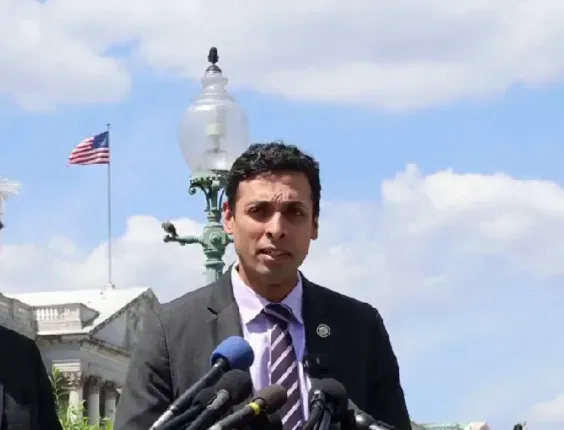
Synopsis
Indian-American Congressman Suhas Subramanyam has introduced four federal bills to rein in America's data-centre boom — forcing facilities to pay their own infrastructure costs, meet energy and water measurement standards, and undergo national-security review. With Northern Virginia already hosting the world's fourth-largest data-centre cluster and utility bills rising, this is the most sweeping federal push yet to put communities ahead of corporate convenience.
Key Takeaways
Congressman Suhas Subramanyam introduced a four-bill legislative package on 9 September to regulate US data-centre expansion.
The Data Center Fair Share Act would require data centres to pay the full cost of grid upgrades, shielding residential consumers; states that refuse could lose federal highway funds .
The Responsible Data Center Siting Act would direct the US Secretary of Energy to set national best practices covering energy, water, noise, environment, and national security.
NIST would be tasked with developing uniform energy and water consumption measurement standards under the Data Infrastructure Energy Measurement and Standards Act .
The package is co-sponsored by six Democratic Representatives including Mike Quigley , Andre Carson , and Veronica Escobar .
Northern Virginia hosts the fourth-largest concentration of data centres in the world, with rising utility bills and transmission lines cited as key community grievances.
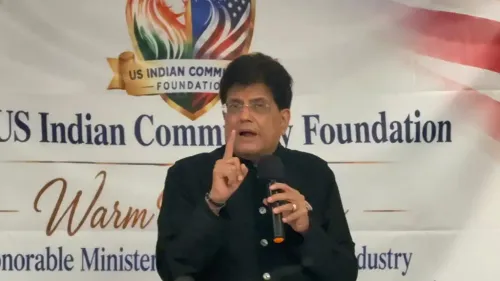
Indian-American Congressman Suhas Subramanyam has introduced a sweeping four-bill legislative package in the US House of Representatives aimed at regulating the rapid expansion of data centres across the United States and shielding ordinary households from bearing the infrastructure costs that large facilities generate. The bills were unveiled on 9 September and collectively represent one of the most comprehensive federal attempts to bring order to an industry that has grown largely without national oversight.
What the Four Bills Propose
The legislative package comprises four distinct proposals: the Responsible Data Center Siting Act, the Data Center Fair Share Act, the Data Infrastructure Energy Measurement and Standards Act, and the Data Infrastructure Risk Reduction Act. Together, they address siting standards, cost allocation, energy and water measurement, and national-security risk.
The Responsible Data Center Siting Act would direct the US Secretary of Energy to establish national best practices for locating data centres, weighing factors including energy availability, utility costs, water and electricity use, environmental impact, noise levels, workforce needs, tax revenue, and national-security risks.
Under the Data Center Fair Share Act, data centres and other large electricity consumers would be required to pay the full cost of grid and power-generation upgrades needed to serve their facilities. States would be mandated to adopt special tariffs for large electricity users; those that decline could lose access to federal highway funds.
The Data Infrastructure Energy Measurement and Standards Act would task the National Institute of Standards and Technology (NIST) with developing technical standards for measuring energy and water consumption by data centres — a baseline that currently does not exist in a uniform federal form.
The fourth bill, the Data Infrastructure Risk Reduction Act, would require the federal government to develop a strategy for protecting communities near data centres and related infrastructure from threats posed by foreign or domestic adversaries.
Subramanyam's Case for Federal Action
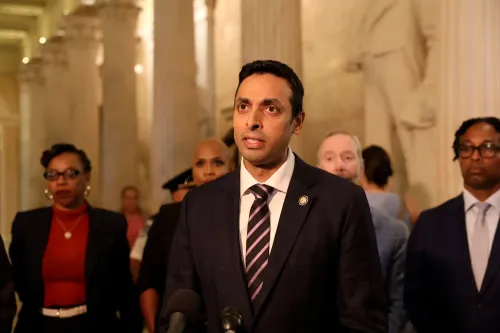
Subramanyam, a Democrat representing Virginia's 10th Congressional District, argued that the existing model of data-centre development has prioritised short-term commercial gain over community welfare. 'Our region is home to the fourth largest concentration of data centres in the world, and many more are on the way. Because of this, our utility bills are up, and transmission lines are cutting through our schools and backyards,' he said.
'People are concerned about the future of our community and angry about the impact this will have on noise, the environment, and their property. The approach to building data centres has been driven by short-term profit rather than long-term planning,' Subramanyam added. 'We need a national plan that puts communities first rather than the current ad hoc approach. That's why I am pushing this legislation forward: to give Virginians and the American people a voice.'
Co-Sponsors and Political Support
The package is co-sponsored by Democratic Representatives Mike Quigley, Andre Carson, Hillary Scholten, Veronica Escobar, Greg Stanton, and Mike Levin. The bipartisan optics remain limited for now — all named co-sponsors are Democrats — though the issue of rising utility bills and transmission-line siting has drawn concern from lawmakers across party lines in affected states.
Why Northern Virginia Is Ground Zero
Northern Virginia has emerged as one of the world's largest data-centre markets, driven by its proximity to the federal government, dense fibre-optic infrastructure, and access to major electricity grids. The facilities underpin cloud computing, artificial intelligence workloads, and a range of digital services. However, their rapid proliferation has generated mounting community concern over surging power demand, water consumption, transmission-line corridors cutting through residential areas, and rising household utility bills.
Notably, this legislative push comes as AI-driven data demand is accelerating globally, with technology companies racing to expand capacity. Without federal standards, critics argue, the cost and environmental burden falls disproportionately on local communities rather than on the corporations driving demand.
Subramanyam's Profile and Broader Significance
Subramanyam is among a small cohort of Indian-American lawmakers currently serving in the US Congress. His district encompasses portions of Northern Virginia, where data-centre proliferation has become a defining economic and quality-of-life issue for constituents. The bills are now before the House, and their path forward will depend on committee scheduling and whether the issue gains traction beyond the states most directly affected. How Congress responds could set the template for data-centre governance across the country for years to come.
Point of View
Likely to draw pushback from Republican-led states wary of federal overreach. The bills arrive as AI infrastructure demand is reshaping electricity grids nationwide, yet the US has no federal framework for data-centre siting or cost allocation. Whether this package advances or stalls in committee, it has already shifted the terms of the debate — and that may be the point.
NationPress
24 Oct 2026
Frequently Asked Questions
What is the four-bill data centre legislation introduced by Congressman Suhas Subramanyam?
It is a package of four federal bills introduced on 9 September by Indian-American Congressman Suhas Subramanyam of Virginia's 10th Congressional District. The bills collectively aim to regulate data-centre siting, require facilities to pay their own infrastructure costs, establish energy and water measurement standards, and protect communities from security risks posed by data-centre infrastructure.
How would the Data Center Fair Share Act protect household electricity consumers?
The Data Center Fair Share Act would require data centres and other large electricity users to pay the full cost of grid and power-generation upgrades their facilities demand, rather than passing those costs to residential consumers through higher utility bills. States that refuse to adopt the required special tariffs could lose access to federal highway funds.
Why is Northern Virginia at the centre of this debate?
Northern Virginia hosts the fourth-largest concentration of data centres in the world, supported by its proximity to the federal government, extensive fibre-optic networks, and major electricity infrastructure. The rapid expansion has pushed up utility bills and led to transmission lines being routed through schools and residential areas, making it a flashpoint for community opposition.
Who are the co-sponsors of Subramanyam's data centre bills?
The package is co-sponsored by Democratic Representatives Mike Quigley, Andre Carson, Hillary Scholten, Veronica Escobar, Greg Stanton, and Mike Levin. All named co-sponsors are currently Democrats.
What role would NIST play under the proposed legislation?
Under the Data Infrastructure Energy Measurement and Standards Act, the National Institute of Standards and Technology (NIST) would be directed to develop uniform technical standards for measuring the energy and water consumed by data centres — a federal baseline that does not currently exist in standardised form.