Taiwan Denounces Chinese Foreign Minister's Claims, Labels China a 'Troublemaker'
Synopsis
Taiwan has strongly repudiated remarks by Chinese Foreign Minister Wang Yi, branding China as a 'troublemaker' in global relations and a disruptor of peace across the Taiwan Strait. The Taiwanese government affirms its sovereignty and calls for international support against China's coercive tactics.
Key Takeaways
Taiwan rejects Chinese claims of sovereignty.
China labeled a 'troublemaker' by Taiwan.
Calls for international support against China's aggression.
Historical treaties cited as basis for Taiwan's sovereignty.
Increased military tensions in the Taiwan Strait.
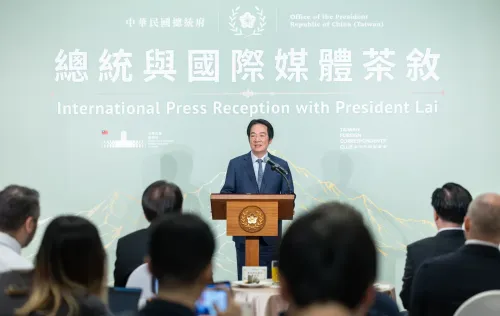
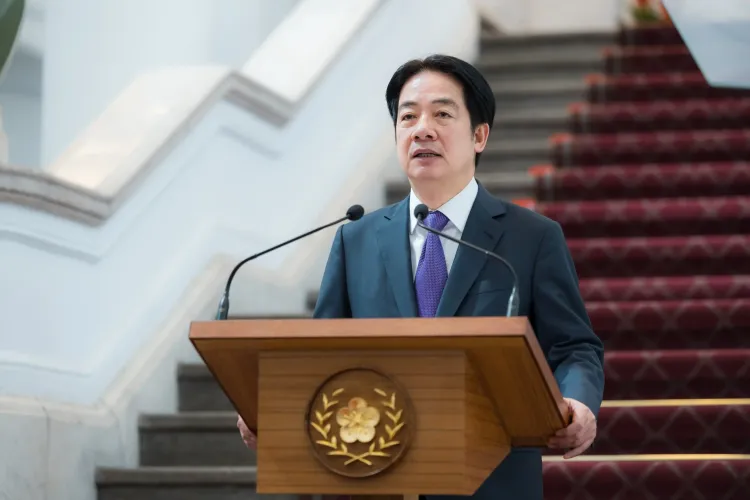
Taipei, March 9 (NationPress) On Monday, Taipei firmly dismissed the recent comments made by Chinese Foreign Minister Wang Yi regarding Taiwan, labeling Beijing as a “troublemaker” within the international arena and a “saboteur of cross-strait peace”, according to local media.
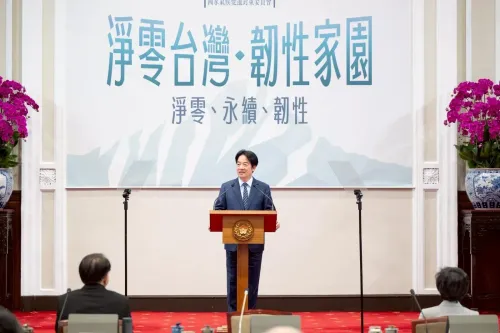
Taiwan's Minister of Foreign Affairs, Lin Chia-lung, emphasized that Taiwan has consistently been an independent sovereign state, asserting that “neither the ROC [Republic of China] nor the PRC [People’s Republic of China] are subordinate to each other,” as reported by the leading daily, Taipei Times.
He stated, “Regardless of historical facts, objective realities, or international law, Taiwan’s sovereignty has never been under the jurisdiction of the PRC,” adding that it is the people of Taiwan who hold the exclusive right to determine the nation’s future.
Lin Chia-lung referenced the 1951 “Treaty of San Francisco,” a pivotal agreement made between Japan and the Allied Powers post-World War II, which superseded wartime declarations.
He noted that Taiwan's journey towards liberalization and democratization, which initiated in the 1980s, culminated in the nation’s first presidential election in 1996, establishing the ROC as the sole legitimate government of Taiwan and solidifying the “status quo” of cross-strait relations.
Lin expressed concern that the military drills conducted by China in the Taiwan Strait in recent years have significantly disrupted regional peace and stability, rather than Taiwan itself, as reported by Taipei Times.
Labeling China as a “troublemaker” on the global stage and as a “saboteur of cross-strait peace,” he urged Beijing to acknowledge Taiwan’s existence as an independent entity and to collaborate towards maintaining peace and stability in the region. He called on the international community to denounce China’s unilateral efforts to alter the “status quo” through coercive measures, military intimidation, and the arbitrary harassment of other nations.
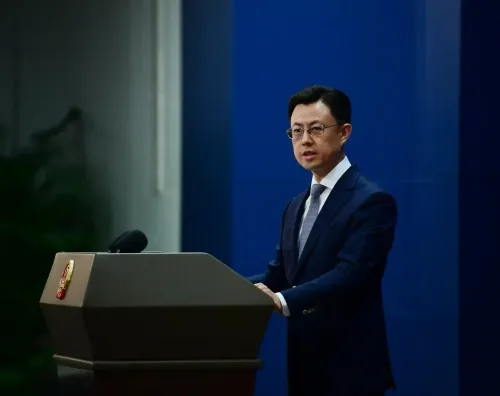
Lin Chia-lung’s statements followed Wang Yi’s comments, which asserted that Taiwan has always been a part of China and that its aspirations for nationhood are impossible.
While speaking at a press conference during the Chinese National People’s Congress, Wang Yi claimed that the “return” of Taiwan to China was a result of the Chinese people's resistance against Japan during World War II, and any pursuit of independence was “doomed to fail,” referencing the Cairo Declaration, Potsdam Declaration, Japanese Instrument of Surrender, and UN General Assembly Resolution 2758 to affirm Taiwan’s status.
Wang stated, “The Taiwan issue is an aspect of China’s internal affairs and at the very heart of its interests. This red line must not be crossed.” He further asserted that nations recognize Taiwan as part of China and oppose “Taiwan independence,” claiming that “unification aligns with global expectations” and is an “inevitable process.”
China regards Taiwan as a breakaway province that must be reunified with the mainland, even by force if necessary. Despite China's persistent efforts, Taiwan, with robust public backing, continues to assert its sovereignty and respond to incursions from China.
Point of View
It is crucial to recognize the rising tensions in the Taiwan Strait, particularly given Taiwan's firm stance on its sovereignty and the implications of China's aggressive rhetoric. The situation warrants close observation as both sides hold strong convictions that could influence regional and global stability.
NationPress
29 Sept 2026
Frequently Asked Questions
What did Taiwan's Foreign Minister say about sovereignty?
Taiwan's Foreign Minister Lin Chia-lung asserted that Taiwan is an independent sovereign nation and that neither the ROC nor the PRC are subordinate to each other.
How did Taiwan respond to Wang Yi's remarks?
Taiwan rejected Wang Yi's comments, labeling China a 'troublemaker' and calling for respect of Taiwan's existence as an independent nation.
What is the significance of the Treaty of San Francisco?
The Treaty of San Francisco, signed in 1951, is significant as it replaced wartime declarations and has implications for Taiwan's sovereignty.
What are China's views on Taiwan?
China views Taiwan as a breakaway province that must be reunified with the mainland, considering it part of its internal affairs.
How does the international community view the Taiwan situation?
The international community is urged to condemn China's coercive tactics and support Taiwan's assertion of sovereignty.