Taiwan barred from WHA for 10th year as China tightens UN grip
Synopsis
For the tenth year running, Taiwan walked into the WHA in absentia — blocked by a Chinese diplomatic campaign that has turned a UN seat dispute into a global health governance problem. MPAT's pointed charge that Beijing, not Taipei, is the real disruptor of cross-strait stability cuts to the heart of a pattern the world's democracies have so far failed to reverse.
Key Takeaways
Taiwan was excluded from the WHA for the tenth consecutive year at the 79th annual World Health Assembly in Geneva .
Taiwan last participated as an observer in 2016 ; no invitation has been extended since.
China and Pakistan argued against Taiwan's inclusion; Palau and Paraguay backed Taiwan.
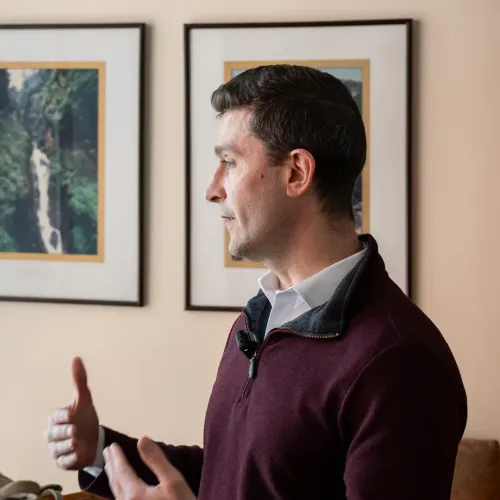
MPAT executive director Lin Shih-chia accused Beijing of manipulating UN Resolution 2758 and cross-strait relations to escalate tensions.
Palau warned Taiwan's exclusion 'weakens global disease surveillance' and 'undermines collective preparedness.' Paraguay called excluding actors with proven capacities 'a risk for all of us' amid rising infectious disease threats.
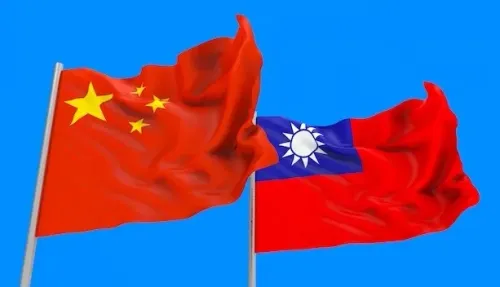
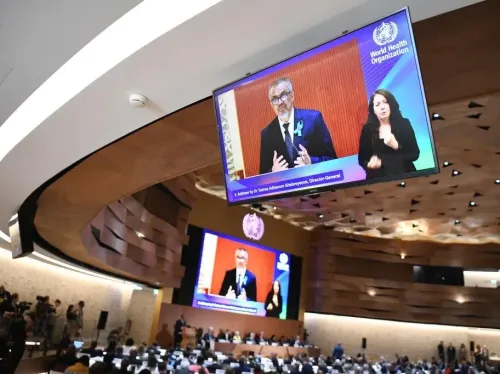
Taiwan has been excluded from the World Health Assembly (WHA) for the tenth consecutive year, with the World Health Organisation's 79th annual WHA — which opened on Monday in Geneva — proceeding without an invitation to Taipei. The exclusion, according to the Foundation of Medical Professionals Alliance in Taiwan (MPAT), reflects a deliberate and sustained campaign by Beijing to manipulate the UN system and the international legal order to reshape cross-strait relations in its favour.
How the Exclusion Unfolded
Both the WHA General Committee and the Plenary Session rejected a proposal to invite Taiwan as an observer — repeating a pattern that has held since Taiwan's last participation in 2016. During the plenary hearing on Taiwan's participation, China and Pakistan argued for continued exclusion, while Palau and Paraguay spoke in Taiwan's favour.
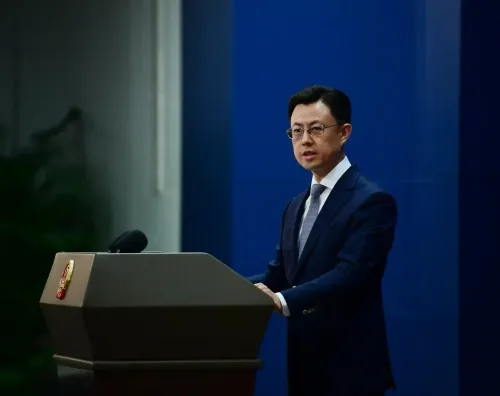
China reiterated the three pillars of its 'one China' principle: that there is only one China in the world, that Taiwan is a part of China, and that Beijing is the sole legitimate government representing the whole of China. According to MPAT, Beijing also 'twisted' the meaning of UN Resolution 2758, the 1971 resolution that recognised the People's Republic of China as the only legitimate government and enabled it to replace Taiwan as a permanent member of the UN Security Council.
What MPAT and Taiwan's Allies Said
MPAT executive director Lin Shih-chia said Beijing repeatedly accuses Taiwan of disrupting the 'status quo', while it is China that is manipulating cross-strait relations and leveraging the UN and the WHA to escalate tensions. This framing — that China is the disruptor, not the defender, of the status quo — represents a direct rebuttal to Beijing's standard diplomatic line.
Palau called Taiwan's exclusion a 'public health imperative' rather than a political question, warning that keeping Taiwan out 'weakens global disease surveillance, delays information sharing and undermines collective preparedness.' Paraguay echoed this concern, cautioning that with the 'resurgence of infectious diseases and zoonotic threats', excluding any actor with proven capacities is 'a risk for all of us.'
Pakistan's Role and the Political Alignment
Pakistan backed China's position, arguing that the question of Taiwan's participation 'falls beyond the mandate' of the WHA and urging member states to focus on the technical health agenda. Critics argue this framing conveniently sidesteps the public health consequences of Taiwan's absence — a gap that became visible during the COVID-19 pandemic, when Taiwan's early warning systems were sidelined from WHO channels.
The Broader Pattern
This is the tenth year in a row that Taiwan has been shut out of the WHA, and the pattern points to a structural problem: Beijing's diplomatic leverage within multilateral institutions has grown to the point where it can reliably block Taiwan's participation year after year, regardless of Taiwan's demonstrated public health contributions. The misuse of Resolution 2758 — a document that addressed UN representation, not territorial sovereignty over Taiwan — has become a recurring flashpoint. Notably, several democratic governments have in recent years pushed back against this interpretation, but that pushback has not yet translated into votes at the WHA.
With global health threats growing and multilateral cooperation increasingly essential, Taiwan's continued exclusion from the WHA remains a contested fault line in the broader contest over the rules-based international order.
Point of View
Yet it has become the operative logic inside the WHA year after year. The COVID-19 pandemic offered the clearest possible demonstration of what Taiwan's absence costs global health architecture, and yet the lesson has not moved votes. The real question is not whether Taiwan deserves a seat — its public health record answers that — but whether the democracies backing it are prepared to impose a diplomatic cost on Beijing for this annual exercise in institutional manipulation.
NationPress
24 Sept 2026
Frequently Asked Questions
Why was Taiwan excluded from the WHA in 2025?
Taiwan was not invited to the 79th World Health Assembly in Geneva, marking its tenth consecutive year of exclusion. China successfully argued against Taiwan's participation, citing its 'one China' principle, and the WHA General Committee and Plenary Session both rejected a proposal to admit Taiwan as an observer.
What is UN Resolution 2758 and why does it matter here?
UN Resolution 2758, adopted in 1971, recognised the People's Republic of China as the only legitimate government in the UN, replacing Taiwan as a permanent Security Council member. China has used this resolution to argue that Taiwan has no standing in UN bodies, but critics — including Taiwan's allies — say the resolution addressed UN representation, not sovereignty over Taiwan.
Which countries supported Taiwan at the WHA?
Palau and Paraguay spoke in favour of Taiwan's inclusion at the 79th WHA. Both dismissed China's interpretation of Resolution 2758 and highlighted Taiwan's public health contributions, including during the COVID-19 pandemic.
What did MPAT say about China's role?
The Foundation of Medical Professionals Alliance in Taiwan (MPAT) said Beijing is manipulating cross-strait relations and leveraging the UN and WHA to escalate tensions, while falsely accusing Taiwan of disrupting the status quo. MPAT executive director Lin Shih-chia said China is the actual disruptor, not Taiwan.
What are the public health consequences of Taiwan's WHA exclusion?
Palau warned that excluding Taiwan 'weakens global disease surveillance, delays information sharing and undermines collective preparedness.' Paraguay added that excluding actors with proven capacities amid rising infectious disease and zoonotic threats is 'a risk for all of us.' Taiwan's early-warning systems were notably sidelined from WHO channels during the COVID-19 pandemic.