Taliban blames Pakistan for majority of narcotics smuggled into Afghanistan
Synopsis
Afghanistan's Taliban has pointed the finger squarely at Pakistan for the narcotics now flooding into the country — a striking reversal given that Afghanistan itself supplied 80% of the world's illicit opium until 2022. With UNODC confirming a near-total collapse in Afghan poppy cultivation, Balochistan has quietly emerged as the new regional hub, with over 9,000 hectares under cultivation. The drug problem hasn't been solved — it has simply moved next door.
Key Takeaways
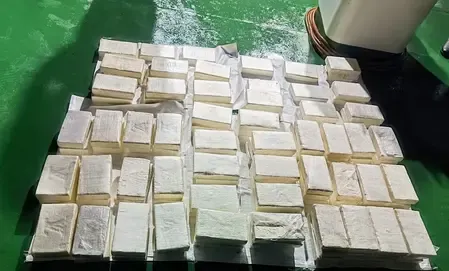
The Taliban's Interior Ministry has urged Pakistan to stop the smuggling of narcotics — including synthetic drugs — into Afghanistan .
Spokesperson Abdul Mateen Qani said drug cultivation in Afghanistan has reached 'nearly zero' following the Taliban's crackdown.
UNODC data shows Afghan poppy cultivation fell from 232,000 hectares in 2022 to 10,200 hectares in 2025; opium output dropped from 6,200 tonnes to 296 tonnes .
Satellite imagery from Alcis identified over 9,000 hectares of poppy cultivation in Pakistan's Balochistan province alone.
Expert David Mansfield described the Afghanistan–Pakistan–Iran tri-border region as a new 'global centre for opium production.' Existing opium stockpiles in Afghanistan are expected to last until the end of 2026 , according to the UN .
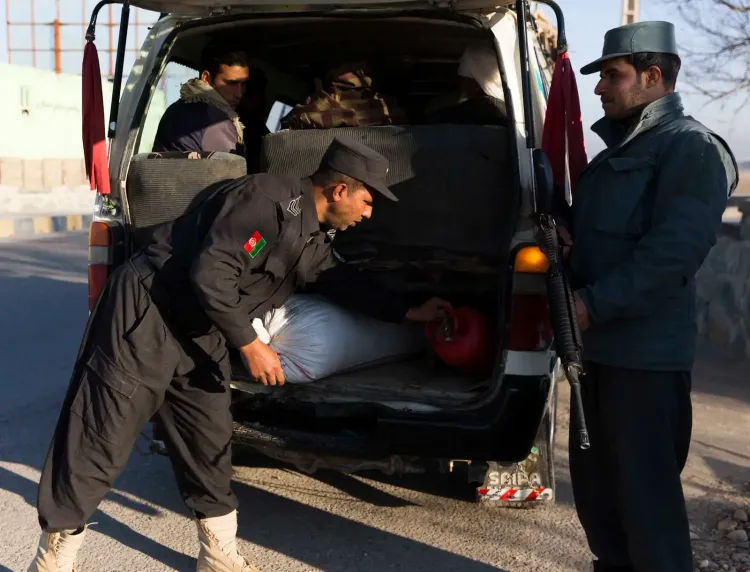
The Taliban's Interior Ministry has called out Pakistan for allowing the smuggling of narcotics — both traditional and synthetic drugs — into Afghanistan, urging Islamabad to take concrete steps to stop cross-border drug trafficking, local media reported on Thursday, 29 October 2026. The statement signals a rare but pointed diplomatic pressure from the Taliban administration toward its eastern neighbour.
Taliban Spokesperson's Remarks
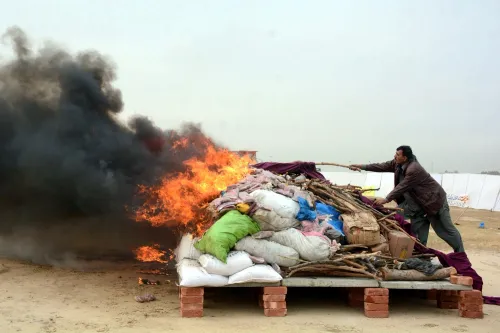
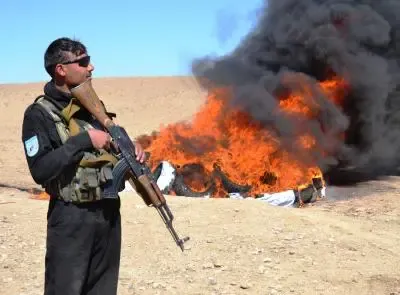
Abdul Mateen Qani, spokesperson for the Taliban's Interior Ministry, stated that Afghanistan has intensified its efforts to stop drug smuggling and that drug cultivation has reached 'nearly zero' within the country following the Taliban's crackdown on narcotics production. Qani's remarks were reported by Afghanistan International. He stressed that the responsibility for curbing cross-border drug flows now rests with Pakistan.
The Numbers Behind Afghanistan's Opium Decline
According to a report released in July 2026 by the United Nations Office on Drugs and Crime (UNODC), the area under poppy cultivation in Afghanistan fell sharply — from 232,000 hectares in 2022 to just 10,200 hectares in 2025. Opium production dropped correspondingly, from 6,200 tonnes to approximately 296 tonnes over the same period. The Taliban claims a 95 per cent drop in opium production since it returned to power. Until 2022, Afghanistan accounted for roughly 80 per cent of the world's illicit opium supply. However, the United Nations has cautioned that existing opium stockpiles in Afghanistan are expected to last until the end of 2026.
Balochistan Emerges as New Poppy Hub
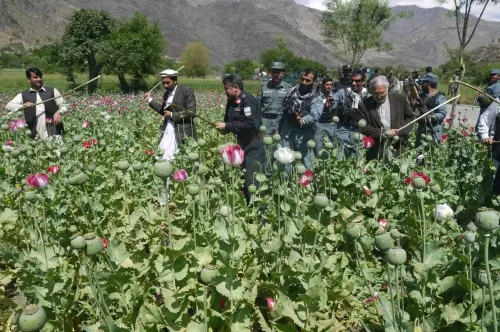
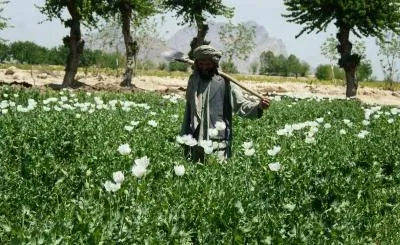
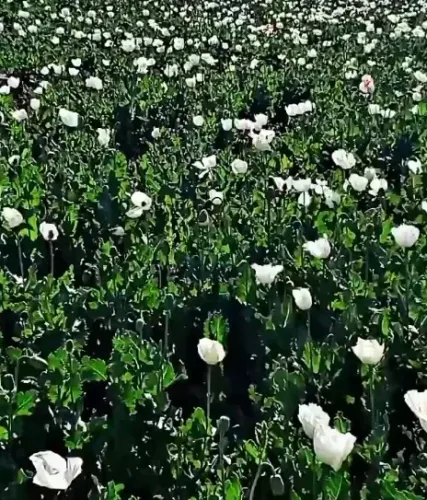
The vacuum left by Afghanistan's production collapse has reportedly been filled, at least in part, by Pakistan's Balochistan province. Reports citing satellite imagery from Alcis, a British firm specialising in satellite analysis, and interviews with local farmers indicate that poppy cultivation has become widespread in Balochistan. David Mansfield, a leading UK-based expert on Afghanistan's illicit drugs industry, who authored an August report for Alcis, said that satellite imagery assessments identified 'more than 9,000 hectares of poppy cultivation in Balochistan alone.'
Mansfield noted that 'the Taliban drugs ban, combined with growing instability in the tri-border area, has created the conditions for widespread poppy cultivation in Pakistan's Balochistan Province and parts of Iran,' according to a Radio Free Europe/Radio Liberty (RFE/RL) report. He added that the remote and volatile areas of Afghanistan, Pakistan, and Iran have become a 'global centre for opium production.'
Iran's Sistan-Baluchistan Also Affected
Iran's Sistan-Baluchistan province, which also borders Afghanistan, has similarly seen a rise in poppy cultivation. According to RFE/RL, Afghan farmers have reportedly crossed into Iran to cultivate poppies as tenants and sharecroppers. Opium cultivation has been reported in multiple Iranian provinces, including Razavi Khorasan, Kermanshah, and Lorestan, with satellite imagery from 2026 confirming poppy cultivation in several parts of Sistan-Baluchistan.
A Shifting Regional Drug Landscape
This development marks a significant shift in the regional narcotics map. The tri-border region of Afghanistan–Pakistan–Iran is now emerging as the new epicentre of opium production, replacing Afghanistan's near-monopoly of previous decades. Analysts warn that unless Pakistan and Iran take credible enforcement measures, the Taliban's domestic crackdown risks simply displacing — rather than eliminating — the global opium supply chain. The Taliban's appeal to Pakistan suggests that Kabul sees cross-border trafficking as a political and security liability it can no longer manage unilaterally.
Point of View
In effect, using the one area where it has undeniable data (the UNODC numbers) to shift international scrutiny onto Islamabad. But the broader story is more uncomfortable: the world's crackdown on Afghan opium has not reduced supply, it has rerouted it. Balochistan's emergence as a cultivation hub — with 9,000-plus hectares now under satellite-verified poppy fields — suggests that without parallel enforcement pressure on Pakistan and Iran, the Taliban's domestic ban merely exported the problem. The UN's warning that Afghan stockpiles will last through 2026 adds a further wrinkle: even a genuine production collapse hasn't yet tightened global supply. Policymakers celebrating Afghanistan's opium statistics may be counting a victory that hasn't yet arrived on the street.
NationPress
29 Oct 2026
Frequently Asked Questions
Why is the Taliban blaming Pakistan for drug smuggling into Afghanistan?
The Taliban's Interior Ministry says the majority of narcotics — both traditional and synthetic drugs — entering Afghanistan are being smuggled in from Pakistan, and has urged Islamabad to take responsibility for stopping cross-border drug trafficking. The charge comes after the Taliban claims to have reduced drug cultivation within Afghanistan to near zero.
How much has opium production dropped in Afghanistan since the Taliban ban?
According to a UNODC report released in July 2026, poppy cultivation in Afghanistan fell from 232,000 hectares in 2022 to 10,200 hectares in 2025, while opium production dropped from 6,200 tonnes to around 296 tonnes. The Taliban claims a 95 per cent overall decline in opium production since it returned to power.
Why has Pakistan's Balochistan become a centre for poppy cultivation?
Expert David Mansfield has said the Taliban's drug ban, combined with growing instability in the tri-border area of Afghanistan, Pakistan and Iran, created conditions for widespread poppy cultivation in Balochistan. Satellite imagery from Alcis identified more than 9,000 hectares of poppy cultivation in Balochistan alone.
Is Iran also affected by the shift in opium cultivation?
Yes. Iran's Sistan-Baluchistan province has seen rising poppy cultivation, with Afghan farmers reportedly crossing the border to farm as tenants and sharecroppers. Satellite imagery from 2026 confirms cultivation in several parts of the province, as well as in Razavi Khorasan, Kermanshah and Lorestan.
Does the drop in Afghan opium production mean less drug supply globally?
Not necessarily. The UN has warned that existing opium stockpiles in Afghanistan are expected to last until the end of 2026. Meanwhile, production has shifted to Pakistan's Balochistan and parts of Iran, meaning the tri-border region has effectively replaced Afghanistan as the global centre for opium output, according to analysts.