Taliban blames neighbours for drug surge as UNODC flags 'balloon effect'
Synopsis
The Taliban has flipped the script — once the world's dominant opium producer, Afghanistan's regime is now publicly accusing Pakistan and Iran of fuelling regional drug cultivation. With UNODC data showing a near-doubling of opium eradication in neighbouring countries between 2022 and 2023, the 'balloon effect' argument has statistical legs — but verification of Taliban claims on Afghan eradication remains elusive.
Key Takeaways
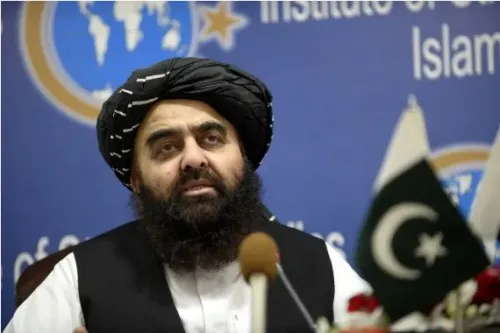
Afghanistan's Foreign Minister Amir Khan Muttaqi accused neighbouring countries of rising narcotics cultivation at a Kabul conference on 28 October 2026 .
British researcher David Mansfield found that Afghanistan's drug ban has shifted methamphetamine and ephedrine production to border areas of Pakistan and Iran .
UNODC's Afghanistan Opium Survey 2025 records opium poppy eradication in two countries near Afghanistan rising from 5,868 hectares (2022) to 13,200 hectares (2023) — a possible 'balloon effect'.
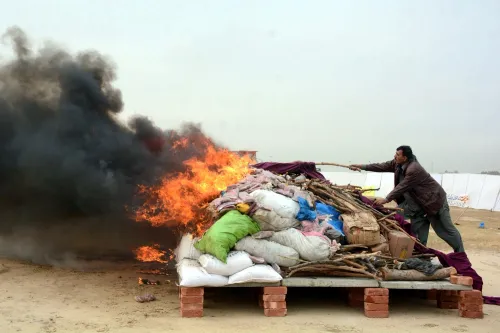
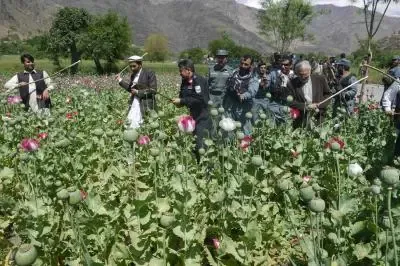
The Taliban reported eradicating over 4,000 hectares of opium poppy in 2025 , though UNODC said it could not technically verify the figure.
Researcher Alfred W.
McCoy has argued that the CIA-Pakistan nexus during the 1980s anti-Soviet war helped create the conditions for the region's entrenched narcotics trade.
UNODC has called for close monitoring to determine the full extent of cultivation shifts beyond Afghanistan's borders.
Afghanistan's Taliban-led Foreign Ministry has pivoted from defending the country's own narcotics record to publicly blaming Pakistan and Iran for rising drug cultivation near their borders — a significant rhetorical shift that aligns with, but also partially obscures, a complex regional drug economy documented by international researchers and the United Nations.
Taliban's New Diplomatic Offensive on Narcotics
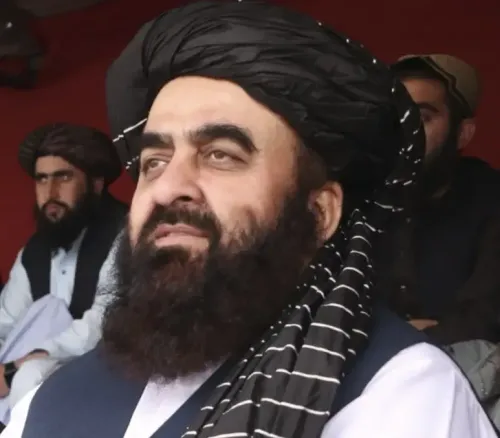
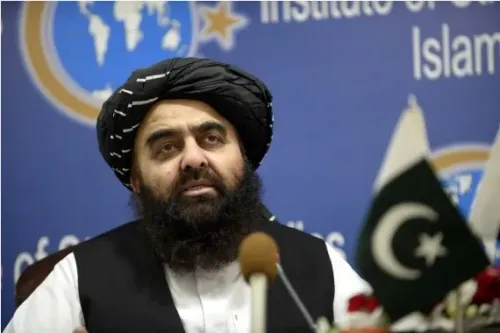
Foreign Minister Amir Khan Muttaqi raised the issue at a conference titled 'The Islamic Emirate's Fight Against Narcotics', held at the Ministry of Foreign Affairs in Kabul. The conference was attended by representatives of regional countries and international organisations, according to reports from Tolo News on Tuesday, 28 October 2026.
Muttaqi called for joint regional efforts to combat drug cultivation, production, and trafficking, and offered to facilitate field visits by foreign representatives to verify Afghanistan's own anti-narcotics work firsthand. Interior Ministry spokesperson Abdul Matin Qani went further, asking the United Nations and the international community to investigate and take steps to prevent narcotics from moving through Iran and Pakistan into Afghanistan and beyond.
What British Research and UNODC Data Show
The Taliban's posture has gained partial support from academic findings. British researcher David Mansfield published findings earlier this year arguing that Afghanistan's domestic narcotics ban has effectively displaced production to border areas of Pakistan and Iran. He noted that industrial drug output — specifically methamphetamine and ephedrine — has contracted inside Afghanistan even as it has expanded in adjacent zones.
Mansfield also observed that Taliban suppression of methamphetamine production within Afghanistan has raised transaction costs and squeezed income for actors in that supply chain, suggesting the crackdown carries measurable economic teeth.
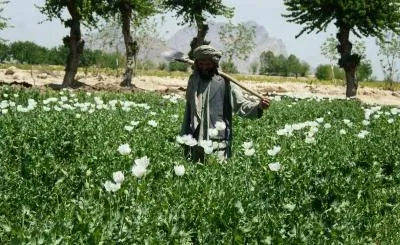
The United Nations Office on Drugs and Crime (UNODC) lends qualified weight to this picture. Its Afghanistan Opium Survey 2025 notes that the Taliban's De Facto Authorities reported eradicating over 4,000 hectares of opium poppy in 2025, though UNODC stated it could not technically verify that figure. Separately, UNODC data shows that opium poppy eradication in two countries near Afghanistan rose sharply — from 5,868 hectares in 2022 to 13,200 hectares in 2023 — a jump the agency attributes to a possible 'balloon effect', where enforcement pressure in one country pushes illicit activity into neighbouring territories.
UNODC cautioned, however, that 'more information and close monitoring of the situation are needed to fully understand the extent to which cultivation may have shifted.'
Historical Roots: From Operation Cyclone to the Present
The region's entanglement with narcotics has deep historical roots. During the Soviet occupation of Afghanistan in the 1980s, Pakistan served as the primary conduit for US and Saudi support to Mujahideen fighters through the CIA's covert programme known as Operation Cyclone. Multiple academic and journalistic accounts argue that this period coincided with a dramatic expansion of opium cultivation and heroin trafficking across Afghanistan and Pakistan.
Historian and researcher Alfred W. McCoy — who has documented the global narcotics trade for roughly 50 years — argued that CIA-backed covert operations and Pakistan's security apparatus created conditions that enabled the narcotics trade to flourish. McCoy reportedly wrote that hundreds of heroin refineries operated in Pakistan's North-West Frontier Province under the protection of powerful political and security figures, with weapons and drugs moving through the same logistical corridors.
The UNODC has similarly observed that Afghanistan's rise as a dominant opium producer was closely tied to the war environment that began in 1979.
The Balloon Effect and Regional Accountability
The 'balloon effect' identified by UNODC is not a new phenomenon in drug enforcement — it has been documented in Latin America and Southeast Asia. When one node of a supply chain faces pressure, production shifts to the next most accessible location. Critics argue that without coordinated regional enforcement, Afghanistan's current ban, however genuine in execution, risks simply redistributing rather than reducing the overall drug supply.
This is the context in which the Taliban's calls for international verification carry both diplomatic credibility and strategic utility: they position the regime as a responsible actor while directing scrutiny toward regional rivals. Whether international organisations will formally investigate the cross-border displacement remains to be seen.
What Comes Next
The invitation for field visits by regional representatives, if accepted, could mark a rare instance of ground-level verification of Taliban anti-narcotics claims — and potentially the first systematic international assessment of drug production shifts in the Pakistan-Iran-Afghanistan corridor. The UNODC's own call for closer monitoring suggests the agency is watching developments carefully.
Point of View
Yet the regime's own eradication figures cannot be independently verified — a credibility gap it has not resolved. More importantly, calling on Pakistan and Iran to submit to international scrutiny while refusing it at home is a selective accountability argument. The balloon effect is well-documented globally, but it is not a get-out-of-jail case for Afghanistan: decades of war-era infrastructure — much of it built during Operation Cyclone — still defines regional trafficking routes, and no conference statement erases that structural legacy.
NationPress
28 Oct 2026
Frequently Asked Questions
Why is the Taliban blaming neighbouring countries for drug cultivation?
The Taliban argues that its domestic crackdown on narcotics has pushed drug production across the border into Pakistan and Iran. Foreign Minister Amir Khan Muttaqi made this claim at a Kabul conference on 28 October 2026, citing what the regime describes as a regional 'balloon effect' — enforcement in Afghanistan displacing production to adjacent countries.
What does UNODC data show about drug production shifting out of Afghanistan?
UNODC's Afghanistan Opium Survey 2025 notes that opium poppy eradication in two countries near Afghanistan nearly doubled, from 5,868 hectares in 2022 to 13,200 hectares in 2023, which the agency attributes to a possible balloon effect. However, UNODC also said it could not technically verify the Taliban's own claim of eradicating over 4,000 hectares inside Afghanistan in 2025.
What is the 'balloon effect' in drug enforcement?
The balloon effect describes how cracking down on drug production in one location causes it to shift to another, just as squeezing a balloon moves air rather than eliminating it. The UNODC has flagged this risk in the Afghanistan-Pakistan-Iran corridor, though it has called for further monitoring before drawing firm conclusions.
What is the historical link between the Afghanistan-Pakistan drug trade and Cold War covert operations?
Researcher Alfred W. McCoy and the UNODC have both documented that Afghanistan's rise as a dominant opium producer was closely tied to the Soviet-Afghan war era beginning in 1979. The CIA's Operation Cyclone, which channelled support to Mujahideen through Pakistan, reportedly created logistical and political conditions that enabled the heroin trade to expand alongside the anti-Soviet campaign.
What has the Taliban proposed to demonstrate its anti-narcotics effort?
The Taliban has offered to facilitate field visits for representatives of regional countries and international organisations to assess its anti-narcotics work firsthand. Interior Ministry spokesperson Abdul Matin Qani also called on the UN and the international community to independently investigate drug production and trafficking from Iran and Pakistan into the region.