Afghan Taliban marks fifth anniversary of return to power in Kabul
Synopsis
Five years after seizing Kabul without a fight, the Taliban staged its most visible Victory Day yet — helicopters dropping flowers, flag-waving convoys, and a formal state gathering. But the UN's simultaneous statement was a pointed reminder: improved security is not the same as legitimate governance, and Afghanistan's women remain the clearest measure of how far the country still has to go.
Key Takeaways
The Afghan Taliban marked the fifth anniversary of its return to power on 15 August 2025 with official celebrations in Kabul .
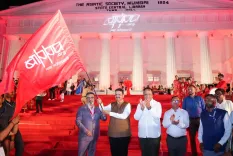
The day, designated 'Victory Day' , saw security convoys, white-flag displays, and government helicopters dropping flowers over the city.
No security incidents were reported; cultural and sports events were held across multiple cities.
UNAMA acknowledged security gains but flagged restrictions on women and girls and terrorism concerns as obstacles to lasting recovery.
Georgette Gagnon of UNAMA said sustainable peace requires accountable institutions and realisation of rights for all Afghans.
The Taliban took power on 15 August 2021 ; the last US soldier left Afghanistan by end of August 2021 .
The Afghan Taliban on 15 August 2025 marked the fifth anniversary of its return to power in Kabul, holding large-scale celebrations under tight security across the capital and other cities. The occasion, officially designated 'Victory Day' by the Taliban administration, commemorates the group's takeover on 15 August 2021 following the withdrawal of US-led coalition forces from Afghanistan.
How Kabul Marked the Day
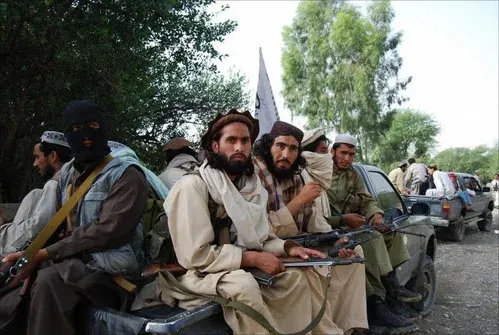
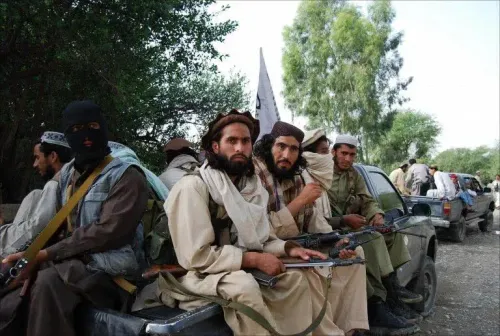
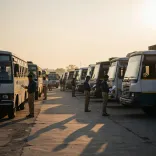
Convoys of security personnel moved through Kabul's streets, chanting slogans and displaying white flags. Government helicopters flew over parts of the city, dropping flowers on residents below. Senior officials attended a large formal gathering convened to underscore the political significance of the anniversary.
The day was declared a public holiday, and no security incidents were reported. Cultural events and sports competitions were organised in Kabul and several other cities across the country.
What the UN Said
The United Nations Assistance Mission in Afghanistan (UNAMA) issued a statement on Thursday acknowledging improvements in security conditions while cautioning that lasting peace requires more than the absence of armed conflict.
UNAMA called on the Taliban's 'de facto' authorities to take concrete steps toward sustainable stability. 'A reduction in conflict has brought tangible benefits for many Afghans and created opportunities to focus on recovery, development and regional economic cooperation, with positive steps taken including a ban on opium poppy cultivation,' the statement read.
Challenges Flagged by UNAMA
The UN mission simultaneously highlighted persistent concerns, particularly restrictions on women and girls and ongoing terrorism-related risks, which it said are impeding Afghanistan's post-conflict recovery.
Georgette Gagnon, Deputy Special Representative of the Secretary-General and Officer-in-Charge of UNAMA, said: 'The last five years have shown that Afghans deeply value peace and stability after decades of war. But sustainable peace and prosperity require more than just an absence of conflict. Afghanistan's future depends on building a society in which the rights and potential of all Afghans are realised, and institutions are responsive and accountable.'
Five Years in Context
The Taliban seized control of Kabul on 15 August 2021 as the US-backed Afghan government collapsed. The last American soldier departed the country by the end of August 2021, ending two decades of US military presence. In the five years since, the Taliban administration has remained internationally unrecognised, with no country having formally extended diplomatic recognition to the government in Kabul.
The anniversary arrives at a moment when international engagement with Afghanistan remains limited, even as humanitarian needs persist and regional neighbours recalibrate their posture toward the Taliban-led state.
Point of View
Flag convoys, formal state gatherings — is as much a message to the international community as it is to Afghans: the administration intends to project permanence. Yet the UN's carefully timed statement exposes the central contradiction: security has improved, but on deeply unequal terms, with Afghan women bearing the cost of that stability. Five years on, no government has recognised the Taliban, and UNAMA's language of 'de facto authorities' signals that this diplomatic freeze is unlikely to thaw without measurable movement on rights. The anniversary, in that sense, marks not a resolution but a protracted stalemate dressed as a celebration.
NationPress
30 Sept 2026
Frequently Asked Questions
Why is 15 August significant for the Afghan Taliban?
15 August marks the day in 2021 when the Taliban seized control of Kabul, completing its takeover of Afghanistan as the US-backed government collapsed. The Taliban designates it 'Victory Day' and has observed it as a public holiday.
What happened in Kabul on the fifth anniversary?
Security convoys moved through Kabul's streets with white flags and slogans, government helicopters dropped flowers over parts of the city, and senior officials held a large formal gathering. Cultural events and sports competitions were also organised across Afghanistan.
What did the UN say about Afghanistan on this anniversary?
UNAMA acknowledged that reduced conflict has brought tangible benefits, including a ban on opium poppy cultivation, but called on Taliban authorities to address restrictions on women and girls and terrorism concerns, saying sustainable peace requires accountable institutions.
Has any country recognised the Taliban government?
No country has formally recognised the Taliban administration in the five years since it took power. International engagement remains limited, and UNAMA continues to refer to the Taliban as 'de facto' authorities.
When did the last US soldier leave Afghanistan?
The last American soldier departed Afghanistan at the end of August 2021, weeks after the Taliban's takeover of Kabul on 15 August 2021, ending two decades of US military presence in the country.