UNAMA urges Taliban to lift Afghan women rights curbs after Herat arrests
Synopsis
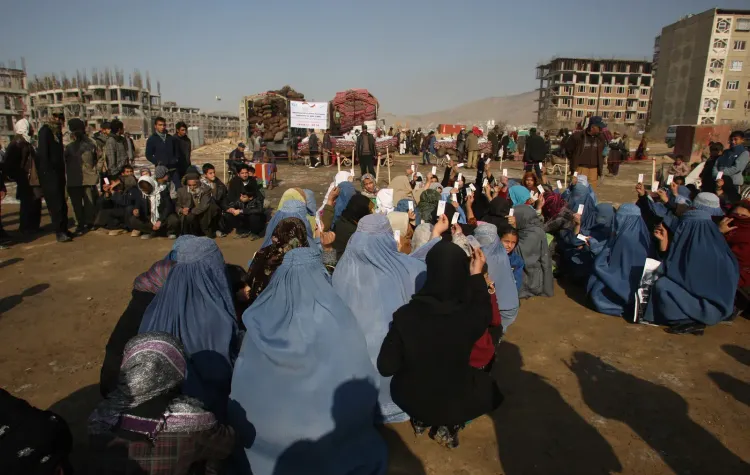
At least 30 women arrested in Herat for alleged dress code violations, a boy killed when Taliban forces opened fire on protesters — and now the UN is demanding a full rollback of all Taliban policies curbing Afghan women's rights. UNAMA's direct public challenge to Taliban governance is one of the sharpest yet from the UN mission on the ground.
Key Takeaways
UNAMA confirmed at least 30 women were arrested in Herat between 6 and 7 June for allegedly violating Taliban dress code directives.
Protests over the detentions in the Jibreil area of Herat City on 9 June resulted in at least one fatality — a boy killed by gunfire ; a second death is being verified.
The Taliban's Herat vice-and-virtue directorate had ordered male family members to enforce dress requirements; women without a prayer veil or with uncovered faces risk detention.
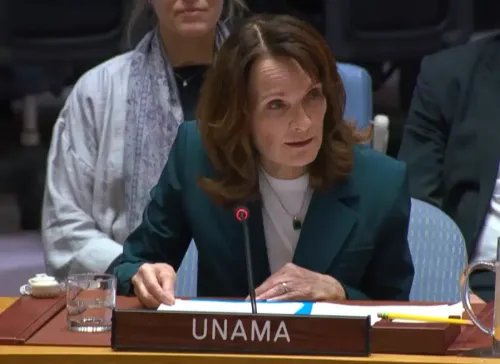
Georgette Gagnon , UNAMA Officer-in-Charge, warned that detention carries 'enormous stigma' placing women at risk of further violence even after release.
UNAMA called on Taliban authorities to revoke all policies restricting Afghan women's freedom of movement, expression, education, employment, and participation in public life .
The international community has condemned the Herat detentions; UNAMA stressed all law enforcement must meet international standards of necessity, proportionality, and non-discrimination .
The United Nations Assistance Mission in Afghanistan (UNAMA) has expressed grave concern over the arrest of at least 30 women in Herat between 6 and 7 June, reportedly for allegedly violating Taliban-imposed dress code directives, and over the excessive use of force against residents who subsequently took to the streets in protest. The UN mission is calling on Taliban authorities to revoke all policies restricting the human rights and fundamental freedoms of Afghan women and girls.
The Herat Arrests and Protest Crackdown
According to UNAMA, the detained women were arrested for allegedly flouting dress code instructions issued by the Taliban's Directorate for the Promotion of Virtue and Prevention of Vice in Herat. Dozens more women reportedly received verbal warnings during the same period.
Following protests on 9 June in the Jibreil area of Herat City over these detentions, UNAMA confirmed that at least one person — a boy — was killed by gunfire, while several others suffered injuries from being beaten with sticks. The mission said it is also verifying reports of a second fatality during the unrest.
What the Taliban Directive Said
The arrests followed a directive from the Taliban's Herat vice-and-virtue body ordering male family members to ensure women comply with the Taliban's interpretation of Islamic dress requirements. Under the directive, women seen in public without a prayer veil, with uncovered faces, or wearing tight clothes or makeup could face detention and transfer to a women's detention facility.
What UNAMA and UN Officials Said
Georgette Gagnon, the Secretary-General's Deputy Special Representative for Afghanistan and Officer-in-Charge for UNAMA, underscored the severe social consequences of these detentions. 'A woman's detention in Afghanistan carries enormous stigma, which can put women at risk of further violence and isolation in their families and communities even after they are released,' she said.
Gagnon added: 'The de facto authorities are obliged under international law to uphold the rights of all Afghans to freedom of expression, peaceful assembly, liberty and security of person, and freedom from arbitrary detention.'
UNAMA reiterated that all law enforcement measures must comply with international legal standards, including the principles of necessity, proportionality, and non-discrimination in the use of force, and that people must be able to express dissent peacefully without fear of violence, intimidation, or reprisals.
International Response and Broader Context
The international community has condemned the detention of Afghan women and girls in Herat. This comes amid a sustained pattern of Taliban restrictions since their return to power, encompassing bans on girls' education beyond primary school, curbs on women's employment, and sweeping limitations on freedom of movement — measures widely condemned by human rights bodies as constituting gender apartheid.
UNAMA's call for a full revocation of these policies marks one of its most direct public challenges to Taliban governance on women's rights, and signals that international scrutiny of the situation in Herat is intensifying. How the Taliban respond — and whether the detained women are released — will be closely watched by rights groups and UN bodies in the weeks ahead.
Point of View
Weaponising family and community structures against the very women the Taliban claims to protect. The international community's condemnations have so far produced no policy reversal — the real question is whether the UN has any enforcement lever left.
NationPress
27 Sept 2026
Frequently Asked Questions
Why were Afghan women arrested in Herat in June 2024?
At least 30 women were arrested between 6 and 7 June in Herat for allegedly violating dress code instructions issued by the Taliban's Directorate for the Promotion of Virtue and Prevention of Vice. The directive required women to wear a prayer veil in public and barred uncovered faces, tight clothing, and makeup, with non-compliance punishable by detention.
What happened during the Herat protests against the arrests?
Residents protested the arbitrary detentions in the Jibreil area of Herat City on 9 June. According to UNAMA, at least one person — a boy — was killed by gunfire, and several others were injured after being beaten with sticks. UNAMA is also verifying reports of a second fatality during the unrest.
What has UNAMA demanded from the Taliban?
UNAMA has called on Taliban authorities to revoke all policies and practices restricting the human rights and fundamental freedoms of Afghan women and girls, including curbs on freedom of movement, expression, education, employment, and participation in public life. It also demanded that all law enforcement comply with international standards of necessity, proportionality, and non-discrimination.
Who is Georgette Gagnon and what did she say?
Georgette Gagnon is the Secretary-General's Deputy Special Representative for Afghanistan and Officer-in-Charge for UNAMA. She stated that a woman's detention in Afghanistan 'carries enormous stigma' that can put women at risk of further violence and isolation even after release, and that the Taliban are obliged under international law to uphold Afghans' rights to freedom of expression, peaceful assembly, and freedom from arbitrary detention.
How has the international community responded to the Herat detentions?
The international community has condemned the detention of Afghan women and girls in Herat. UNAMA's public statement marks one of its most direct challenges yet to Taliban policies on women's rights, reflecting growing frustration with the Taliban's continued rollback of fundamental freedoms since their return to power.