UN Rapporteur slams Taliban detention of Afghan women over dress code
Synopsis
For a third consecutive day, Taliban morality police detained women and girls in Herat — including a hospital nurse — for alleged dress code violations. The UN’s top Afghanistan rights official has called the arrests illegal and demanded immediate release, in one of the sharpest UN rebukes of Taliban enforcement in recent months.
Key Takeaways
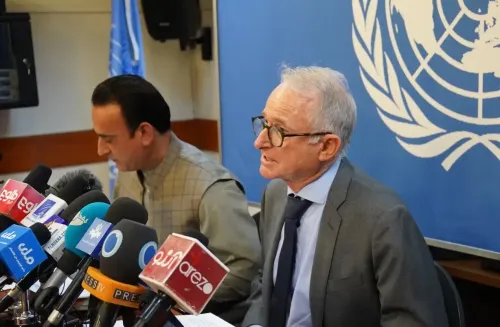
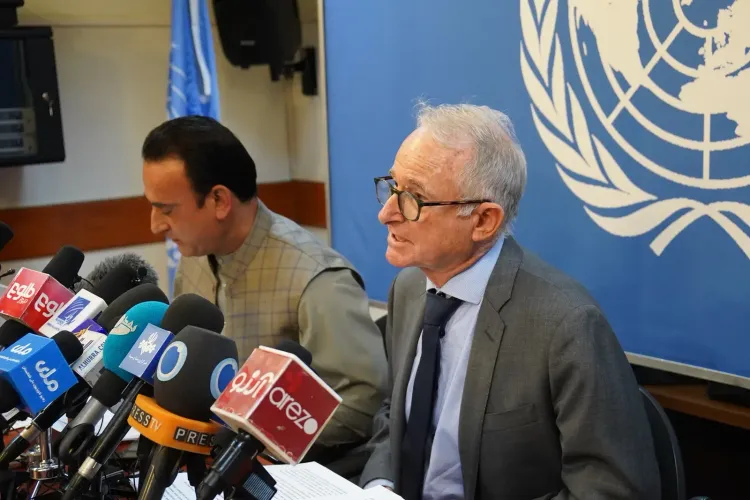
UN Special Rapporteur Richard Bennett condemned the Taliban’s detention of Afghan women in Herat as ‘illegal and unacceptable’ on 9 June .
Taliban morality police reportedly detained at least 21 women and girls across multiple Herat locations over three consecutive days .
Among those detained was reportedly a nurse from Herat Regional Hospital .
Arrests follow a Directorate for the Promotion of Virtue and Prevention of Vice directive ordering male relatives to enforce Taliban dress rules on women.
Since 2021 , the Taliban has banned girls from secondary school beyond class six , barred women from universities, and restricted their employment and movement.
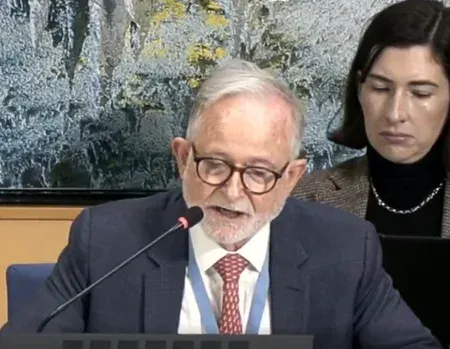
UN Special Rapporteur on human rights in Afghanistan, Richard Bennett, on 9 June condemned the Taliban's detention of Afghan women for alleged dress code violations, calling the arrests “illegal and unacceptable” and demanding their immediate release. The statement follows reports that Taliban morality police detained at least 21 women and girls in Herat over non-compliance with the group's dress requirements.
What Happened in Herat
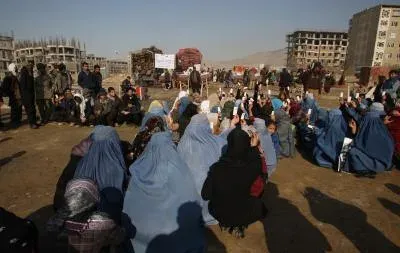
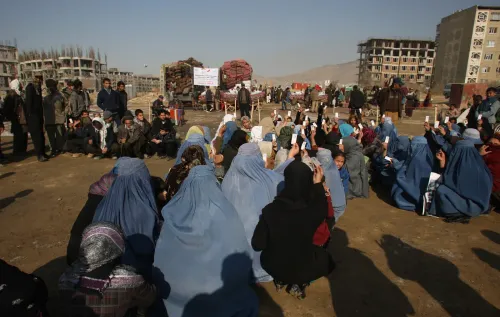
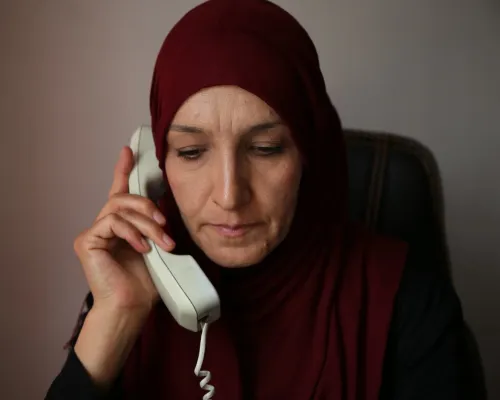
According to local sources cited in reports, Afghan women and girls were picked up across multiple locations in Herat, including the southern road, Almas Market, and the Qasr area. Among those reportedly detained was a nurse employed at Herat Regional Hospital. The detentions are said to have continued for at least three consecutive days.
What the UN Rapporteur Said
In a post on X, Bennett wrote: “I am deeply alarmed that for a 3rd consecutive day, scores of women in Herat continue to be arbitrarily arrested and detained for violating the Taliban’s dress code. It is illegal and unacceptable. The arrests must stop, and the women must be released immediately.” The statement marks one of the sharpest direct rebukes from a UN rights official over Taliban enforcement actions in recent months.
The Directive Behind the Arrests
The detentions follow a directive issued by the Taliban’s Directorate for the Promotion of Virtue and Prevention of Vice in Herat, which instructed male family members to ensure women comply with the Taliban’s interpretation of Islamic dress requirements. Under the directive, women seen in public without a prayer veil, with uncovered faces, or wearing tight clothing or makeup could be detained and transferred to a women’s detention facility, according to reports.
Broader Pattern of Restrictions
This comes amid reports of intensified enforcement of the Taliban’s morality law across several Afghan provinces. Human rights groups have documented how the law has progressively tightened controls over women’s clothing, movement, and participation in public life. Since seizing power in 2021, the Taliban has banned girls from attending secondary schools beyond class six, prohibited women from pursuing university education, and imposed sweeping restrictions on employment and access to public spaces. Critics argue the latest round of arrests represents an escalation rather than routine enforcement.
What Comes Next
International pressure on the Taliban over women’s rights has so far yielded limited results, with the group showing no indication of reversing its policies. Human rights organisations are calling on member states to raise the issue at the UN Human Rights Council and to condition any diplomatic engagement with Kabul on measurable improvements in women’s rights. The fate of the detained women in Herat remains unclear.
Point of View
A framing that carries legal weight under international human rights law and could inform future accountability proceedings. Yet condemnations alone have not moved the Taliban before. The harder question is whether the international community — including states quietly pursuing diplomatic normalisation with Kabul — is prepared to attach real costs to these arrests. So far, the evidence suggests it is not.
NationPress
26 Sept 2026
Frequently Asked Questions
Why did the Taliban detain women in Herat?
Taliban morality police detained at least 21 women and girls in Herat for allegedly violating the group’s dress code, which requires women to wear a prayer veil, cover their faces, and avoid tight clothing or makeup in public. The arrests followed a directive from the Taliban’s Directorate for the Promotion of Virtue and Prevention of Vice holding male family members responsible for women’s compliance.
What did the UN Special Rapporteur say about the arrests?
UN Special Rapporteur Richard Bennett called the detentions ‘illegal and unacceptable’ in a post on X, stating that scores of women had been arbitrarily arrested for a third consecutive day and demanding that the arrests stop and the women be released immediately.
Who was among those detained in Herat?
According to local sources cited in reports, those detained included a nurse employed at Herat Regional Hospital, alongside other women and girls picked up at the southern road, Almas Market, and the Qasr area of Herat.
What broader restrictions has the Taliban imposed on Afghan women?
Since taking power in 2021, the Taliban has banned girls from secondary school beyond class six, prohibited women from attending universities, and restricted their access to employment and public spaces. Human rights groups say the morality law has further tightened surveillance of women’s clothing and movement.
What action is being called for internationally?
Human rights organisations are urging UN member states to raise the issue at the UN Human Rights Council and to link any diplomatic engagement with the Taliban to verifiable improvements in women’s rights. The UN Rapporteur has specifically demanded the immediate release of all detained women.