Tibet under China's control as long as CCP ties sovereignty to territory: Report

Synopsis
A Tibet Express report lays bare why Beijing will never voluntarily relinquish Tibet: for the CCP, it is not a territorial dispute but an existential one. With a new assimilation law now in force and human rights groups sounding alarms, the question is no longer whether Tibet is occupied — it is whether the world is willing to say so loudly enough.
Key Takeaways
China has maintained control over Tibet for more than seven decades , driven by strategic, political, and ideological imperatives, according to a Tibet Express report.
Khedroob Thondup , nephew of the Dalai Lama , says Tibet will remain under occupation as long as the CCP equates sovereignty with absolute territorial integrity.
China's Ethnic Unity and Progress Law came into force on 1 July , codifying forced assimilation policies that critics say contravene China's own constitution.
Ryan Fioresi of the International Campaign for Tibet (ICT) described the human rights situation inside Tibet as 'quite grim' and 'escalating.' The ICT has urged the United Nations , governments, and interfaith leaders to press Beijing to resume dialogue with the Dalai Lama or his representatives.
China's decades-long grip over Tibet is rooted not merely in territorial ambition but in the Chinese Communist Party (CCP)'s survival calculus — and the region will remain under occupation for as long as the Party equates sovereignty with absolute territorial integrity, according to a report by Tibet Express.
Strategic and Symbolic Weight of Tibet
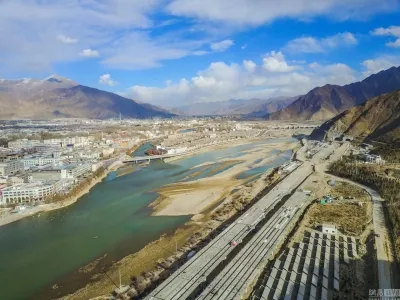
For more than seven decades, China has maintained control over Tibet, which serves as a natural buffer between China and South Asia. The region, often called the 'Third Pole' for its vast glaciers and river systems, is the source of major waterways including the Brahmaputra, Mekong, and Yangtze — making it central to China's long-term water security strategy.
Beijing has invested heavily in highways, airbases, and railways across Tibet, effectively transforming the plateau into a militarised zone that projects power across Asia, according to the Tibet Express report. For China, Tibet is not just territory — it is a cornerstone of strategic security and a demonstration of imperial reach.
CCP's Legitimacy Tied to Holding Tibet
The CCP's official position frames Tibet as an inseparable part of China, a narrative reinforced through state propaganda, education policy, and legislation — despite historical evidence pointing to periods of independent governance in Tibet. Analysts note that any concession on Tibet would be perceived within the Party as an unravelling of its foundational legitimacy.
Khedroob Thondup, nephew of Tibetan spiritual leader the Dalai Lama, was quoted in the Tibet Express report as saying: 'China's hold on Tibet is not just about land — it is about control, legitimacy, and survival. As long as the Party equates sovereignty with absolute territorial integrity, Tibet will remain under occupation. Only when China undergoes internal transformation — whether through democratisation, decentralisation, or a reimagining of its national identity — will the possibility of Tibet's freedom emerge.'
Thondup added that a more pluralistic China could allow genuine autonomy or even independence movements to flourish.
Escalating Human Rights Concerns
In July, Ryan Fioresi, executive director of the International Campaign for Tibet (ICT), described conditions inside Tibet as deeply troubling. 'The situation inside Tibet is quite grim,' Fioresi said. 'The human rights abuses by the Chinese government are escalating.'
Fioresi pointed specifically to China's Ethnic Unity and Progress Law, which came into force on 1 July, saying the legislation gave legal cover to policies aimed at eroding Tibet's distinct cultural identity. 'The Chinese government just implemented on July 1st, just a few days ago, the Ethnic Unity and Progress Law, which codifies many of Beijing's forced assimilation policies into Chinese law,' he said.
He further argued that 'many of the stipulations in the Ethnic Unity and Progress Law contravene China's own constitution and its international human rights commitments.'
International Pressure and What Comes Next
The ICT has appealed to governments, the United Nations, and interfaith leaders to publicly condemn the new law and press Beijing to resume negotiations with the Dalai Lama or his representatives. 'We called on governments, the United Nations, and interfaith leaders to speak out on this law, to shine a light on what China is doing to erase Tibetan identity and to urge Beijing to change these policies,' Fioresi said.
This comes amid sustained international scrutiny of Beijing's policies in Tibet, Xinjiang, and Hong Kong — with critics arguing that the Ethnic Unity and Progress Law marks a new phase of institutionalised assimilation. Whether global pressure translates into any policy shift from Beijing remains to be seen.
Point of View
Beijing is quietly institutionalising assimilation with a speed and legal precision that earlier phases of control never required. The international community's response — appeals to the UN, interfaith statements — has so far been structurally mismatched to the scale of what is being built.
NationPress
9 Aug 2026
Frequently Asked Questions
Why does China refuse to give up control over Tibet?
According to analysts and a Tibet Express report, China's hold over Tibet is tied to the CCP's political legitimacy, strategic security, and national identity — not just territorial claims. Relinquishing Tibet would be seen within the Party as an admission of weakness and a threat to its foundational narrative of unity.
What is China's Ethnic Unity and Progress Law?
The Ethnic Unity and Progress Law is a Chinese legislation that came into force on 1 July, which critics say codifies Beijing's forced assimilation policies into law. Ryan Fioresi of the International Campaign for Tibet has argued that several of its provisions contravene China's own constitution and international human rights commitments.
Who is Khedroob Thondup and what did he say about Tibet?
Khedroob Thondup is the nephew of Tibetan spiritual leader the Dalai Lama. He was quoted in a Tibet Express report saying that Tibet will remain under occupation as long as the CCP equates sovereignty with absolute territorial integrity, and that only internal transformation in China could open the door to Tibetan freedom.
What is the International Campaign for Tibet calling for?
The International Campaign for Tibet (ICT) has urged governments, the United Nations, and interfaith leaders to publicly condemn the Ethnic Unity and Progress Law and press Beijing to resume negotiations with the Dalai Lama or his representatives. ICT executive director Ryan Fioresi has described the human rights situation in Tibet as 'quite grim' and worsening.
Why is Tibet strategically important to China?
Tibet functions as a natural buffer between China and South Asia and is the source of major rivers including the Brahmaputra, Mekong, and Yangtze, making it critical to China's long-term water security. China has also built highways, airbases, and railways across Tibet, turning the plateau into a militarised zone that projects power across Asia.