Trump blames Iran war and petrol prices for Republican midterm losses
Synopsis
Trump's post-midterm interview is a rare moment of partial accountability — he admits voters hated the Iran war and the petrol price spike, yet refuses to second-guess the decision. With Republicans losing both chambers and Tehran reportedly emboldened by the result, the political and strategic costs of the military action are now converging in ways the White House cannot easily spin away.
Key Takeaways
President Donald Trump admitted in a CBS '60 Minutes' interview that the Iran war and rising petrol prices contributed to Republican midterm losses .
Republicans lost their majority in both the House of Representatives and the Senate in the 2026 midterms .
Trump defended the Iran military action as justified, saying Iran could not be allowed to acquire a nuclear weapon .
Vance had attributed the losses to the Iran war in a social media post; Trump broadly agreed but said the strategic rationale had been sound.
Trump claimed Iran was close to a deal before the election and predicted an agreement, without providing terms or a timeline.
Trump ruled out further escalation, saying: “I’m not looking to.
I don’t think there’s any reason to.”
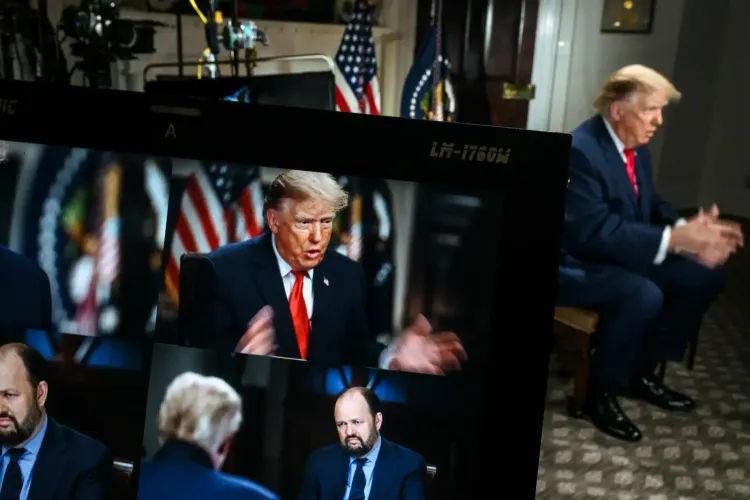
US President Donald Trump has blamed the Iran war, rising petrol prices, and what he described as unpopular candidates for the Republican Party's losses in the 2026 midterm elections — while robustly defending the military action itself and ruling out further escalation. Trump made the remarks in an interview with Ross Douthat for CBS News' '60 Minutes', his first extended post-midterm appearance on a major network.
Key Admissions on Voter Anger
Trump acknowledged that many Americans had grown frustrated with both the war and its knock-on effect on everyday costs. “They didn’t like the war. They didn’t like the fact that gasoline went up, ‘cause I had it down at a low,” he said. Despite the setback, he maintained that halting Iran’s nuclear ambitions had justified the military action. “And my answer is an emphatic yes because you can’t let Iran have a nuclear weapon,” Trump said.
He also sought to separate his personal political standing from the election outcome. “Well, number one, I was not on the ballot,” he said, arguing that his own popularity had not been on the line. Douthat pressed back, noting that several Trump-endorsed candidates had lost in traditionally Republican-leaning states, to which Trump defended his endorsement record and claimed his backing had helped others perform better than they otherwise would have.
The Vance Factor and Internal Acknowledgement
Vice President J.D. Vance had, in a social media post, attributed the Republican losses primarily to the Iran war. When asked about Vance’s assessment, Trump broadly accepted it but said it omitted the core strategic rationale. He confirmed that Vance had been part of the decision-making process leading up to the military action, suggesting the administration was unified even as it now grappled with the electoral fallout. Notably, this marks a rare moment of bipartisan-style self-reflection from a White House more accustomed to deflecting accountability.
Economic Messaging and the Disconnect with Voters
On the economy, Trump pointed to employment figures, stock market gains, and factory investment as evidence that his policies were delivering results. When Douthat challenged why voters remained dissatisfied despite those indicators, Trump attributed it to a failure of communication. “I think it was bad messaging,” he said. He also blamed the press for not giving adequate coverage to what he characterised as favourable economic developments, and predicted that improvements in investment and construction activity would become more visible to ordinary Americans over the coming months.
Douthat questioned the relevance of retirement account performance to voters more concerned with wages and petrol prices at the pump — a tension that the President did not directly resolve.
Iran Deal, Strait of Hormuz, and What Comes Next
Trump claimed that Iran had been close to reaching a deal before the election, and suggested the Republican losses had given Tehran renewed optimism at the negotiating table. He nevertheless predicted that an agreement would be reached, though he provided no timetable or specific terms. On the question of further military action, Trump was unequivocal: “Well, I’m not looking to. I don’t think there’s any reason to.”
A dispute emerged during the interview over conditions in the Strait of Hormuz. Trump maintained the waterway remained open, while Douthat noted that shipping through the strait was contingent on a substantial US military presence — raising the question of how any eventual agreement would enable those forces to withdraw. Trump said countries under US protection would reimburse the costs of the war, though the interview transcript included no confirmation from those governments, and no response from Iran was cited regarding his account of ongoing negotiations.
The 2026 US midterm elections, held halfway through a presidential term, saw all House of Representatives seats and roughly a third of Senate seats contested. Republicans lost their majority in both chambers, a significant reversal that now constrains Trump’s legislative agenda for the remainder of his term.
Point of View
But the structural damage is harder to dismiss: Republicans lost both chambers, and the President’s own VP publicly cited the Iran war as the cause. The acknowledgement that Tehran gained negotiating leverage from the midterm result is a significant admission, one that raises the question of whether the military action achieved its strategic aims without a deal in hand. Trump’s confident prediction of an eventual agreement, offered without terms or timeline, echoes similar assertions on trade and immigration that have repeatedly been revised. The Strait of Hormuz exchange is the most substantive unresolved thread: an open waterway sustained by a costly military presence is not a sustainable endgame, and no plan for transition was offered.
NationPress
9 Nov 2026
Frequently Asked Questions
Why did Trump say Republicans lost the 2026 midterm elections?
Trump attributed the losses to voter unhappiness with the Iran war, higher petrol prices, and what he described as unpopular candidates in some races. He also suggested poor media coverage of economic gains contributed to the defeat.
What did Trump say about the Iran war in the CBS interview?
Trump defended the military action as necessary to prevent Iran from acquiring a nuclear weapon, saying 'you can’t let Iran have a nuclear weapon.' He ruled out further escalation, stating he was 'not looking to' expand the conflict.
What did Vice President J.D. Vance say about the midterm results?
Vance posted on social media that the Republican losses were attributable to the Iran war. Trump broadly accepted that assessment but argued it omitted the question of whether the military action had been justified, which he said it had.
What happened to Republican majorities in Congress after the midterms?
Republicans lost their majority in both the House of Representatives and the Senate. US midterm elections, held halfway through a presidential term, contested all House seats and roughly a third of Senate seats.
Is Trump expecting a deal with Iran?
Trump said Iran had been close to a deal before the election and predicted an agreement would be reached, but provided no timetable or specific terms. He claimed Republican losses had given Tehran renewed hope at the negotiating table.