Trump Blasts Supreme Court Over Birthright, Tariff Rulings
Synopsis
President Trump publicly accused the US Supreme Court of costing America 'trillions and trillions of dollars' through rulings on birthright citizenship and tariffs, escalating a long-running clash between executive power and judicial review over immigration and trade policy.
Key Takeaways
Trump accused the US Supreme Court of causing 'trillions and trillions of dollars' in losses through rulings on birthright citizenship and tariffs.
The statement was posted by the White House on July 29, 2026 , attributed directly to Trump.
Trump's battle against birthright citizenship dates to at least 2018 , when he sought to end it via executive order, citing the 14th Amendment's jurisdiction clause.
Tariff disputes stem from Trump-era use of Section 232 and Section 301 trade authorities, which courts have subjected to judicial review.
The statement reflects a deep institutional tension between Article II executive power and Article III judicial authority over immigration and trade.
The trillion-dollar cost figure cited by Trump is unverified; no independent assessment has been confirmed.
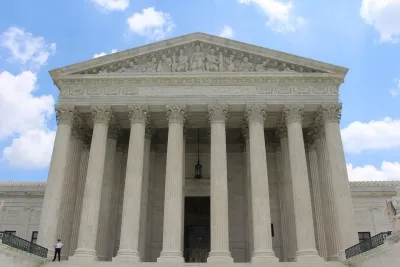
Washington DC, July 29, 2026 — President Donald J. Trump has turned his fire on the United States Supreme Court, accusing the nation's highest judicial body of costing America 'trillions and trillions of dollars' through what he called 'negative rulings' on birthright citizenship and tariffs — a broadside that lays bare one of the sharpest fault lines in American governance today.
The Charge From the Oval Office
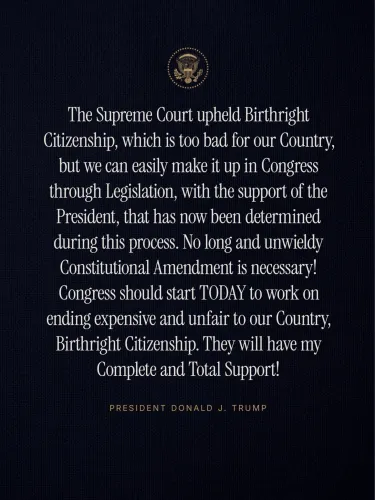
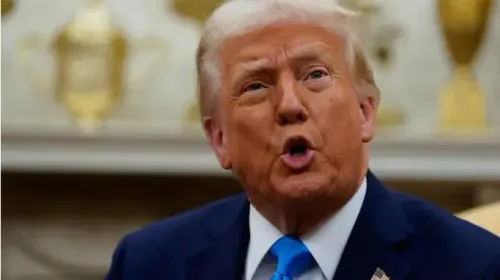
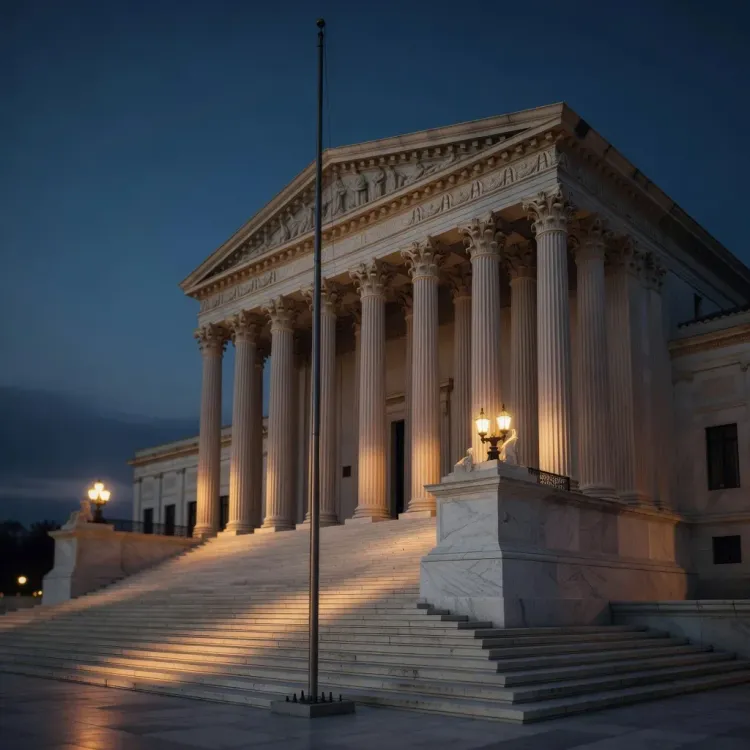
The White House posted the statement on Wednesday, July 29, 2026, quoting Trump directly: 'Does anybody have any idea how much Money and Prestige the United States Supreme Court has cost our Nation with their negative Rulings on Birthright Citizenship and TARIFFS? The answer, TRILLIONS AND TRILLIONS OF DOLLARS!' The post was accompanied by an image and attributed explicitly to President Donald J. Trump.
The language is pointed and deliberate. By framing the court's rulings as a cost — not a constitutional check — Trump casts the judiciary as an obstacle to national prosperity rather than a co-equal branch of government. It is a rhetorical move with deep roots in his political playbook.
Birthright Citizenship: A Decade-Long Battle
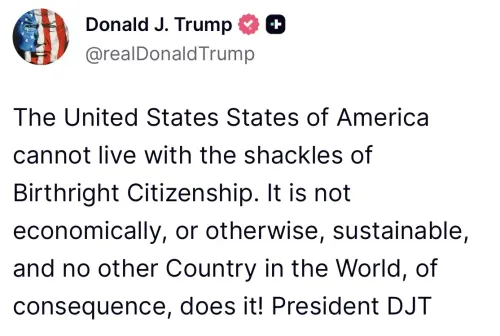
The clash over birthright citizenship stretches back at least to 2018, when Trump publicly stated his intent to end automatic citizenship for children born on US soil to non-citizen parents via executive order — a direct challenge to the 14th Amendment's citizenship clause. Courts have consistently been a barrier to that ambition. The Supreme Court's authority to interpret the 14th Amendment's phrase 'subject to the jurisdiction thereof' has made it the ultimate arbiter of who qualifies as an American citizen at birth — a power Trump has long viewed as an overreach.
Tariffs and the Limits of Executive Trade Power
On trade, Trump's administration leaned heavily on Section 232 and Section 301 authorities to impose sweeping tariffs on Chinese and other imports beginning in 2018, aiming to address trade deficits and protect domestic industries. Judicial review of those measures — and the broader question of how far presidential tariff authority extends without explicit congressional sanction — has been a recurring battleground. A Supreme Court ruling constraining that authority would carry enormous economic consequences for import-dependent businesses and global supply chains alike.
Institutional Tension at Its Rawest
What makes this statement significant is not just its volume — it is its framing. Trump is not merely criticising specific outcomes; he is questioning the Court's legitimacy as an economic and policy actor. This reflects a broader, long-running tension between Article II executive authority and Article III judicial review in areas where presidents have claimed broad discretionary power. The trillion-dollar figure, while unverified, is designed to land like a verdict: the Court, in Trump's telling, is not a guardian of the Constitution but a drain on the nation.
For immigrant families and import-dependent businesses — the two groups most directly affected by these policy battles — the statement signals that the executive branch is not finished pushing. Legislation to narrow birthright citizenship or expand tariff authority, and the inevitable court challenges that would follow, remain firmly on the horizon.
The Supreme Court has not responded. It rarely does. But in American politics, silence from the bench has never stopped the argument at the other end of Pennsylvania Avenue.
Point of View
The White House is building a political case for legislative or executive workarounds that could reshape both immigration law and trade authority. For observers tracking the global ripple effects of US trade policy — including India, which has navigated American tariff regimes carefully — the signal is clear: the executive branch intends to keep pushing the boundaries of presidential power, with or without the Court's blessing.
NationPress
30 Jul 2026
Frequently Asked Questions
Why is Trump criticising the Supreme Court over birthright citizenship?
Trump has long sought to end automatic citizenship for children born in the US to non-citizen parents, arguing the 14th Amendment does not require it. The Supreme Court's authority to interpret that amendment has repeatedly blocked or constrained his efforts, prompting his criticism.
What Supreme Court rulings on tariffs is Trump referring to?
Trump's statement references court rulings that limited his administration's use of tariff powers under Section 232 and Section 301 trade authorities. The specific rulings he cites from 2026 have not been independently verified from available information.
Is the 'trillions of dollars' figure accurate?
The trillion-dollar cost figure is Trump's own assertion and has not been independently verified. No official or independent economic assessment confirming this number is available.
What is birthright citizenship and why is it controversial in the US?
Birthright citizenship grants automatic US citizenship to anyone born on American soil, rooted in the 14th Amendment ratified in 1868 . It is controversial because critics, including Trump, argue it incentivises illegal immigration, while supporters say it is a constitutional right that cannot be removed by executive order.
Can the US President override Supreme Court rulings on immigration or tariffs?
No. Under the US constitutional system, Supreme Court rulings are binding on the executive branch. A president can seek new legislation through Congress, propose constitutional amendments, or pursue new executive actions — all of which would face fresh judicial scrutiny.