Trump claims Hormuz shipping hits record levels, predicts oil price drop
Synopsis
At a North Dakota library dedication, President Trump claimed Strait of Hormuz vessel traffic has hit record highs and predicted oil prices will keep falling — offering an upbeat but unverified read on US-Iran tensions. With no supporting data cited, the remarks are as much political messaging as policy signal.
Key Takeaways
President Donald Trump claimed on 2 July that shipping through the Strait of Hormuz had reached record levels.
Trump predicted continued declines in global oil prices , saying he wanted prices ‘to go down.’ He briefly referenced Iran , saying the US was ‘doing equally as well’ with Tehran, without elaborating.
The remarks were made during the dedication of the Theodore Roosevelt Presidential Library in Medora, North Dakota .
No independent shipping data was cited to corroborate Trump’s claims about Hormuz traffic volumes.
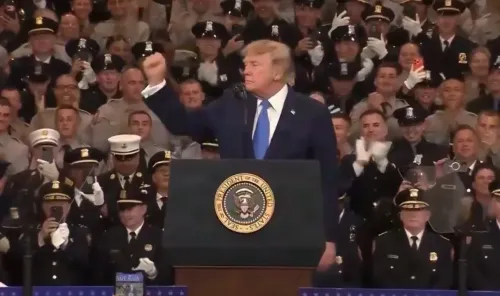
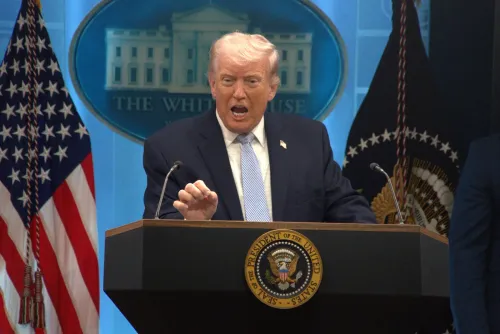
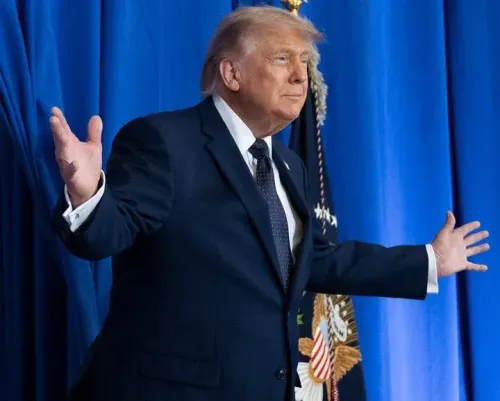
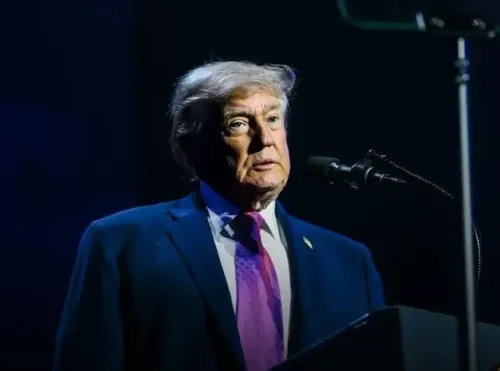
President Donald Trump on Wednesday declared that vessel traffic through the Strait of Hormuz had reached record levels and predicted a continued fall in global oil prices, offering an optimistic assessment of US-Iran relations during a speech in Medora, North Dakota. Trump made the remarks while dedicating the Theodore Roosevelt Presidential Library, weaving foreign policy claims into a wider address on American economic revival.
Trump's Claims on Hormuz Traffic
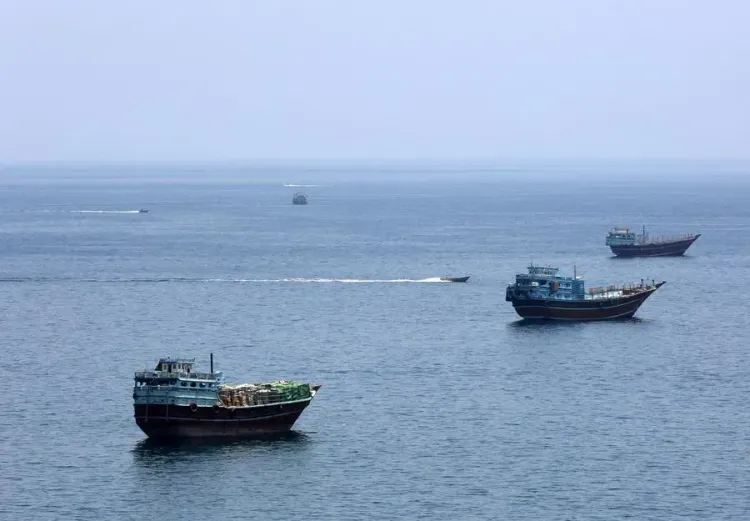
“Those boats are coming out of the Hormuz Strait. They’re coming out by numbers that nobody ever saw. We’re setting records actually,” Trump said. The president offered no independent data or official figures to substantiate the claim, and the assertion has not been verified by shipping industry bodies or energy market analysts.
On oil prices, Trump was equally emphatic. “The oil is dropping,” he said. “I don’t give a damn if they’re happy or sad, I want the prices to go down. And the oil is dropping like nobody thought possible. But I told you it would. Total control, we have total control of everything.”
Brief Reference to Iran
Trump also touched on Iran while discussing US foreign policy, though he offered little detail. “We’re actually doing equally as well with the Islamic Republic of Iran. Maybe you’ve heard of it,” he said, without elaborating on the state of negotiations or diplomatic contacts.
The remarks come amid ongoing international scrutiny of US-Iran tensions, which have periodically threatened to disrupt energy flows through the Strait of Hormuz — one of the world’s most strategically critical oil transit chokepoints.
Why the Strait of Hormuz Matters
The Strait of Hormuz, situated between the Persian Gulf and the Gulf of Oman, carries a significant share of the world’s traded crude oil and liquefied natural gas. Any disruption to shipping through the waterway is closely monitored by global energy markets and major oil-importing nations, including India, China, and Japan. Trump’s assertion of record traffic, if accurate, would signal a notable easing of tensions that had previously rattled energy traders.
Broader Address: 'Golden Age of America'
The Hormuz remarks were part of a wide-ranging speech in which Trump repeatedly pivoted between honouring Theodore Roosevelt and promoting his administration’s domestic and foreign policy record. He linked lower energy prices to what he described as a broader economic resurgence.
“This is just the beginning of the Golden Age of America,” Trump said. “America is going to experience something that I can truly say, I believe the best is yet to come.” He also argued that the United States had regained international standing, claiming other nations now viewed Washington differently than before.
What to Watch
Independent shipping data and energy market reports will be key to verifying Trump’s claims about Hormuz traffic. Analysts and oil-importing nations will also be watching for any concrete developments in US-Iran diplomacy, given that the strait’s security remains a central variable in global crude pricing.
Point of View
The deliberate vagueness — ‘maybe you’ve heard of it’ — signals either active back-channel diplomacy that cannot yet be disclosed, or rhetorical posturing ahead of a negotiating move. Either way, energy markets and oil-importing nations like India will wait for shipping intelligence data, not a library speech, before adjusting their outlook.
NationPress
1 Oct 2026
Frequently Asked Questions
What did Trump say about the Strait of Hormuz?
President Trump claimed on 2 July that vessel traffic through the Strait of Hormuz had reached record levels, saying boats were ‘coming out by numbers that nobody ever saw.’ He offered no independent data or official figures to support the claim.
Why is the Strait of Hormuz strategically important?
The Strait of Hormuz, between the Persian Gulf and the Gulf of Oman, is one of the world’s busiest oil transit routes, carrying a substantial share of globally traded crude oil and liquefied natural gas. Disruptions there directly affect energy prices worldwide.
What did Trump say about Iran?
Trump briefly referenced Iran, saying the US was ‘doing equally as well with the Islamic Republic of Iran,’ without providing details on the state of diplomacy or negotiations. The remark was not elaborated upon during the speech.
Where did Trump make these remarks?
Trump made the remarks in Medora, North Dakota, on Wednesday, 2 July, during the dedication ceremony of the Theodore Roosevelt Presidential Library.
What impact could record Hormuz traffic have on oil prices?
If verified, record shipping traffic through the Strait of Hormuz would suggest eased geopolitical tensions and uninterrupted crude supply flows, which could exert downward pressure on global oil prices — consistent with Trump’s prediction of further price declines.