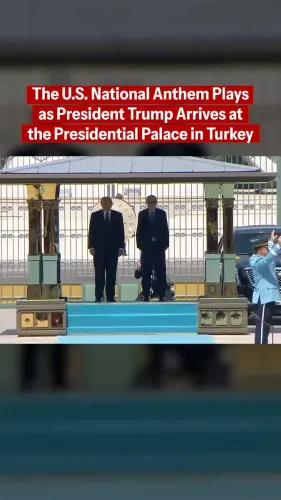
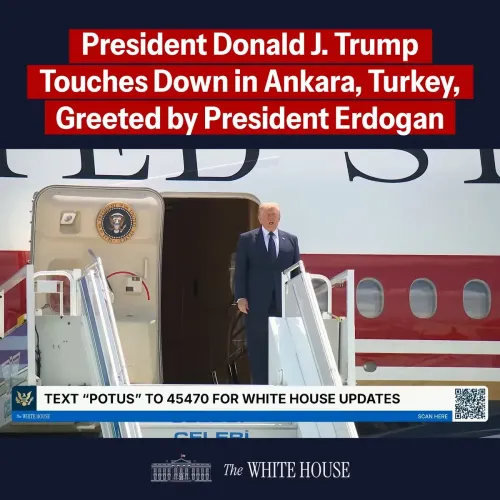
Trump Joins NATO Official Welcome and Alliance Family Photo
Synopsis
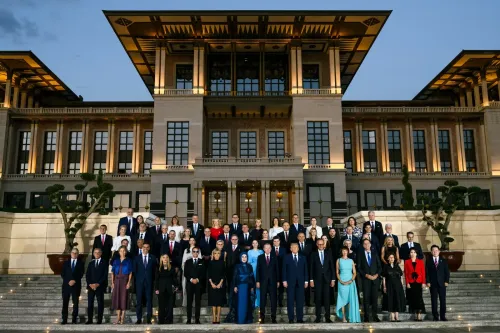
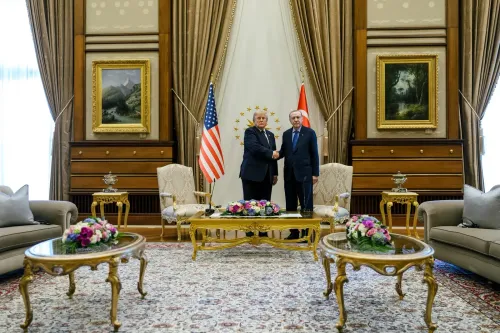
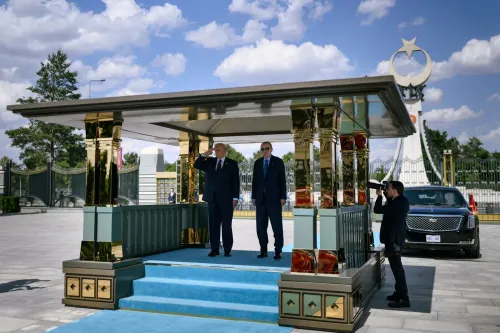
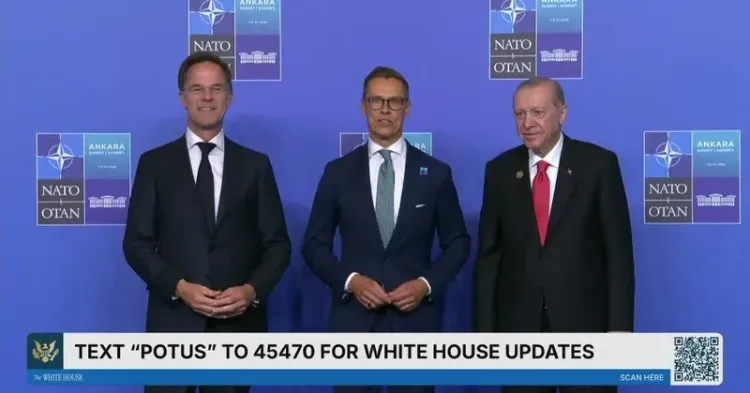
US President Donald Trump took part in the official welcome ceremony and the traditional NATO family photograph at the 2026 summit. The moment, shared by the White House, underscores American engagement with the 32-member transatlantic alliance amid ongoing debates over defence spending and collective security commitments.
Key Takeaways
President Donald Trump participated in the official NATO welcome ceremony and family photograph on 8 July 2026 .
The White House formally shared the moment, signalling active US engagement at the summit.
NATO , founded in 1949 , now comprises 32 member nations bound by the collective defence principle of Article 5 .
During his first term, Trump pressured allies to raise defence spending to 2% of GDP , a benchmark that shaped alliance policy for years.
Summit outcomes on burden-sharing and alliance expansion will be closely watched by Eastern European allies and US defence planners alike.
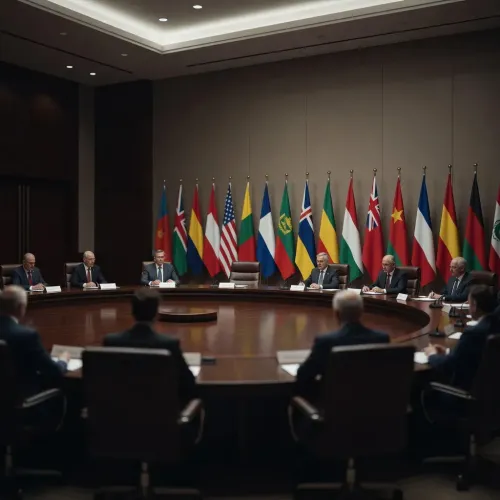
US President Donald Trump participated in an official welcome ceremony and the traditional NATO family photograph on Wednesday, 8 July 2026, as world leaders gathered for the alliance's summit. The White House shared the moment, underscoring American engagement at the heart of the 32-member transatlantic military alliance.
Context
The NATO family photo is a time-honoured tradition at every summit, bringing together heads of state and government of all member nations for a collective image that signals unity and shared commitment to collective defence. Trump's participation in the official welcome and photo opportunity carries symbolic weight given his historically contentious relationship with the alliance during his first term (2017–2021).
During that earlier tenure, Trump repeatedly pressed NATO allies to meet the benchmark of spending 2% of GDP on defence, a posture that created friction at summits in Brussels and London but also produced measurable increases in allied defence budgets over subsequent years.
Policy Backdrop
NATO, founded in 1949, operates on the principle of collective defence enshrined in Article 5 of the Washington Treaty — that an attack on one member is an attack on all. The alliance has expanded to 32 members, with burden-sharing remaining a persistent flashpoint between Washington and European capitals.
Trump's return to the presidency has renewed scrutiny of the US commitment to the alliance. His administration's posture on defence spending targets and the future of alliance expansion are among the most closely watched policy questions in transatlantic relations today.
Stakeholders and Impact
NATO allies, particularly those in Eastern Europe, have a direct stake in the tone and substance of US engagement at the summit. A visible, participatory American president at the family photo and welcome ceremony sends a signal of continuity to partners who have sought reassurance about Washington's long-term commitment to collective defence.
US defence forces and the broader alliance military structure also watch summit outcomes closely, as decisions on burden-sharing, troop deployments, and readiness targets flow from the political agreements reached at the leaders' level.
What's Next
Observers will watch for any formal communiqué or bilateral statements emerging from the summit that address defence spending thresholds, alliance expansion, or specific security commitments to member states. Trump's engagement at the ceremonial opening is likely to be followed by working sessions where the substantive agenda — including burden-sharing and collective defence posture — will be negotiated among allies.
The outcome of this summit could set the tone for transatlantic security cooperation well into the latter half of the decade, with implications for both European security architecture and US strategic priorities globally.
Point of View
But it provides European allies with a moment of reassurance they will use domestically. The real test will come in the working sessions, where the gap between ceremonial unity and substantive agreement on defence spending and collective commitments tends to surface. For India, which has deepened its strategic partnerships with both the US and key NATO members, the direction of transatlantic cohesion has direct implications for the broader Indo-Pacific security architecture.
NationPress
8 Jul 2026
Frequently Asked Questions
What is the NATO family photo?
The NATO family photo is a traditional group photograph taken at every summit, featuring the heads of state and government of all member nations as a symbol of alliance unity and collective commitment to defence.
Why is Trump's participation in NATO 2026 significant?
Trump's participation is significant because during his first term he repeatedly questioned NATO's value and pressured allies over defence spending, making his active engagement at the 2026 summit a closely watched signal of US commitment to the alliance.
How many countries are in NATO in 2026?
NATO has 32 member nations as of 2026, following the alliance's expansion over recent years.
What is NATO's defence spending target?
NATO's benchmark is for each member nation to spend at least 2% of its GDP on defence, a target that Trump aggressively pushed during his first presidential term from 2017 to 2021.
What will be decided at the NATO summit 2026?
The summit is expected to address collective defence commitments, burden-sharing among allies, and potentially alliance expansion, with any formal agreements captured in a leaders' communiqué.