Trump Lands in Shenzhen, Greeted by Xi Ahead of APEC
Synopsis
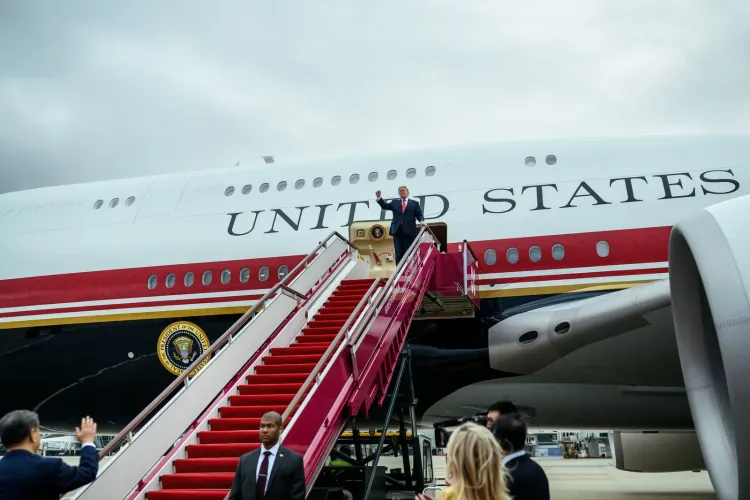
President Donald J. Trump touched down in Shenzhen, China on 18 November 2026, where President Xi Jinping greeted him ahead of the APEC Summit — the latest chapter in a high-stakes US-China diplomatic engagement that has historically shaped global trade and tariff policy.
Key Takeaways
President Trump arrived in Shenzhen, China on 18 November 2026 ahead of the APEC Summit .
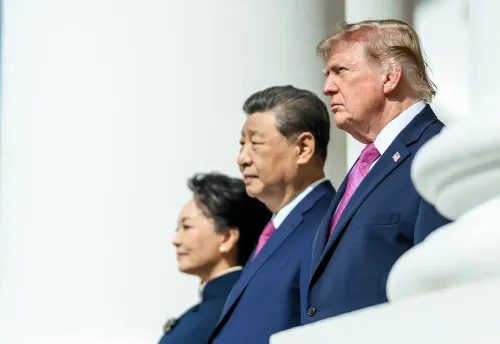
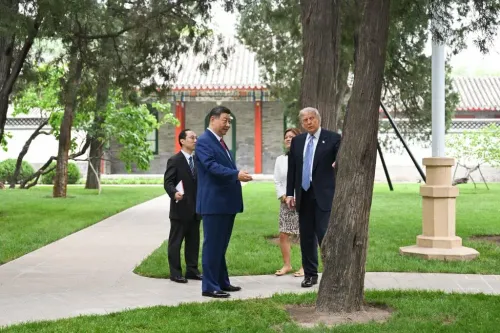
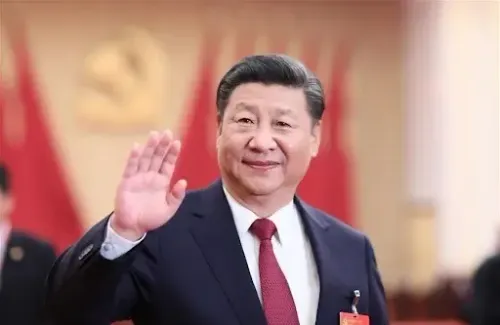
President Xi Jinping personally greeted Trump upon arrival, signalling the diplomatic weight of the visit.
Shenzhen is China's premier technology and manufacturing hub, making it a symbolically charged host city for a US-China encounter.
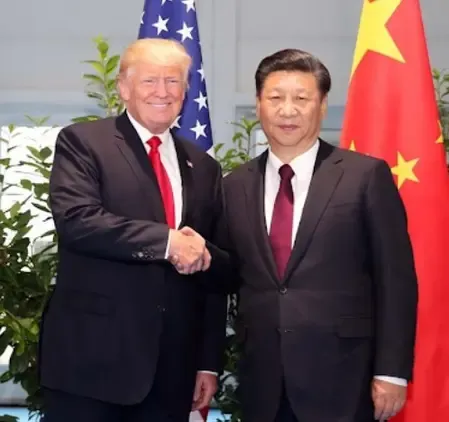
Trump and Xi previously met at the 2017 APEC summit in Da Nang, Vietnam ; their engagement later produced the Phase One trade agreement in 2020.
APEC brings together 21 member economies across the Pacific Rim, with US-China bilateral sideline meetings typically dominating summit outcomes.
Observers are watching for any joint statements, trade commitments, or new negotiating frameworks to emerge from the summit.
Shenzhen, China — 18 November 2026. Air Force One touched down in one of China's most iconic economic powerhouses, and the symbolism was impossible to miss: President Donald J. Trump arrived in Shenzhen on Wednesday, stepping onto Chinese soil ahead of the APEC Summit — and President Xi Jinping was there to greet him. The White House confirmed the arrival, flagging the meeting as the opening act of what promises to be a consequential leaders' gathering in the Asia-Pacific.
Why Shenzhen — and Why It Matters
Shenzhen is no ordinary backdrop. Built from a fishing village into a $500-billion technology and manufacturing colossus in four decades, the city is shorthand for China's economic ambition. Hosting an American president here — in the heartland of the supply chains and tech ecosystems that sit at the centre of US-China trade friction — is itself a statement. The choice of location carries a message before a single word of diplomacy is exchanged.
The Asia-Pacific Economic Cooperation (APEC) summit brings together leaders from 21 member economies spanning the Pacific Rim to negotiate trade, investment, and growth frameworks. It is the premier multilateral stage where the world's two largest economies are forced into the same room — and where bilateral sideline meetings routinely produce the summit's most closely watched outcomes.
Trump and Xi: A Relationship With History
This is not the first time the two leaders have faced each other at an APEC table. Trump and Xi met on the sidelines of the 2017 APEC summit in Da Nang, Vietnam, during Trump's first term — a meeting that preceded the most turbulent trade confrontation in modern economic history. The 2018–2020 US-China trade war, fought across multiple rounds of tariff escalation, eventually produced the Phase One trade agreement, a partial truce that locked in Chinese commitments to purchase American goods in exchange for a pause on further US duties.
That history casts a long shadow over Shenzhen 2026. Analysts watching the two economies are alert to whether this encounter follows the same cycle — tension, managed escalation, selective stabilisation — or whether the summit produces something structurally new.
What the World Is Watching For
US businesses, trade negotiators, and Asia-Pacific governments will be parsing every word out of this summit. The core pressure points remain familiar: bilateral trade imbalances, tariff architecture, technology export controls, and the resilience of global supply chains that run through both economies. Any joint statement, any follow-on bilateral commitment, or any announcement of a formal negotiating track would immediately move markets and reshape regional trade expectations.
The pattern of US-China engagement at APEC has been one of managed competition — selective cooperation on growth layered over deep structural rivalry. Whether Trump and Xi can move beyond the pattern, or whether Shenzhen becomes another chapter in the same long story, is the question the summit now has to answer.
Point of View
The same sector that sits at the heart of US export-control and technology-competition anxieties. If history rhymes, the Shenzhen meeting could follow the Da Nang-to-Phase-One arc — opening with symbolic warmth before descending into months of hard negotiation. The more consequential question is whether a second-term Trump, with a different domestic mandate and an evolved China posture, is in the market for a new framework altogether.
NationPress
18 Nov 2026
Frequently Asked Questions
Why did Trump travel to Shenzhen for APEC 2026?
Trump travelled to Shenzhen because China is hosting the 2026 APEC Summit there. As a member economy, the US president attends the annual leaders' meeting, and Shenzhen was selected as the host city by China.
What is the APEC Summit and why does it matter for India?
The Asia-Pacific Economic Cooperation (APEC) Summit is an annual gathering of leaders from 21 Pacific Rim economies focused on trade, investment, and growth. While India is not currently an APEC member, decisions taken there — especially US-China trade agreements — directly affect global supply chains and commodity prices that impact the Indian economy.
Have Trump and Xi met before at APEC?
Yes. Trump and Xi Jinping met on the sidelines of the 2017 APEC summit in Da Nang, Vietnam, during Trump's first presidential term. That engagement preceded the US-China trade war and eventually the Phase One trade agreement signed in 2020.
What are the key issues at the US-China meeting in Shenzhen?
The primary pressure points include bilateral trade imbalances, tariff structures, technology export controls, and global supply-chain resilience. Analysts are watching for any joint statement or commitment to formal trade negotiations.
What is significant about Shenzhen as a location for this meeting?
Shenzhen is China's foremost technology and manufacturing hub, symbolising China's economic rise. Hosting an American president there places the diplomatic conversation squarely in the context of the tech and supply-chain competition that defines US-China rivalry.