Trump to officially rename AI 'superintelligence', backs self-regulation

Synopsis
Trump's decision to rebrand AI as 'superintelligence' is more than a semantic quirk — it signals how his administration intends to frame the technology: as a national power asset, not a regulatory challenge. Paired with a China warning and a self-regulation preference, the White House is betting that American dominance in SI, as it now calls it, is better secured through competition than governance.
Key Takeaways
President Donald Trump announced plans on 30 September 2026 to officially rename artificial intelligence 'superintelligence' , with a formal document to be signed.
The administration will use the abbreviation SI , introduced at the launch of America.gov , a new federal information portal.
Trump backed industry self-regulation , citing the DOJ and FBI as enforcement backstops, with no new regulatory framework announced.
Trump warned against technology collaboration with China , calling the AI race a two-country contest that the United States is currently winning.
Tech companies reportedly agreed to offer communities hosting data centres benefits including energy supplies, education, and financial support.
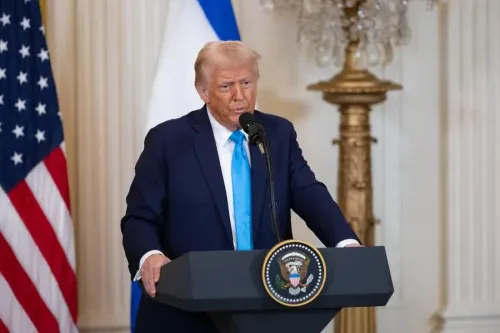
US President Donald Trump on 30 September 2026 announced plans to officially rename artificial intelligence 'superintelligence', telling technology leaders gathered at a White House luncheon that a document formalising the change would be signed. The announcement came alongside a broader push to entrench American technological supremacy over China and a preference for industry self-regulation over government mandates.
The Name Change Explained
Trump argued that the word 'artificial' failed to capture the true nature of the technology. 'This isn't — this is extreme intelligence. It's superior intelligence,' he said. At a separate event launching America.gov — presented by the administration as a single gateway to federal information and services — Trump said the administration would use the abbreviation SI. He framed the renaming as part of a wider effort to expand the technology while keeping the United States at the global frontier.
Self-Regulation Over Government Rules
Asked whether the technology industry required guardrails or formal regulation, Trump emphasised self-regulation alongside existing law enforcement mechanisms. 'Well, there's a belief that there should be tremendous self-regulation,' he said. He cited the Department of Justice and the FBI as institutions capable of addressing wrongdoing, but his remarks did not lay out specific new regulatory requirements or detail how industry self-regulation would function in practice. Critics could argue this leaves a significant enforcement gap in a sector moving faster than existing legal frameworks.
The China Competition
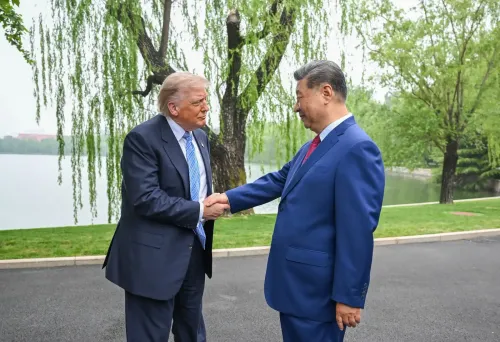
Trump was explicit about the geopolitical dimension of the technology race, warning against any joint venture with China that could expose American knowledge or secrets. 'If we do that, we're going to be giving a lot of secrets,' he said. He described the contest as effectively a two-horse race between the United States and China, asserting that no other country occupied a meaningful third position. 'We're leading now over China and everyone else, and I want to keep it that way,' he said. Trump acknowledged having discussed the technology with Chinese President Xi Jinping, but said he had deliberately limited that conversation to protect America's advantage.
Data Centres and Community Benefits
At the luncheon, Trump said technology companies had agreed to work more closely with communities hosting data centres, with potential support including energy supplies, educational resources, and financial assistance for teachers and local residents. He asserted that areas with data centres had become wealthier and experienced lower taxes, though he did not provide figures or name specific communities to support those claims. He also warned that difficulties in securing suitable locations could push projects overseas or to other parts of the United States.
What Comes Next
The administration said a formal statement summarising the meeting would be released. No signing date for the renaming document was specified. The America.gov launch marks the administration's first consolidated federal information portal. With no binding regulatory framework outlined, the practical impact of the 'superintelligence' rebranding — and what, if anything, changes in policy terms — remains to be seen.
Point of View
Autonomous systems, and critical infrastructure is a conspicuously thin framework. The China competition argument is real and well-founded, but history suggests that pure competitive pressure without domestic safety standards tends to accelerate risk rather than manage it. The question mainstream coverage is not asking loudly enough: who exactly self-regulates, and who holds them to account when the self-regulation fails?
NationPress
30 Sept 2026
Frequently Asked Questions
Why does Trump want to rename artificial intelligence 'superintelligence'?
Trump argued that the word 'artificial' does not accurately describe the technology, preferring terms like 'extreme intelligence' and 'superior intelligence'. He announced the name change at a White House luncheon with tech leaders and said a formal document would be signed, with the administration using the abbreviation SI.
What is Trump's position on AI regulation?
Trump favours industry self-regulation over new government mandates, citing the Department of Justice and FBI as existing institutions that can address wrongdoing. He did not announce specific new regulatory requirements or explain how self-regulation would be enforced.
How does Trump view the US-China AI competition?
Trump described it as a two-horse race, with the United States currently leading. He warned against joint ventures with China that could expose American secrets, and said he had limited his discussions on AI with President Xi Jinping to protect America's technological advantage.
What is America.gov and what does it have to do with AI?
America.gov was launched by the Trump administration as a single gateway to federal information and services. Trump used the event to announce that the administration would refer to AI as SI — short for superintelligence — going forward.
What did Trump say about data centres and local communities?
Trump said technology companies at the luncheon agreed to work more closely with communities hosting data centres, potentially providing energy, education support, and financial benefits for residents. He claimed areas with data centres had become wealthier and seen lower taxes, though he did not provide supporting figures.